4 min read

© The Indian Express Pvt Ltd



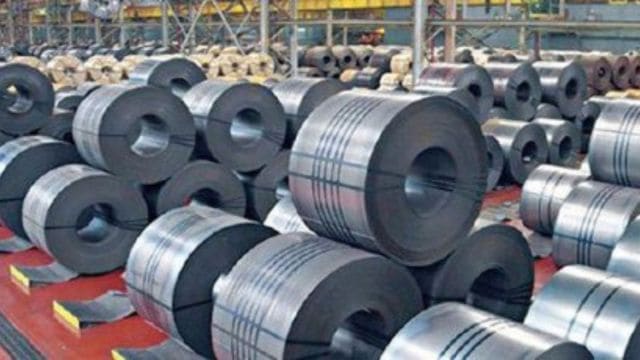 This comes as the Directorate General of Trade Remedies (DGTR) initiated an anti-dumping investigation into the imports of certain steel products in India as per notification released on Friday. (Express File)
Amid a surge in steel imports from several countries, including China, the Ministry of Commerce and Industry is likely to recommend an increase in duty on steel products, according to a person aware of the development.
This comes as the Directorate General of Trade Remedies (DGTR) initiated an anti-dumping investigation into the imports of certain steel products in India as per notification released on Friday.
“There are concerns about the impact of a steel duty hike on the downstream industry, but at the same time, there is massive overcapacity in China. A recommendation for a duty is likely, as several Western countries are imposing duties on Chinese steel products, and that steel could be rerouted to India,” the person said.
The Ministry of Steel has asked the Ministry of Commerce to impose a 25 per cent duty on steel products, citing that steel imports from China surged by 80 per cent to 1.61 million tonnes between January and July this year, compared to 0.9 million tonnes during the same period last year. However, Micro, Small and Medium Enterprises (MSMEs) have warned that a safeguard duty on steel products would negatively impact 8 lakh MSMEs.
According to the DGTR notification, the Indian Steel Association (ISA), comprising ArcelorMittal Nippon Steel India Limited, AMNS Khopoli Limited, JSW Steel Limited, JSW Steel Coated Products Limited, Bhushan Power & Steel Limited, Jindal Steel and Power Limited, and the Steel Authority of India Limited, is seeking the imposition of a safeguard duty on imports of “Non-Alloy and Alloy Steel Flat Products” into India.
“The applicant alleges that there has been a recent, sudden, sharp, and significant increase in the volume of imports, which has caused significant injury to the domestic industry in India. The applicant further alleges that imports have occurred in such increased quantities and under such circumstances as to cause or threaten to cause serious injury to the domestic industry,” DGTR said in a notification.
ISA argued that beginning with the imposition of a 25 per cent duty under Section 232 by the United States of America under its Trade Expansion Act, 1962, several countries have introduced multiple trade remedy measures against steel product imports. The evidence indicates that 129 trade remedy measures were imposed by various countries against steel products between 2019 and 2023.
“The existence of significant excess capacity far exceeding domestic consumption in China, Japan, and South Korea has arisen, inter alia, due to slowing demand in those countries. China’s recent domestic policy measures resulted in a decline in consumption of long steel products, which are mainly used in the real estate sector. To mitigate the decline in steel consumption for long products, Chinese steel companies shifted a significant percentage of their production from long products to flat products, which are now being exported to global markets,” ISA stated in its application to DGTR.
Think tank GTRI argued that imports are primarily due to the gap between steel production and consumption.
“In FY 2024, India produced 139.15 million tonnes (MT) of steel, exported 7.5 MT, and consumed 136.29 MT, according to official figures. This left little surplus, making imports necessary to meet domestic demand. Steel imports, which account for only 6 per cent of domestic production, primarily cater to large steel firms, with 50 per cent consisting of raw materials such as steel scrap and 40 per cent specialised products unavailable locally,” GTRI said.
The ISA further said that the ASEAN region is expected to significantly increase its crude steel production capacity, with 75 per cent of the region’s planned capacity expansion linked to investments by Chinese companies. ASEAN is the leading region for cross-border investments by Chinese steel companies, which are heavily investing in overseas steel projects. The capacity in ASEAN is expected to rise to levels far exceeding the region’s steel demand, ISA said.
Rating agency ICRA had said that the domestic steel industry’s capacity utilisation in 2024–25 could fall below 80 per cent for the first time in four years due to the surge in imports. ICRA predicted that, alongside record ongoing expansion plans, the industry’s capacity utilisation rate would decline from 85 per cent in 2023–24 to an estimated 78 per cent in the current fiscal year, the lowest level in four years.