13 min read


© The Indian Express Pvt Ltd



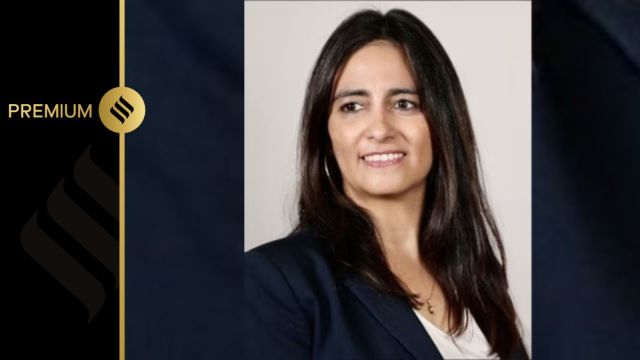 Claudia Sanhueza, Under-Secretary for International Economic Relations, Chile (Express File Photo)
 As India and Chile work towards building a fresh framework for a Comprehensive Economic Partnership Agreement (CEPA) or Free Trade Agreement, there will be inclusion of both goods as well as services and a focus on issues like energy, facilitation of commerce, technology, innovation and environment, Claudia Sanhueza, Under-Secretary for International Economic Relations for Chile said. In an interview with Soumyarendra Barik and Aanchal Magazine, Sanhueza said they would like to advance the trade pact talks given that elections are approaching in India, with “infinite possibilities for collaboration” between the two nations on several areas including lithium mining and exploration of mineral reserves. Excerpts:
Q: You met Commerce Minister Piyush Goyal. What were the key areas of discussion?
A: We met him…we had this meeting to explore the possibility of expanding and increasing our trade relation. We have a bilateral trade agreement signed in 2006. That hasn’t seen an expansion. But there is always the case and the preamble of this trade agreement says that the parties were looking for ways to continue the conversation towards a CEPA or a free trade agreement. So, this is something which is on the table for a long time and we are very interested in doing something like that with India.
Well, India has become and is becoming a relevant player in the world. It is the biggest country and the expectation is that its economy will grow at a faster rate than everyone else. And we have a lot of complementarities and similarities as well in the challenges we have. For example, with respect to the energy use, with respect to what India needs for producing electric cars, we have lithium, for example, the batteries. And also the pharmaceutical industry of India and Chile are very important as well. So, we met him, it was a very good meeting. And we are starting the conversations to find a framework to go for CEPA or FTA.
Q: Is there a timeline in mind for the CEPA or the FTA?
A: It will depend on the framework really, but the sooner the better. We know you have elections here next year. So it will be good to advance the conversation a lot before that. But it will depend actually on the framework. We want to do something relevant as well for India and for Chile as well. We know India, you had this convention here with Latin American countries last August and we know there is a suggestion of being present in Latin America. So that is a win-win relationship but it will depend on the list of issues we are talking about.
Q: On energy transition, which is an area where Chile can really help India with, specifically on lithium, etc. What’s the nature of conversation with India?
A: I think India is similar to Chile in the sense that we not only need lithium, but need to add value to that industry. I mean to go downstream and produce batteries at the end…So, that is something that is interesting for India as well to have technology, to add value to that industry. At the same time, it has the possibility of exploring and mining lithium.
Q: India is interested in exploring mining?
A: I think so they are. They are sending various people to see, experience and I think they are interested in doing so. And there are other spaces, more in the agricultural sector, for example, in the wine sector…so that’s something we need to explore to identify why this benefits. We think the benefits, I mean Chile is a small country, we don’t have the size even of the smallest state in India but we are very important in the sense that we are integrated to the global value chain in a very intense way. We also usually are seen as a door for the rest of Latin America. It’s a country that is very wholesome, has certainties and experience…we have 33 trade agreements with 65 economies and over. So you can export from Chile to the rest of the world. And those are the kind of benefits like indirect benefits of a trade relationship.
Q: When you talk about exploration, last time, Chile had shown interest in exploring the reserves in Jammu & Kashmir for lithium reserves. Has there been any progress on it?
A: We have a working group that has a conversation. It’s more general on critical minerals. But they have this working group part, and they are exploring the conversation and see what are the ways to collaborate. And maybe move towards a memorandum of understanding or something like that.
Q: Does it include only people from Chile, or does it also include people from India?
A: Yes. Both parties.
Q: The working group is discussing how there could be a collaboration between India and Chile. Has there been a big movement?
A: Yes. I think the final collaboration will depend on the parties. If we are committed to collaborate, we will. Then there are infinite possibilities of collaboration.
Q: There’s a convention in Chile, with the President saying that there was a plan to nationalise the lithium reserves in Chile.
A: The national lithium strategy that he presented… before that, lithium is a national good. It has been nationalised since 1979. So it is not about nationalising lithium because it’s already a national mineral. But it’s about how we extract, explore and produce. And, in that sense, the National Strategy has a lot of components. We are proposing a public-private collaboration with the private sector from all over the world. It’s open to the rest of the world. It has also created a national estate company and it has also created the research institute…on lithium and salars. So those are the main components of doing this in a sustainable way. So a lot of conversation with communities to produce it in a greener way, with new technologies, trying to have a low impact on the environment and with community gains.
Q: India has an entity called KABIL with members from public sector companies and it has been exploring in Australia, which is also a big player. In your political context, where the government is going to become a major stakeholder, in the entire industry value chain. Are those sorts of partnerships also being discussed with the Indian side where maybe an Indian entity can go and partner with the Chilean government to do the exploration?
A: Yes. In fact the part of the collaboration, the private public collaboration is meant to be like contracts between the national company and the private sector. Like we already have, for example, today 60 per cent of the lithium production is with Chinese investors and 40 per cent with North American investors. It’s a contract with the state. So that is a way we do it.
Q: So in future if some Indian company wants to come in…
A: Yes, of course, if we say a state or private Indian entrepreneur wants to invest in Chile, he or she will have a contract with the state. We have a principle of non-discrimination to investors in Chile. We don’t discriminate with any investor.
Q: India imports its lithium majorly from Hong Kong and China, which makes certain policy sections a little uneasy. Chile doesn’t really feature in the list of countries that export a lot of lithium to India. What’s the reason behind that?
A: Well, because we have these contracts with these investors. Finally, they have the supply, in some sense related to that contract. So 60 per cent of exports in lithium go to China. 40 per cent goes to the rest of the investors. So that’s one reason. The other reason is more likely from the demand. The countries that are demanding lithium, they pay more in those contracts and have the priority for the extraction.
Q: China is the biggest EV market in the world, and which is why they have a huge demand for lithium, it has its own reserves also. But with India also making a move in the EV space, even though it’s premature but there are million EVS on the road. With China slightly showing signs of slowing down, how important is this partnership with India in that particular context with China probably stagnating a little bit for a while and India is definitely growing at the pace with EV demand. How important does this partnership with India become in that particular respect with China slowing down specifically?
A: Well, I would like to think that the priority on India from the Chilean government is before the economic conditions. It’s not in that sense, but it is related to our objective of, on the one hand, looking for a basis for improving our own economy and being related to India, which has a very good expectation of growth, it is good for us. But also has to be a strategy of diversifying our economic relations. And in that sense it is important also for us that diversifying strategy is not only about the economy, but also about a political economy. So, there are several issues. In economic terms, obviously, it is better not to rely on one country. Actually, we are not a very concentrated country. For example 20 per cent of our exports go to Europe and then 20 per cent to North America, and then Asia…we are diversified enough. We want to be related to different countries. That’s why India is a top priority for our government.
Q: Coming back to the trade pact. Earlier, there was a mention from Chile that it is looking at the expansion to include digital services and investment. What are the other priority areas which have been discussed for the trade pact expansion. Also, when you say you have elections in mind, is there going to be a push for an interim deal before the full FTA?
A: Now we have to discuss the framework. It will be good to have something before the elections. But it will depend on how comprehensively we go. So there is a trade off.
Q: So there will be push for certain sectors first
A: Yes, I mean depending on what we finally decide, but it will depend on the conversation. We want something good anyway. So, if we spend more time but we reach a good agreement, a comprehensive agreement. We want something more comprehensive than we have, but that will take longer. So, we have to optimise.
Q: Digital services and probably batteries, EVs could take priority?
A: Could take but it will depend. I think they were in Australia. But, well, it will depend on how we go with the conversation now. It’s not a red line in any way, it’s open.
Q: But like in Australia, the wine sector was included in the early harvest. So will you also push for it initially?
A: I don’t want to say in advance about that…but yes, the wine sector is important for us.
Q: India recently had a directive and then went back on laptop imports. Many countries such as the US, South Korea raised this issue at the WTO saying it is inappropriate. How do you see India’s policy stability in the trade relationship with Chile?
A: I think lately, at least, there has been interest here with Latin American countries. And we can observe that there is a shift in the emphasis. I find it a good shift. India wants to be present in a more important way in Latin America. But if those changes, sometimes they have challenges because the institutional framework is not there, I mean, you have to change it as well…I think there is a willingness to be there. And the good meeting we had yesterday is a symptom of that as well. So those changes in the international policy are important because the international policy is very stable in the countries in general, it is not like the tax policy…it’s a long term policy. So when there is a shift in international policy, they are supposed to be long term.
Q: And there you are seeing a good shift
A: Yes
Q: How many rounds of negotiations have happened on the trade pact?
A: We are starting a new conversation to have the framework for this new agreement. Before this, there were three rounds to evaluate the second expansion, and I think that’s going to be there for a minute to see if we can go for something else.
Q: What is the push from your side?
A: We are really open. But if it’s a more comprehensive one, there will be a chapter on goods but also on services for example. And inside that, we have to discuss many issues like energy and other things. There is a long list of topics that are of interest to both parties — the facilitation of commerce, technology, innovation and environment.