8 min read


© The Indian Express Pvt Ltd



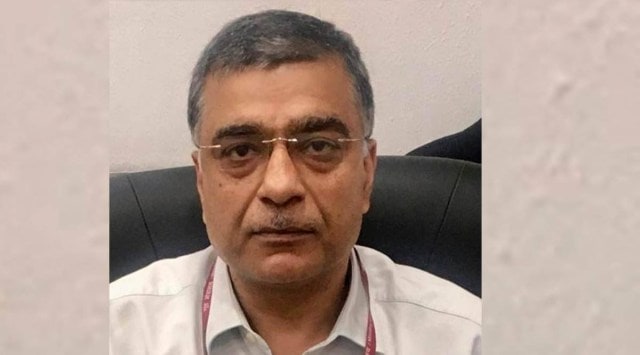 Arun Kumar
 The Outgoing Director General of Civil Aviation Arun Kumar was among the top officials who steered India’s aviation sector through a rather tumultuous period that saw a once-in-a-century pandemic, concerns over engine failures, a flurry of safety-related incidents, and errant passengers. These challenges were met by a proactive DGCA willing to crack the whip, shedding its earlier image of a soft regulator. Kumar, who superannuated on February 28, tells Sukalp Sharma that the Pratt & Whitney engine snag issue was perhaps his biggest challenge and delves on how the DGCA leveraged its penal powers to demonstrate a zero-tolerance approach on safety. Edited excerpts:
As India’s aviation regulator, what were the key challenges that you had to grapple with?
Every monsoon poses a challenge. The season brings in its wake a lot of challenges for the aviation authorities, be it airports, the airlines, everyone. The pilots have to be suitably trained, visibility becomes an issue. Then at times it is raining plus crosswinds are there. Mumbai, especially, becomes very difficult. So at that time (when he took charge), a lot of events were happening. Jet Airways had just disintegrated…So what happened was that all those aircraft, SpiceJet took from the lessor. The induction was swift but there were problems with pilots… I remember there was a day when two-three events happened, serious events. One was a skid off the runway in Mumbai. The runway got blocked for 36 to 48 hours. And all those aircraft coming from the US, the UK etc to be diverted to Ahmedabad and all because at that time, India did not have the aircraft removal kit. There was an old kit with Air India and it was stationed somewhere in Mangalore. So it was loaded on a truck and they started for Mumbai. And that took 48 hours. So that was not okay if we are going to become the world’s third-largest aviation market… Now, you have those kits at some airports. So, if something like that happens, you have the kit to remove it . You can activate that thing (kit) in two hours and another four to six hours, you can remove the aircraft. Which means you can do it in an appropriate period of time.
We also brought in a lot of discipline. We penalised a lot of pilots and we made it public also, which was primarily for the demonstration effect. I have to access 12,000 flight crew and I cannot reach everyone… If the case was fool-proof, we penalised… You have to be just and cannot be unjust to anyone. But at the same time, if a mistake has happened, and somebody is found wanting or lacking or responsible, then you have to act.
So this demonstration effect you’re talking about, we’ve seen it a lot with airlines also. Because DGCA, over the last few months at least , has very publicly fined airlines too…
That journey is on…
But even in that, the demonstration part is quite evident.
The whole idea is demonstration. So like there were these incidents that happened simultaneously. One in Gujarat, one in the south somewhere. One was with an Air India Express plane… And SpiceJet… I thought that like this, things will just slip out of hand. So we went after pilots and all, and things, as you can see, are now considerably better in three to four years. Now we have a very disciplined workforce. So Monsoon is always a bit of an issue for the aviation sector in India, like winters are in some other countries.
Now the second part of the story. Then the P&W engines had a big issue (like gear box failure, low pressure turbine failure, and high engine vibrations) . Now there are two engines on an aircraft, so there will not be a huge issue even if one engine fails. But we cannot take a chance. Now consider someone flying from Bangalore to Varanasi. The pilot discovers somewhere that one engine has failed. Then you make a landing at some place like Nagpur. Now either a working engine will have to be transported to Nagpur or another plane will have to come to ferry passengers to Varanasi. Because of all this, instead of reaching Varanasi in three hours, you will reach in 10 hours. So it was very irritating for flyers. This was quite a bit of a challenge.
For the first month or so, we felt that there was no solution to it anywhere. It was happening all over the world with the PW1100 engines. So then the OEMs (original equipment manufacturer) came up with some fixes. We asked them by when will you fix the problems. They said they did not have assembly line capacities at the time to fix the issue quickly. The FAA (US Federal Aviation Authority) gave them a lot of time. But we put our foot down and told them that they must replace it within three months, else we won’t allow these faulty engines to fly…
Even the 737 MAX issue was problematic…
It was grounded before I had taken charge. There was a lot of curiosity about its return to service. We adopted the wait-and-watch approach. Some people used to attack us saying that the Indian regulator is very cautious. We wanted to be cautious. We did it much later than the FAA, and there was nothing wrong in that. The matter was serious and we had to be very cautious.
A lot of things happened. We did quite a few things. Like we did not have any regulation on drugs. ICAO mentions that there should be regulations on alcohol and drugs. We had regulations on alcohol but we brought aircraft maintenance engineers under its purview as it is a safety sensitive function. Then we also brought in regulation on drugs.
We recently did something on mental health as well. This issue had also come earlier, at the time of the Germanwings plane crash in 2015. At the time DGCA could not take it to a logical end. But this time we decided to do it.
Would it be correct to say that after COVID, mid-air brawls and incidents have gone up?
I don’t think so. There is no empirical basis. If you don’t report a thing, so it appears as if the thing has not happened. Even in the Air India case, the issue was that they did not report it. But now they are reporting and handing over to the police, wherever required. At our end, we have ruthlessly implemented the rules. I am happy to note that now they are reporting a lot more than earlier.
If you have 5.5 lakh people flying daily, there will be a couple of culprits in that kind of a sample size. Also, we have a lot of passengers in India who are very new to flying. So at times that also leads to certain issues here and there. It will take some time.
DGCA has come a long way from the time the FAA had downgraded the regulator in 2014.
We have come a long way. For example those statutory powers on penalties, we got the act amended and then quickly started enforcing it. Like airlines being penalised, if they don’t meet the obligation to fly to the northeast. It is such a socially-laden message. If you don’t have such provisions, then how do you draw the line?
The competition in both the domestic and international segments is a positive thing.
It is good for the consumer and we should all stand for the consumer.
We will be flying 13-14 million people a month at the current rate. In 2009, we were flying only about 5 million people a month. So we have grown 260-270 per cent in that period. But how has this increase happened? It is because the number of aircraft has increased. In 2013, you had 350 aircraft, and in 2022, you had 710 aircraft, so it has doubled. But passenger numbers have gone up even higher, which means that load factors have improved and aircraft utilisation has also gone up. It is good if an economic asset has good utilisation levels. And there is immense potential in India’s aviation sector.