Journalism of Courage
 5 min read


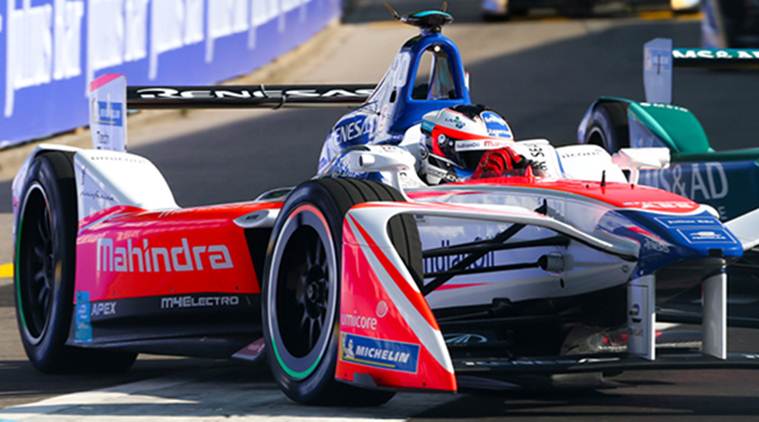 Till Season 4 the race used to take approximately 50 minutes, with drivers making one mandatory pit stop to change cars. (Source: Mahindra)
Formula E, officially the ABB FIA Formula E Championship, is a class of auto racing that uses only electric-powered cars. The series was conceived in 2011, and the inaugural championship started in Beijing in September 2014. The series will enter in the fifth season this year.
Till Season 4 the race used to take approximately 50 minutes, with drivers making one mandatory pit stop to change cars. In the upcoming season the race distance will no longer be measured using pre-defined number of laps, but will instead run to a strict time limit of 45 minutes, plus one lap to reach the chequered flag and no more car swaps!
Since its debut, Formula E has set out to redefine the future of motor-racing, guided by the core vision of developing sustainable yet top-of-the-line mobility solutions. Why should you be excited? Here are interesting facts about Formula E that we bet you didn’t know. Do look out for hidden trivia about the only Indian team in Formula E; Mahindra Racing.
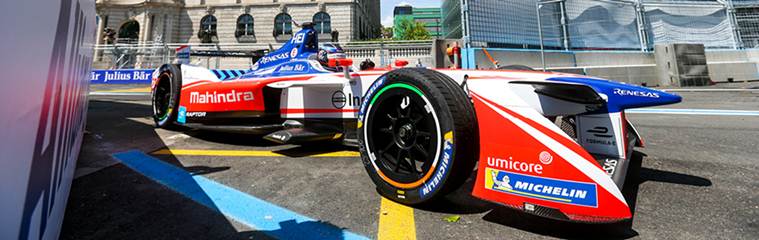 Formula E is the world’s first all-electric international motor-racing series. (Source: Mahindra)
It is the world’s first and only all-electric motor-racing series
Formula E is the world’s first all-electric international motor-racing series. It debuted in 2014, with Mahindra Racing among the founding teams, amid much scepticism. But, four years on, there remains no doubt even in the minds of the most hardened sceptics – these cars can race…
…And they’re seriously fast too
Mahindra’s M4 Electro, the challenger the squad fielded in the just-concluded fourth season of the series, is a rocket ship, capable of going from zero to 100km/h in an eye-watering three seconds. The maximum power output is limited by rules. But even then, the M4Electro is capable of hitting speeds of 225 km/h. And the cars are only set to get faster. Formula E will bring the ‘Gen 2’ car on the track starting season 5, which flags off in December this year. Featuring a sleeker ‘Batmobile’-like design, the more powerful Gen 2 challenger will be able to go from zero to 100km/h in just 2.8 seconds and reach speeds of up to 280km/h. Plus, no pit stops this season – you can’t take your eyes off.
Formula E finds its tracks on the city streets
From Rome to London to Paris to exotic Marrakech and Berlin, where Mahindra Racing scored their first win, Formula E has raced in some truly iconic cities. The championship aims to not just develop electric vehicles but also to promote sustainability. Emissions from gasoline powered cars, has been polluting cities across the world, racing in urban centres brings the purpose of sustainability and thrill of racing, closer to its audience than ever before.
Ain’t no fan like a Formula E Fan
Gone are the days when fans could engage by just watching and rooting for a sport, Formula E fans are in it to win it. Fanboost lets fans vote for their favourite driver. The three drivers with the most votes are given a power boost that they can deploy at a time of their choosing for up to five seconds in the second half of the race. Moreover, teams run their own separate fan-centric initiatives. Mahindra Racing for instance runs its #drivenbydesign contest. Fans, who Mahindra Racing calls #Passioneers, share design ideas for the livery and the crowdsourced design that wins is put on the Mahindra race car for the season.
 From Rome to London to Paris to exotic Marrakech and Berlin, where Mahindra Racing scored their first win, Formula E has raced in some truly iconic cities. (Source: Mahindra)
Hotbed of EV development
Nothing pushes technology forward like war and motorsport, goes an oft used adage. And one of Formula E’s main objectives is to develop EV technology amid the cut-and-thrust of racing. The cars, four years on, are already faster and more energy efficient than they were in the debut season. Season 5, however, will mark a real leap for the championship. Cars will be much quicker than before, as highlighted above, but unlike in the first four years, they will be able to last an entire race distance.
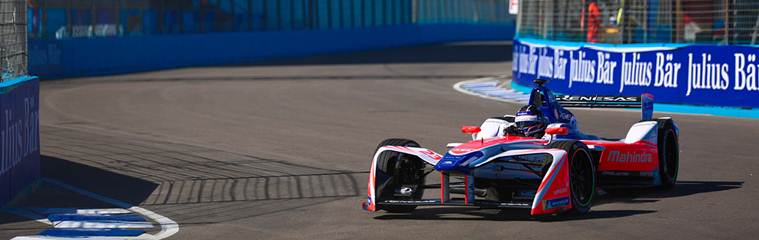 Circuit restrictions were lifted in 2015 for fully-electric vehicles, paving the way for Formula E to race there. (Source: Mahindra)
Lifted a 60 year circuit racing ban on Switzerland
Formula E pulled off what no other motorsport series has been able to – it brought circuit racing back to Switzerland for the first time in over six decades when it held its first ePrix in Zurich in Season 4. Switzerland banned circuit racing in 1955 after a crash at the 24 Hours of Le Mans race in France killed over 80 spectators and injured over a 100. Circuit restrictions were lifted in 2015 for fully-electric vehicles, paving the way for Formula E to race there.