Journalism of Courage
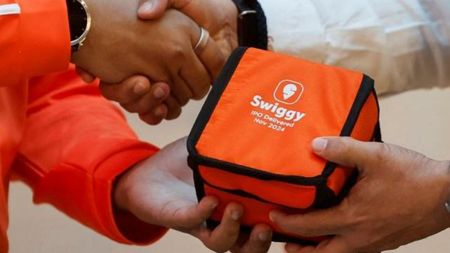
On Wednesday, shares of Swiggy ended with a premium of nearly 17 per cent against the issue price of Rs 390.
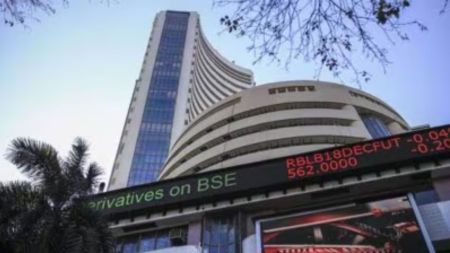
This (FPI sell-off) was primarily on account of expensive valuations in India, reallocation of funds to China, and optimism about US markets, according to Vineet Sachdeva.
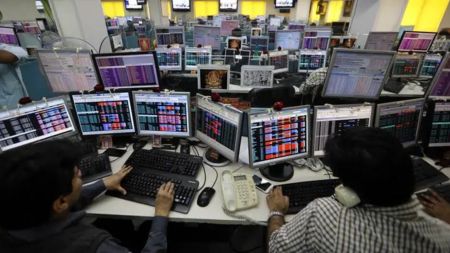
Lukewarm corporate earnings and massive foreign outflows leading to market weakness.
Foreign investors have sold $14 bn of Indian stocks over the last 32 sessions through Tuesday, as they move to China after Beijing's stimulus measures.
Axis Bank, Adani Ports, Nestle, Reliance Industries, Tata Steel and IndusInd Bank were also among the laggards.
Market analysts said unabated foreign fund outflows and mixed global cues further dented investor sentiments.
Gains in IT companies’ stocks was a result of massive buying after Donald Trump defeated Kamala Harris to return to the White House as the 47th President.
The 30-share BSE Sensex gained 711.53 points or 0.9 per cent to 80,188.16. The broader Nifty rose 223.90, or 0.92 per cent, to 24, 437.2. The Nifty IT index surged 3.42 per cent in the afternoon trades.
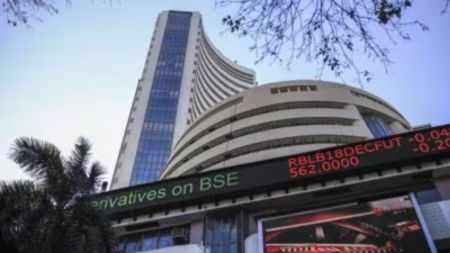
nalysts said a bearish sentiment prevailed in the market due to concerns over sluggish corporate commentary and potential earnings cuts.

The Sensex lost 5.82 per cent in October due to heavy selling by foreign investors.

The growth reflects the resurgence of demand in the Indian jewellery market, fuelled by robust consumer sentiment and a two-day Dhanteras muhurat that allowed a larger window for buyers.
Global shares mostly declined Thursday as investors grappled with uncertainty ahead of the US elections next Tuesday.
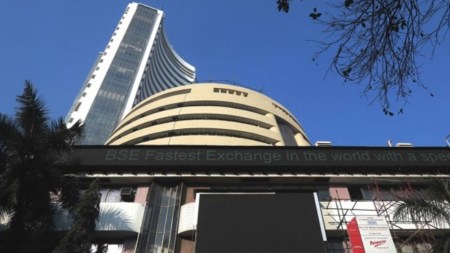
Meanwhile, Indian equity markets experienced a significant rally during Samvat 2080, with the Nifty rising approximately 25 per cent despite FPI withdrawals.

The special live trading session will be held on Friday, November 1, according to a statement released by NSE.

Foreign institutional investors (FIIs) were net sellers in the capital markets on Tuesday, as they offloaded shares worth Rs 548.69 crore, according to exchange data.
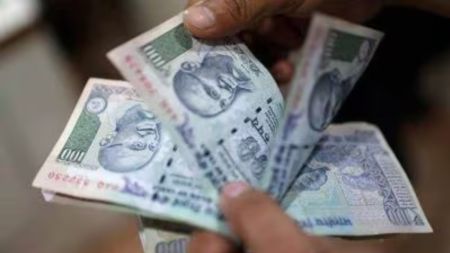
On the domestic equity market front, Sensex advanced 209.10 points, or 0.26 per cent, to 79,611.39 points.
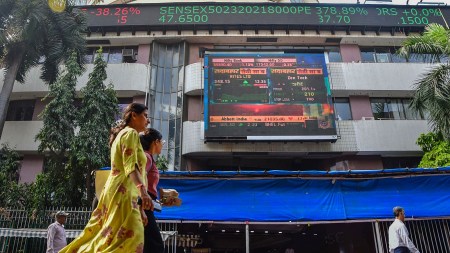
Mutual funds have been getting good inflows in their equity schemes with investors remaining committed to their systematic investment plans — they invested a record Rs 24,500 crore through SIPs in September.
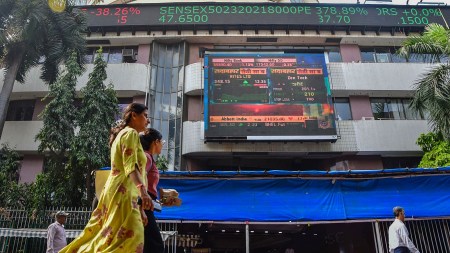
The Sensex closed below the 80,000 mark for the first time in two-and-a-half months and the Nifty 50 lost 218 points to close at 24,180.
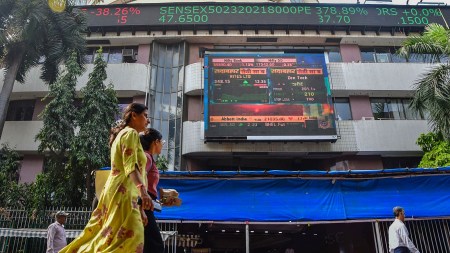
The BSE’s 30-share Sensex opened at 79,921.13, down 299.59 points, or 0.37 per cent, compared to the previous close of 80,220.72. This the first time since August 16, that the index has opened below the 80,000-level.

The automaker's shares opened at Rs 1,931 apiece on the BSE.
According to RBI data released on Friday, India's forex reserves declined by USD 10.746 billion to USD 690.43 billion for the week ended October 11.
HDFC Bank will offload about Rs 10,000 crore worth stake in the proposed IPO.
The rupee dropped to 84.07 and was last quoted at 84.0425 as of 12:20 p.m. IST. The currency's decline past the 84 handle is significant as the Reserve Bank of India had been defending that level for over two months.
While the outlook for Indian markets remains positive, a moderation in earnings could bring down inflated valuations and temper investor expectations, Yogesh Patil, chief investment officer of equity at LIC Mutual Fund AMC said.
Foreign Institutional Investors (FIIs) were net sellers in the capital markets on Friday, offloading shares worth Rs 9,896.95 crore on a net basis in the cash segment, according to exchange data.