It was a rare day for us kids, that sultry Saturday evening of April 1986. Forget dividing ourselves in two teams for our usual tennis-ball cricket game, we didn’t even feel like planting the stumps. About 24 hours back, Javed Miandad had a last ball six at Sharjah and the trauma had drained our energies.
Excuse or explanation failed us and the biggest heartbreak of our young lives was way too complex to deal with. That’s when one of us repeated what he had heard at home. “My father said, we can never beat them on a Friday,” said a subdued voice. The impasse was over. Finally, we had an excuse, and an explanation too, that helped us to come to terms with India’s loss. The “Bad Friday” logic suited us and there were slow, wise nods all around.

Suddenly, Chetan Sharma had sympathy as now it was fate that was burdened with the ignominy of bowling a full toss. “Poor Sharma, he was merely attempting to bowl a yorker,” we concluded.
In hindsight, that was our first encounter with cricket’s uncontrollables. Worse, that was also when cricketing communalism silently seeped into our immature minds for the first time. Unseen and unfelt by us, objectivity and cricketing commonsense exited with this new overbearing arrival.
Miandad’s quick reflexes and his unflappable temperament were now seen as incidental happenings in the pro-Pakistan designs that we believed the Maker had penned for all Fridays. Heavy emotional investment in India vs Pakistan games and the juvenile interpretation of patriotism had taken a toll on us. The sports fan in us died. With time, he was to take a rebirth within us but not before we had missed several memorable sporting spectacles and failed to acknowledge or appreciate many great individual cricketing feats.
Getting up to switch off the television with Sachin Tendulkar’s dismissal and closing one’s eyes during a stunning spell by a hostile pacer from across the border were rituals strictly followed on big India-Pakistan match days.
Many fellow cricket crazies became mental wrecks. For them, the bat-and-ball skills became irrelevant as they started believing that match fortunes fluctuated by keeping one’s fingers crossed. Some even took great pains to convince others that it was the colour of their garments that had influenced India’s win.
Those were the Sharjah days during the illogical 1980s when absurdities were part of the whole cricketing experience. That was the time when most wanted criminals sat in VVIP boxes with their families, sub-standard commentators were seen to be entertaining and the word shady wasn’t just used to describe the comfortable stands under those desert canopies.
Story continues below this ad
But something changed for us rabid and partisan Indian supporters during the 1992 World Cup. India was to exit early but the supreme Channel 9 coverage was way too entertaining for us Doordarshan addicts to turn our backs on the action from
Australia and New Zealand. That’s when we actually saw Pakistan without bias. That’s when we actually made an attempt to know our neighbours. Not distracted by prayer or superstition, we sat wide-eyed to watch those amazing men in green.
They were a very skilful bunch led by a skipper whose walk on the field was similar to the gait that the Big Cats in African jungles flaunt when the National Geographic men pan their cameras on their pride.
There was a teenaged batting prodigy whose limited English vocabulary didn’t include the word pressure. A short and stodgy young leg-spinner with magical fingers who turned veteran batsmen into fumbling novices.
A couple of pacers with speed, guile and skills had a habit of shattering stumps with dream balls. Imran Khan led a team that had several show stoppers like Inzamam-ul Haq, Mushtaq Ahmed, Wasim Akram and Aaqib Javed.
Story continues below this ad
It wasn’t a tough call when the super-entertaining Pakistan bunch played the bland English unit in the final. As Imran lifted the spherical crystal trophy we saw cricket in a new light.
The cobwebs had cleared, our neighbours were suddenly the cool guys. The transformation from a fanatical India fan to a more mature cricket follower took time, but it was a change for the better.
The mind is at peace, the brain works logically and even in these days of mad frenzy the sanity is intact. Having experienced the edgy life on the other side, I can vouch that the present state of semi-neutrality with a certain soft-corner for India is pleasant. I have availed the power to smirk and walk off with a smile when some Shahid Afridi vs Yuvraj Singh kind of debate ceases to be a cricket discussion and dissolves into ugly rhetoric. Since the game is always the winner, you can never be a sore loser.
After appreciating a classic Tendulkar cover drive, in case an Umar Gul in-cutter makes way between the Indian opener’s bat and pad, he too deserves at least a few claps. And if Zaheer Khan loses the race to be the leading wicket-taker to Afridi, it would not be the end of the world. Zaheer and Afridi have done enough to be judged by their showing in one tournament.
The idea here isn’t about being saintly, but it is the best way to deal with the war references and attempts to turn a cricket game into a gladiatorial duel. With the rulers of the two nations present in the stands, Mohali on Wednesday will have a perfect coliseum feel to it.
Story continues below this ad
It is a challenge to cut out clichés and stereotypical sentiments from an Indo-Pak cricketing contest. But in case one achieves that blissful higher plane of cricketing neutrality, watching two sides with unique and outstanding skill sets would be a serene experience, and not necessarily a nerve-jangling ordeal.
(This article was originally published on March 30, 2011)


 7 min read


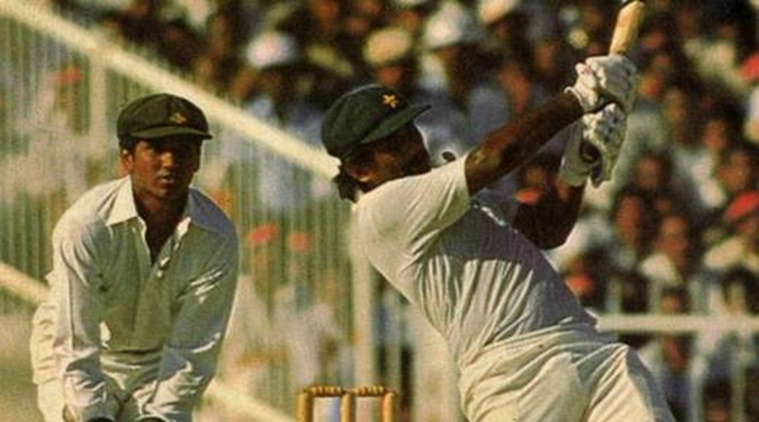 Javed Miandad hit the famous last-ball six in Sharjah. (Source: Pakistan Cricket Twitter)