4 min read
Stay updated with the latest - Click here to follow us on Instagram
© IE Online Media Services Pvt Ltd



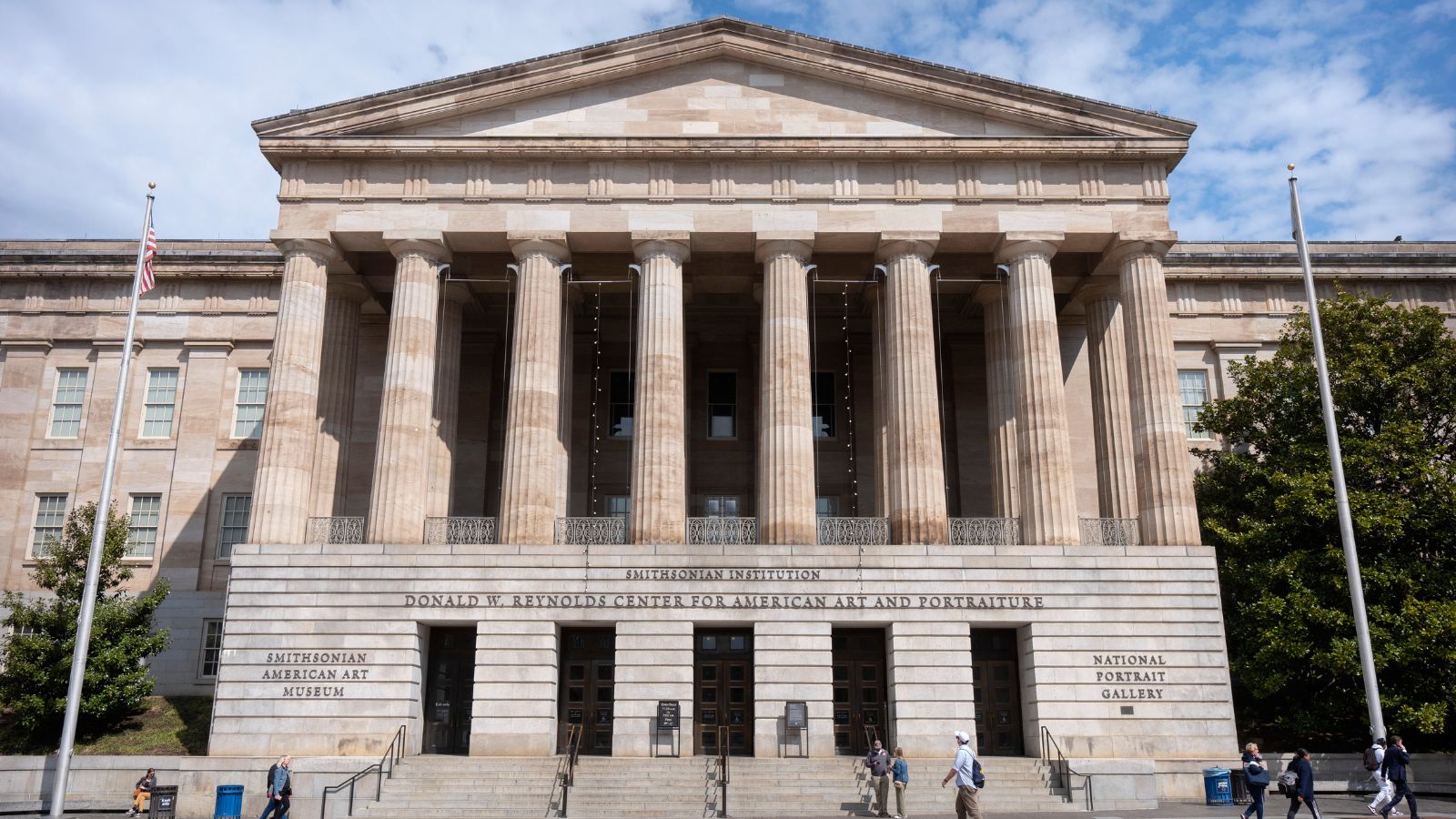 The Donald W. Reynolds Center for American Art and Portraiture, home of the National Portrait Gallery and the Smithsonian American Art Museum, Washington. (AP photo)
US President Donald Trump’s latest executive order, ‘Restoring Truth and Sanity to American History’, has drawn sharp criticism for targeting the Smithsonian Institution. Trump alleges that the institution has been influenced by “a divisive, race-centred ideology”, while critics argue the order is an attempt to whitewash American history. But what actually is the Smithsonian?
With an annual budget exceeding $1 billion, the Smithsonian Institution is the world’s largest museum, education, and research complex. Established in 1846 through a bequest from British scientist James Smithson, its mission is “the increase and diffusion of knowledge”.
The institution operates renowned cultural centres such as the National Air and Space Museum, the National Portrait Gallery, and the National Museum of African American History and Culture (NMAAHC). Around 60% of its funding comes from the federal government, with the rest from private contributions and trust funds.
In his executive order, Trump claims that the National Museum of African American History and Culture teaches that “hard work”,”individualism”, and “the nuclear family” are aspects of “White culture”.
He also criticises an upcoming exhibit at the American Women’s History Museum showcasing trans athletes’ achievements and an American Art Museum exhibit portraying race as a social construct rather than a biological reality.
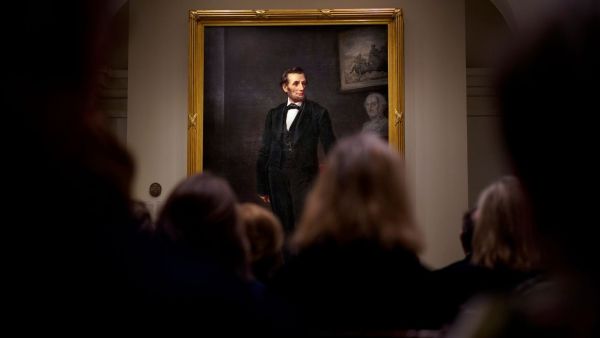 People gather for a ribbon cutting ceremony at the Smithsonian’s National Portrait Gallery to announce the installation of a life-size painting of President Abraham Lincoln. (AP photo)
The order directs Vice President JD Vance to ensure no federal funding goes to exhibits or programmes that “degrade shared American values” or “divide Americans based on race”.
During his presidency, Trump visited the NMAAHC in 2017. Guided by Lonnie Bunch, now the Smithsonian’s secretary, Trump praised the museum for honouring African American contributions to American heritage, saying, “I’m deeply proud that we now have a museum that honours the millions of African American men and women who built our national heritage.”
Holly Brewer, an American history professor at the University of Maryland, argued that the order undermines the study of history by prohibiting essential discussions. “You’re not allowed to ask how societies have used race to establish and maintain power, even though race was explicit in so many laws. I don’t know how you can study history while being barred from asking questions like that.”
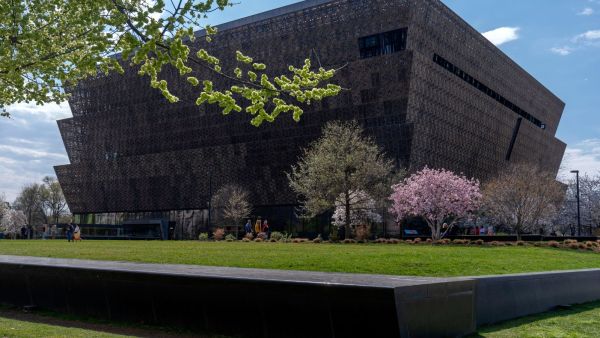 The National Museum of African American History and Culture on the National Mall, Washington. (AP photo)
Bryan Stevenson, founder of the Equal Justice Initiative, called the order a “troubling fiction”.
In a statement, Margaret Huang, CEO of the Southern Poverty Law Center, reaffirmed the importance of inclusive history: “Black history is US history. Women’s history is US history. This country’s history is ugly and beautiful. And each historic struggle for civil rights has advanced our movement toward a truly inclusive, multiracial democracy.”
Trump’s targeting of the Smithsonian is part of a larger effort against cultural institutions he claims have been overtaken by “woke” ideology. The Kennedy Center, the Institute of Museum and Library Services, and media outlets such as Voice of America and PBS are also under scrutiny.
(With inputs from AP)
Stay updated with the latest - Click here to follow us on Instagram