6 min read
Stay updated with the latest - Click here to follow us on Instagram
© IE Online Media Services Pvt Ltd



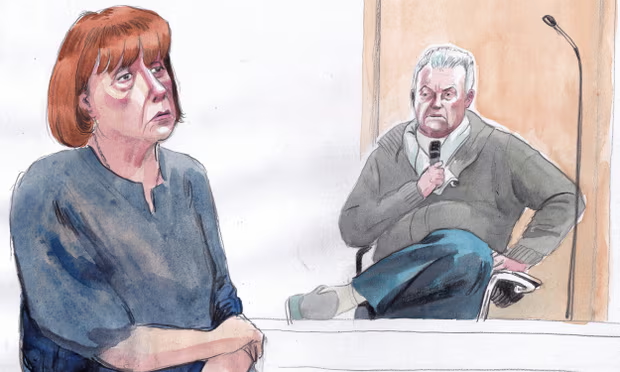 A courtroom sketch of Gisèle Pelicot and her ex-husband Dominique Pelicot during the trial in Avignon. (AP)
When Kate sat down one evening for what she thought would be an ordinary talk with her husband, she never imagined the words that would follow. Sitting at their dinner table, he leaned forward and said, “I have been raping you. I’ve been sedating you and taking photographs of you for years.”
In the kitchen of their suburban home in the UK, Kate (not her real name) felt her world shatter. He spoke so casually she later recalled to the BBC, as though he was asking, “We’re going to have spaghetti bolognese tomorrow for dinner, is it all right if you pick up the bread?”
For years, she sleepwalked and had unexplained mornings when she woke to find him having sex with her, acts she could never consent to while unconscious. He apologised each time, and Kate, manipulated by his remorse even helped him seek psychiatric care. She had no idea he was spiking her tea with prescription sedatives to carry out his assaults.
Her body soon began to betray her. Panic attacks struck without warning, her weight plummeted, and a sense of dissociation clouded each day. It was only when she confided in her sister that action finally followed.
Their mother called the police, but Kate was hesitant. “There was a grief. Not just for me, but for the children. Their dad would never be who he was,” she said.
Six months later, Kate’s determination hardened. Psychiatric notes and testimony from Narcotics Anonymous and church friends revealed confessions he’d made about drugging his wife to rape her.
Initially, the Crown Prosecution Service declined to charge him and only after Kate demanded a review did prosecutors admit their error. In 2022, a jury convicted him of rape, sexual assault by penetration, and administering a substance with intent, handing down an 11-year sentence, five years after Kate’s ex-husband had made his confession. Today, Kate lives with PTSD, a neurological disorder born of her ordeal, but she has reclaimed her voice.
Thousands of kilometres away, in a sunlit Provençal village, retired grandmother Gisèle Pelicot believed her marriage of six decades was untouchable. She tended her garden, cooked large dinners, and swam in her small pool unaware that her own husband, Dominique, a self-proclaimed family man who took his grandchildren to football matches on Sunday, maintained a dark secret.
“You were a caring, attentive husband, and I never doubted you,” she would later say at trial, “we shared laughter and tears,” she added, her voice breaking.
Her abuse came to light only after Dominique was arrested in 2020 for filming women without consent. What followed stunned France: police found over 20,000 photos and videos of Dominique drugging Gisèle and facilitating her rape by more than 70 men. He labelled the video folder simply, “Abuse.”
Dominique and more than 50 co-defendants—neighbours, relatives, and strangers brought under false pretences—stood trial in Aix-en-Provence in 2024.
Amidst devastating circumstances Gisèle refused to hide. She sat in the public gallery, sunglasses shielding her gaze, declaring that anonymity would have been as good as silence.
Over weeks of testimony, the scale of betrayal became clear. Men summoned by Dominique, who promised them therapeutic relief for his “ailing” wife, claimed they believed they had consent. When Dominique spoke from the dock, he offered remorse without denial saying, “I am a rapist, like the others in this room.”
Convicted of rape and sexual assault, the men received sentences ranging from six to twelve years. In the village streets, murals of Gisèle appeared near the town hall, and banners unfurled from Avignon’s ramparts reading ‘Merci Gisèle.’ Thousands marched, some clutching knitting needles as symbols of domestic strength. Her lawyer, Antoine Camus, told TIME, “This is the first time in France you have deep thinking on this subject. I believe there will be a before and after.”
Yet, Kate and Gisèle stand among millions whose suffering remains hidden. Cross-culturally, shame and guilt anchor victims within marriages, fearful of divorce, financial ruin, or social exile. Raquel Kennedy Bergen of St. Joseph’s University notes that victims often remain silent to preserve family stability. In France, just 20 per cent of rape survivors file charges, and of those, 94 per cent end without trial. Worldwide, one in three women experience physical or sexual violence in their lifetime, according to the WHO.
Legal systems can retraumatise. In New York, former governor Andrew Cuomo’s sexual harassment lawsuit collapsed when his team’s invasive demands for medical and therapy records threatened to humiliate his accuser. Fictional portrayals, like the controversial non-consensual scene in Netflix’s Bridgerton, reflect social confusion about marital consent, weaving romance and coercion in a way that blurs reality.
In India, Section 375 of the Bharatiya Nyaya Sanhita excludes husbands from rape charges, with the government arguing in 2024 that labelling spousal abuse as rape would be “excessively harsh.” The UK outlawed marital rape in 1991 and today over 100 countries criminalise it, leaving India among roughly 30 holdouts including Pakistan, Afghanistan and Saudi Arabia.
United Nations Population Fund data shows two-thirds of married Indian women face physical or sexual violence. Domestic violence also carries a lethal toll. A study of North Indian pregnant women revealed that women exposed to abuse are 2.59 times more likely to suffer perinatal or neonatal death.
Many campaign for reform, but progress is slow.
England and Wales are drafting specific spiking offenses carrying up to ten years in jail; France’s parliament debates shifting its rape definition to centre on consent; Indian activists continue to challenge marital exemptions. But laws alone cannot break the silence.
In the kitchens and courtyards where trust was betrayed, Kate and Gisèle have reclaimed their stories. They have shown that when the sanctuary of home becomes a site of violation, survival demands more than laws – it demands solidarity, empathy, and an unwavering belief that no call for help should ever go unanswered.
Stay updated with the latest - Click here to follow us on Instagram