4 min read
Stay updated with the latest - Click here to follow us on Instagram
© IE Online Media Services Pvt Ltd



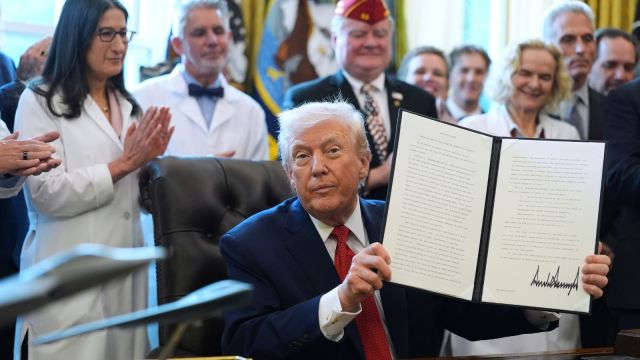 Marijuana will still remain illegal at the federal level and subject to a patchwork of state and local laws across the country, Trump said. (AP)
US President Donald Trump on Thursday signed an order directing the reclassification of marijuana, loosening decades-old federal regulations that treated the drug as among the most dangerous substances.
The order instructs the attorney general to move quickly on reclassifying marijuana, marking one of the most significant shifts in US drug policy in decades. The move could reshape the cannabis industry, unlock billions of dollars in research funding, and open doors long closed to banks and investors.
Once implemented, the psychoactive plant would be listed alongside drugs such as common painkillers, ketamine and testosterone, categorised as less dangerous substances.
President Donald J. Trump signs an Executive Order rescheduling marijuana from Schedule I to Schedule III — recognizing legitimate medical uses and expanding medical marijuana and cannabidiol research to better support patients and doctors. pic.twitter.com/7NpPaLbNTl
— The White House (@WhiteHouse) December 18, 2025
The Senate’s Democratic leader, Chuck Schumer, welcomed the move, while dozens of lawmakers from Trump’s own Republican Party criticised the decision. Industry experts said congressional action would still be required to create stable, long-term regulation.
Marijuana will still remain illegal at the federal level and subject to a patchwork of state and local laws across the country, Trump said. “We have people begging for me to do this, people that are in great pain for decades,” Trump told reporters at the White House.
However, he added that controlled substances are risky and that experimentation did not interest him. “I don’t want it, okay. I’m not going to be taking it. But a lot of people do want it. A lot of people need it,” Reuters reported.
Senior administration officials said the primary purpose of the order was to expand medical research into marijuana and related products to better understand their risks and treatment potential. The Centers for Medicare and Medicaid Services plans to allow some beneficiaries to use hemp-derived CBD products as early as April.
A majority of US states have approved cannabis for medical use in recent years, and nearly 24 states have legalised recreational use. However, since 1971, cannabis has been classified as a Schedule I narcotic, meaning it has no accepted medical use and a high potential for abuse, the BBC reported.
A group of 22 Republican senators sent an open letter to the President, arguing that increased marijuana use would mean the US “cannot re-industrialise America”, the BBC reported.
The senators cited ongoing concerns about the health impacts of cannabis, pointing to research that links its use to impaired judgement and lack of concentration. “In light of the documented dangers of marijuana, facilitating the growth of the marijuana industry is at odds with growing our economy and encouraging healthy lifestyles for Americans,” the letter said.
In a separate letter sent to Attorney General Pam Bondi in August, nine Republican representatives said that “no adequate science or data” exists to justify reclassifying marijuana. “Marijuana, while different from heroin, still has the potential for abuse and has no scientifically proven medical value,” the letter stated. “Rescheduling marijuana would not only be objectively wrong, but would also imply to our children that marijuana is safe. That couldn’t be further from the truth,” the BBC reported.
Despite the opposition, public opinion polls show that a majority of Americans support legalising marijuana. A Gallup poll released in November found that 64 per cent of Americans believe marijuana should be legal, though support has declined slightly due to a 13-point drop among Republicans.
Following the announcement, shares of cannabis-related companies initially gained but later declined. US-listed shares of Tilray dropped 4.2 per cent, Aurora Cannabis fell 3.4 per cent, SNDL slipped nearly 1.5 per cent, and Canopy Growth sank about 12 per cent by Thursday’s close.
Earlier in the day, the stocks had gained between 6 per cent and 12 per cent in afternoon trading before reversing course.
Stay updated with the latest - Click here to follow us on Instagram