3 min read
Stay updated with the latest - Click here to follow us on Instagram

Journalism of Courage



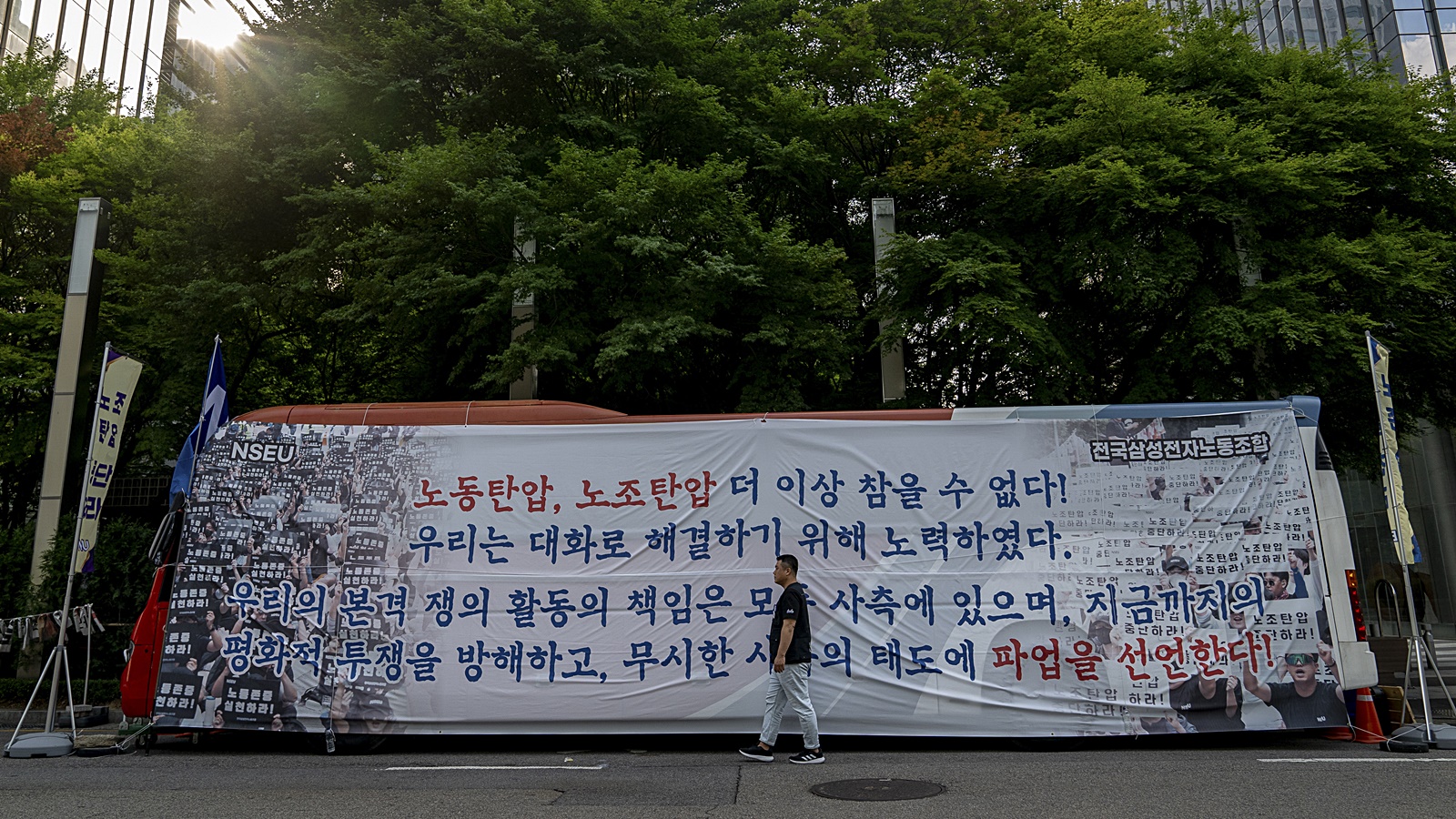 Lee Hyun Kuk, vice president of the Nationwide Samsung Electronics Union, the largest of five labor groups at the company, with a bus carrying the union's protest slogan outside Samsung's offices near the Gangnam district in Seoul, South Korea. The slogan reads "Labor repression, union repression, we won't take it anymore!" (Photo: The New York Times)
For the first time, workers at Samsung, the conglomerate that dominates the South Korean economy, went on strike Friday.
The action comes as Samsung Electronics fights to regain its edge in the business of making memory chips, a critical component in the advanced artificial intelligence systems that are reshaping long-standing rivalries among global technology companies.
Workers in Samsung’s chip division were expected to make up the majority of those who will not report to work Friday for a planned one-day strike. Union representatives said that multiple rounds of negotiations over wage increases and bonuses had broken down.
“The company doesn’t value the union as a negotiating partner,” said Lee Hyun Kuk, vice president of the Nationwide Samsung Electronics Union, the largest among five labor groups at the company. It says it represents 28,000 members, about one-fifth of Samsung’s global workforce, and that nearly 75% voted in favor of a strike in April.
A Samsung Electronics representative said the company was trying to reach an agreement with the union but declined to comment further on the strike.
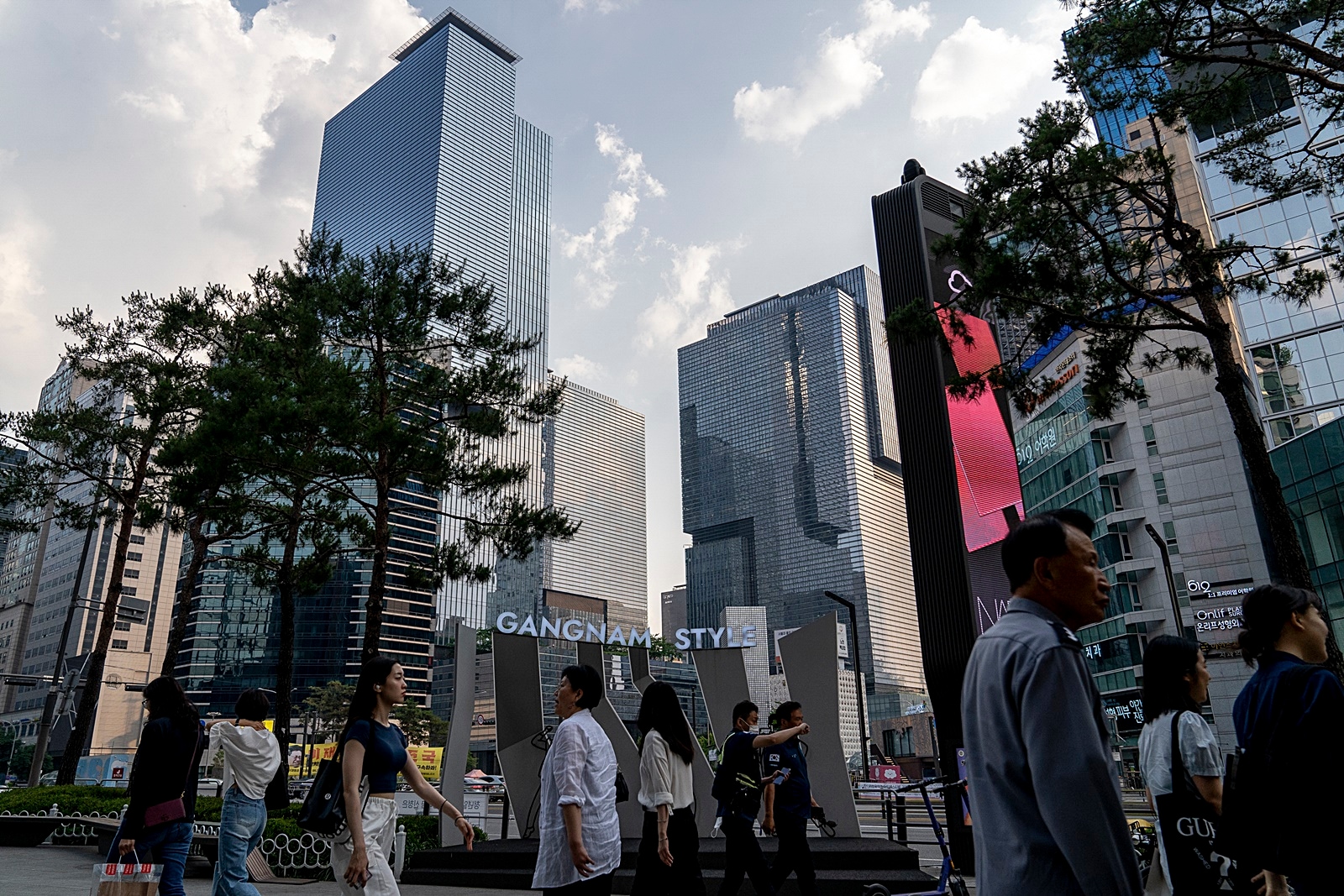 People pass Samsung’s offices near the Gangnam district in Seoul, South Korea. The South Korean tech giant is at odds with some of its employees as it is trying to reassure investors that its memory chip business can meet demand. (Photo: The New York Times)
The work stoppage was not expected to affect Samsung’s manufacturing output. It was timed to fall between a national holiday and the weekend, on a day that many people in South Korea planned to take as vacation. It was not clear how many workers would participate in the action. At a small rally in front of Samsung’s headquarters in Seoul on Friday morning, workers gathered as organizers played protest songs over loudspeakers.
Still, it was awkward timing for the company, which has been trying to reassure clients and investors that its chip business can meet the demands of the artificial intelligence boom.
Samsung has been the world’s largest maker of memory chips for years and reported about $1.4 billion in profit from its chip division in the first quarter of this year.
But that comes after four straight quarters of losses. Samsung ended last year with its weakest earnings in more than a decade.
Heading into the year, its local rival, SK Hynix, claimed the top spot in the market for the next generation, high-bandwidth memory chips just as demand for them took off. Companies developing artificial intelligence systems like Nvidia scrambled to buy them. Analysts say that SK Hynix anticipated this demand earlier than Samsung did.
Stay updated with the latest - Click here to follow us on Instagram