4 min read
Stay updated with the latest - Click here to follow us on Instagram
© IE Online Media Services Pvt Ltd



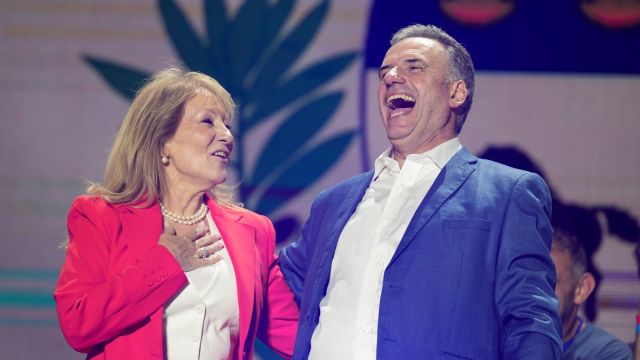 Yamandu Orsi, candidate for the Broad Front (Frente Amplio), and running mate Carolina Cosse, left, celebrate their victory in the presidential run-off election in Montevideo, Uruguay. (AP)
In a tightly contested runoff election, left-wing opposition candidate Yamandú Orsi emerged victorious on Sunday, defeating the conservative governing coalition and bringing a shift in leadership to the South American nation. The victory marks another setback for incumbent parties across the globe in a year of transformative elections.
Álvaro Delgado, the centre-right ruling coalition’s candidate, conceded the race as the vote count neared completion. “With sadness, but without guilt, we can congratulate the winner,” Delgado told his supporters in Montevideo, as reported by Associated Press (AP).
Fireworks lit up the capital as Orsi, a 57-year-old former history teacher and two-time mayor representing the Broad Front coalition, addressed a jubilant crowd. “The nation of liberty, equality and fraternity has triumphed once more,” he said, pledging to unite Uruguay’s 3.4 million citizens. Acknowledging the narrow margin of victory, he added, “There are others in the country who feel differently today. We will need their help to build a better Uruguay.”
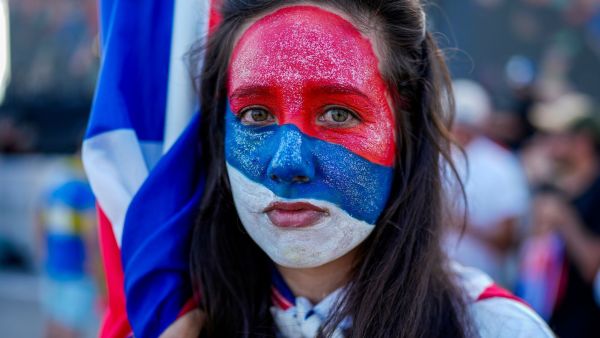 Claudia Noble stands outside the Broad Front’s (Frente Amplio) election night headquarters after polls closed for the presidential run-off election. (AP)
With nearly all votes counted, electoral authorities reported Orsi secured just over 49% of the vote compared to Delgado’s 46%, with the remainder casting blank ballots or abstaining. Turnout reached an impressive 90%, as Uruguay enforces compulsory voting.
While voter disinterest among younger citizens remained a challenge, Uruguay’s campaign season avoided the populist fervour seen elsewhere, such as in Argentina and the United States. Instead, Orsi’s moderate approach resonated after polls suggested a dead heat in the weeks leading up to the election.
Outgoing President Luis Lacalle Pou, who was barred from seeking consecutive terms, confirmed the result on social media: “I called Yamandú Orsi to congratulate him as President-elect of our country,” he wrote on platform X, adding that he was ready to facilitate a smooth transition.
Llamé a @OrsiYamandu para felicitarlo como Presidente electo de nuestro país y para ponerme a las órdenes y empezar la transición apenas lo entienda pertinente.
— Luis Lacalle Pou (@LuisLacallePou) November 25, 2024
Orsi’s victory reflects growing public dissatisfaction with post-pandemic economic challenges, a sentiment that has driven anti-incumbent votes globally. Despite this, Orsi’s platform is not radical. It echoes the Broad Front’s earlier tenure (2005–2020), blending market-friendly policies with social welfare programmes. Under its previous leadership, Uruguay achieved sustained economic growth and progressive reforms, including legalising abortion, same-sex marriage, and marijuana sales.
José “Pepe” Mujica, a former Marxist guerrilla and ex-President renowned for these reforms, offered support to Orsi despite his advanced age and recent cancer recovery. “This is no small feat,” Mujica said after casting his ballot, praising Uruguay’s political stability and respect for institutions.
Orsi has pledged targeted reforms, such as tax incentives to attract investment, revitalising agriculture, and modest social security changes to lower the retirement age. These plans fall short of the sweeping union demands rejected in October’s general election, where neither major candidate won outright.
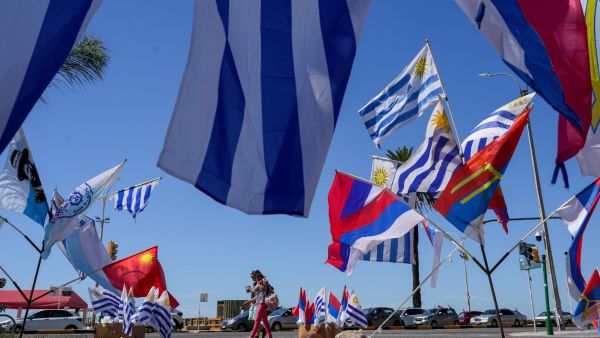 Pedestrians pass by Uruguay’s national flag and political party banners for sale on the day of the presidential run-off election in Montevideo, Uruguay, Sunday, Nov. 24, 2024.
The President-elect is also expected to re-evaluate a potential trade deal with China, which has caused friction within the Mercosur trading bloc.
Supporters like nurse Yeny Varone expressed hope for the future under Orsi’s leadership. “He’s my candidate, not just for me but for my children, who will have better working conditions and opportunities,” she said.
Delgado, 55, who campaigned on a continuation of Lacalle Pou’s pro-business policies, highlighted easing inflation and projected economic growth of 3.2% in 2024. However, frustration with slow wage growth and rising crime undercut his message, ultimately costing his coalition the presidency.
Orsi struck a conciliatory tone in his victory speech. “I will be a president who calls for dialogue and seeks to build an integrated society,” he said, promising to get straight to work. His administration will formally begin on 1 March 2025.
(with inputs from AP)
Stay updated with the latest - Click here to follow us on Instagram