9 min read
Stay updated with the latest - Click here to follow us on Instagram

Journalism of Courage



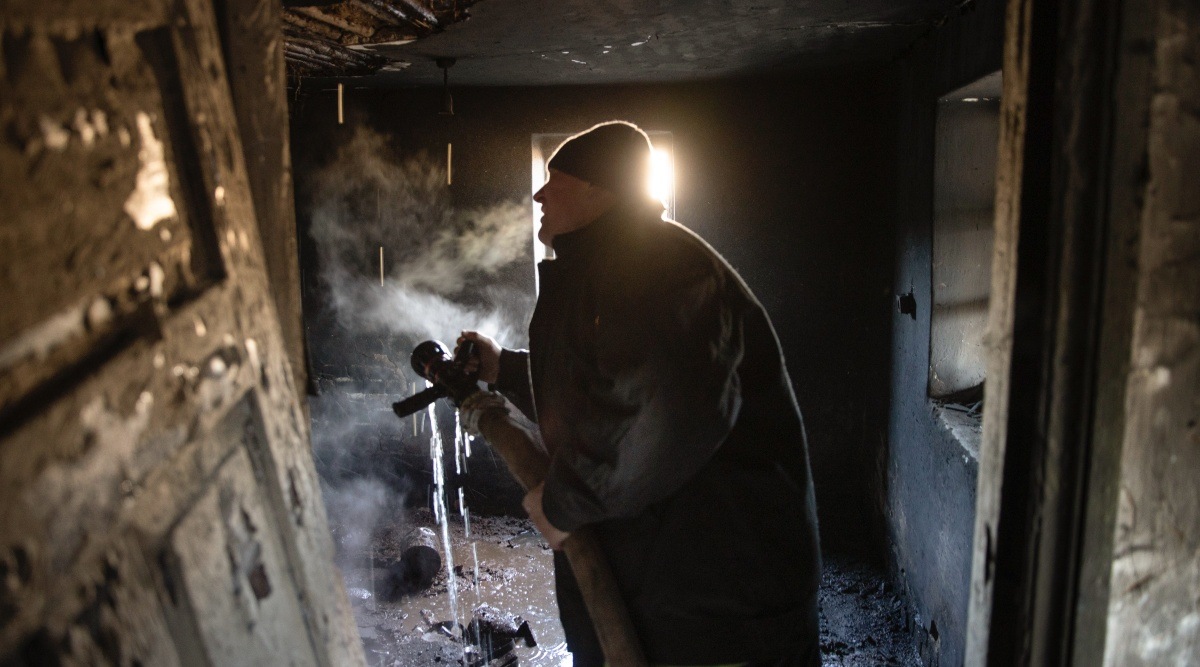 A firefighter from Emergency Service Department Number 21, the single working fire station in Lyman, Ukraine, extinguishing a fire in an abandoned home on Dec. 6, 2022.
Firefighters in Lyman, in Ukraine’s east, contend with land mines, freezing temperatures, damaged buildings, awful cell service and a lack of water. (Tyler Hicks/The New York Times)
A firefighter from Emergency Service Department Number 21, the single working fire station in Lyman, Ukraine, extinguishing a fire in an abandoned home on Dec. 6, 2022.
Firefighters in Lyman, in Ukraine’s east, contend with land mines, freezing temperatures, damaged buildings, awful cell service and a lack of water. (Tyler Hicks/The New York Times) Written by Natalia Yermak and Thomas Gibbons-Neff
LYMAN, Ukraine — In winter, during wartime, any number of obstacles can make life difficult for firefighters in Lyman.
Cell service is so bad in this eastern Ukrainian city that there’s a good chance an emergency call won’t go through at all. Water is sparse, leaving the city’s only aging firetruck with barely enough to fight a blaze. Some streets on its outskirts are impassable because of mines and unexploded munitions.
And then there are the windows.
After the war moved through Lyman like a months-long destructive wave, damaging and destroying neighbourhoods with explosive shells, it left thousands of blown-out windows. So the workers at Emergency Service Department No. 21, Lyman’s single working fire station, are often diverted to an arduous but important task: covering up destroyed windows and damaged roofs as winter sets in.
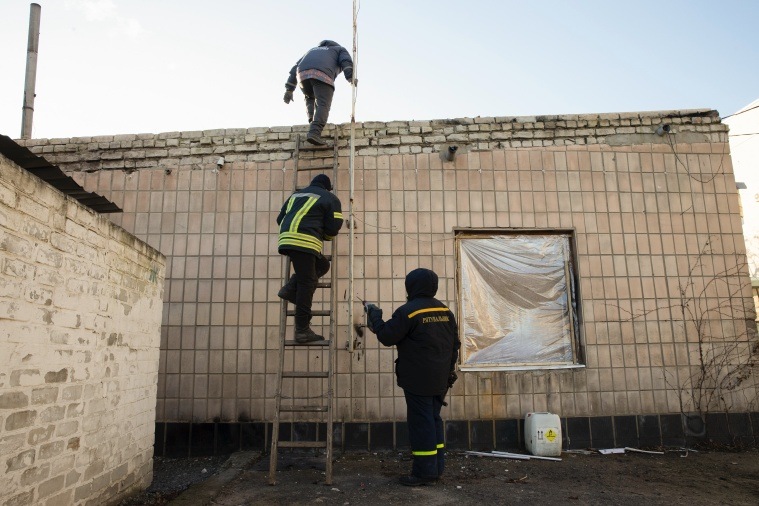 Firefighters from Emergency Service Department Number 21, the single working fire station in Lyman, Ukraine, work to cover up blown-out windows as cold weather grips the country, on Dec. 6, 2022. (Tyler Hicks/The New York Times)
“It had all started in the winter, and it has come to the winter again,” said Andriy Liakh, 33, an emergency official from a neighbouring town who is now working in Lyman. No more than 25% to 30% of the buildings in Lyman are totally beyond repair, he estimated, meaning there is a lot of work to be done to preserve the rest.
On the heels of intense bombardment early in the war, Russian occupation in the spring and summer, and Ukrainian liberation in the fall, the emergency department’s staff is slowly getting reacquainted with a radically different city. There are fewer resources and workers, and temperatures continue to plummet, making conditions extremely challenging.
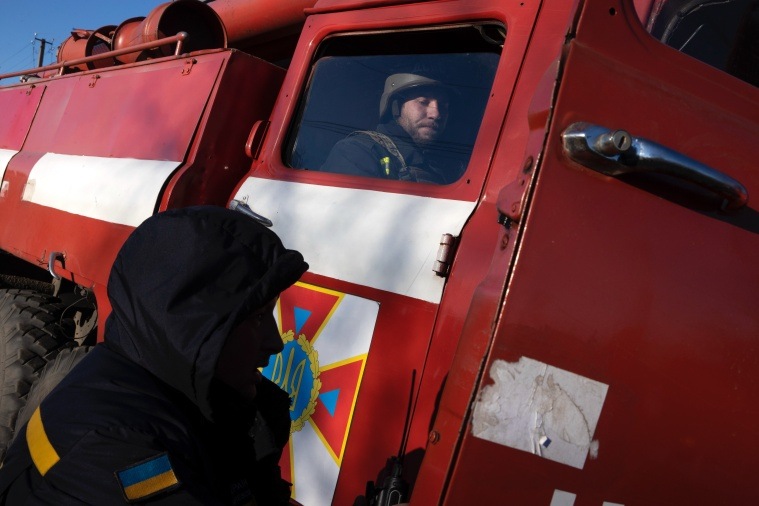 A firefighter from Emergency Service Department Number 21, the single working fire station in Lyman, Ukraine, in their lone remaining fire truck on Dec. 6, 2022. (Tyler Hicks/The New York Times)
This month, journalists from The New York Times spent a day with the firefighters from Station 21 as they repaired buildings and responded to a house fire in Lyman, offering a brief window into a Ukrainian city that sits between its destruction and, hopefully, reconstruction. The sound of shelling at the front line was not far off.
“We are adults; we understand our service, what’s required,” said Liakh, clean-shaven and tired.
As the war moves into the coldest months, winter has become a weapon of its own. Russia’s relentless strikes on Ukraine’s infrastructure have left thousands without power, freezing in basements and huddled around wood stoves. On Thursday, Moscow launched one of its largest attacks yet with a flurry of drones and cruise missiles that targeted the country’s energy grid in Kyiv and other major cities.
Near the front lines, in towns and cities that have been mostly without power for months, freezing temperatures are a part of life. Residents survive by hoarding wood, rationing generator fuel and bundling up. In the battlefield trenches, Ukrainian and Russian soldiers contend with frostbite, hypothermia and weeks of cold meals — constantly exposed to slick mud and knee-deep puddles on warmer days, and hard, frozen ground during the colder nights.
 Firefighters from Emergency Service Department Number 21, the single working fire station in Lyman, Ukraine, extinguish a fire in an abandoned home on Dec. 6, 2022. The blaze started when someone tried to light a damaged stove to keep warm. (Tyler Hicks/The New York Times)
The afternoon call for Station 21’s small crew this month came shortly before the cook finished preparing a hearty lunch of noodles and meat in an aging, Soviet-era field kitchen out back. A house was on fire in the city’s north. Lunch would have to wait.
It was miraculous that the station had received the emergency call at all. At around 11 that morning, the city’s cell towers were shut down as maintenance workers began their daily repair on Lyman’s power grid. The fire, which began around 1 p.m., was seen by a neighbour who had a few bars of cell signal.
But instead of reaching Lyman’s emergency dispatch number, the person contacted a nearby city’s dispatch, which then reached Station 21 by Starlink, a satellite internet service in wide use across Ukraine, especially in combat areas. The crew’s aging, red-and-white Soviet-model firetruck rumbled to the scene.
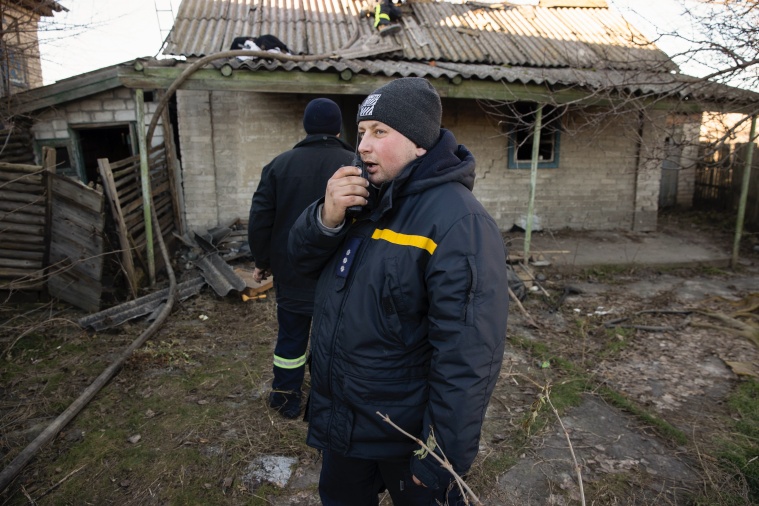
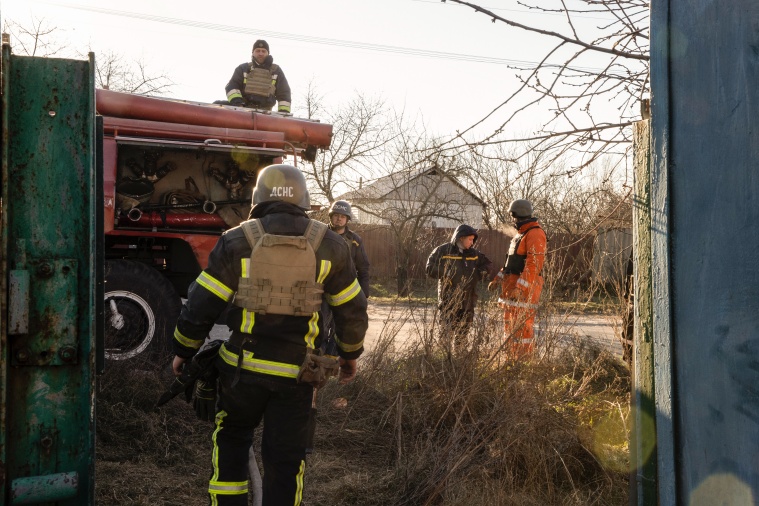 Firefighters from Emergency Service Department Number 21, the single working fire station in Lyman, Ukraine, respond to a fire in an abandoned home on Dec. 6, 2022. (Tyler Hicks/The New York Times)
When they arrived at the modest home, the fire was manageable. Clad in body armour — a reminder that the threat of shelling in Lyman remained — the firefighters moved to extinguish the blaze. The fire was small, so they didn’t run out of water this time.
“The house is abandoned; the owner went somewhere; and some homeless person stayed here overnight, heating the stove,” said Serhiy, 43, a tall and weathered safety inspector.
“The stove was ruined, but he was trying to get warm anyway,” he said, standing in the yard as his colleagues descended from the roof and rolled back the fire hose. “He kindled the fire and ran away. The neighbours saw it in time.”
With a broken window, a hole in the roof and some dilapidated walls, the house stood mostly intact. Several others on the street had suffered worse fates, reduced by shelling to piles of rubble or black husks. The neighbourhood had been ravaged in the fighting but was considered the less-damaged part of the city.
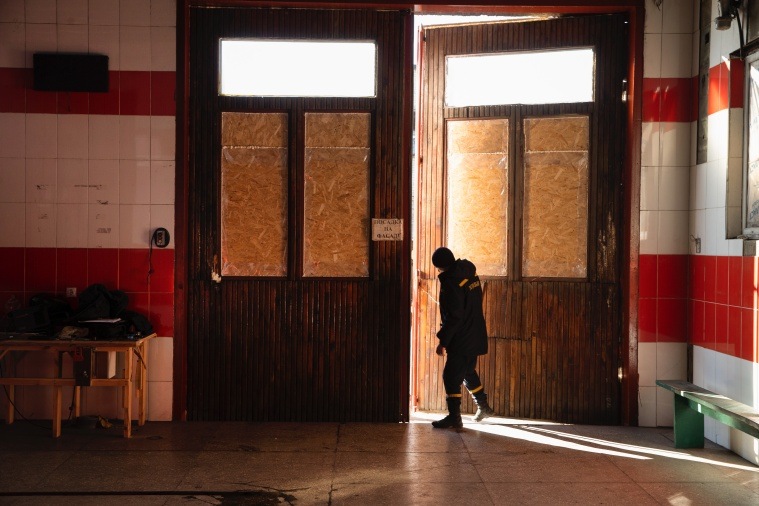 A firefighter from Emergency Service Department Number 21, the single working fire station in Lyman, Ukraine, on Dec. 6, 2022. Before the Russian occupation, Station 21 had newer vehicles and around 120 staff members. Now there are only about 50. (Tyler Hicks/The New York Times)
As the Russians advanced in spring, they showered the southern section of Lyman with artillery fire and missile strikes, turning the neighbourhood of multi-story houses into an apocalyptic ghost town. Hundreds of windows in the tall, off-white residential buildings bared their splintered glass teeth. A medical university building crumbled onto itself like a cardboard box hit by a fist, and one of the wings of the city hospital had a hole in the roof and a wall that was two floors deep.
Still, about 3,000 people from a prewar population of 24,000 remain in Lyman, calling the bombed-out set piece their home.
Winter is a hazardous time for fires, said Serhiy. Most are caused by makeshift heating systems people use to try to stay warm, he said, some in damaged houses.
Members of the Lyman Emergency Service, who left with the last evacuees before the Russian occupation in late May, were among the first people to return after Ukraine retook the city in early October. The Russians retreated along with the emergency response crew they had planted at Station 21, composed mostly of Russians but also apparently a few workers recruited from the Ukrainian crew.
During the occupation, the station’s garage bay was shelled, and an ambulance within it caught fire; the smoke turned the walls and ceiling black.
“As soon as I knew that Lyman was about to be liberated, I knew that we were going to be summoned,” said Liakh. Before the Russian occupation, Station 21 had newer vehicles and about 120 staff members. Now there are only about 50 workers, after some fled with the retreating Russians.
The divided loyalties among the close-knit emergency workers are rarely discussed, but those who returned after Lyman’s liberation likened those who stayed and worked for the Russians to traitors.
“It’s the same as if a Ukrainian soldier would go to the Russian army to serve against Ukraine,” Liakh said.
Like Serhiy, Liakh returned to Lyman without his family members, anticipating the challenges that awaited the residents of Lyman in winter. “I was ready for everything,” he added.
In a city as heavily damaged as Lyman, people’s lives have been focused on everyday survival for many months. Some of the challenges they face routinely have only recently dawned on people who just had their infrastructure destroyed.
“De-occupied territories close to the front line are prepared to winter better than the whole Ukraine,” said Serhiy Lipskyi, deputy head of the Emergency Service of the Lyman territorial community.
“People here knew that the winter was coming, and they would not have electricity or gas or heating — nothing,” he added.
Some residents moved from the bombed southern area to the houses of relatives or into abandoned homes in other parts of the city, hoping that it would be easier to survive there. Others lived as members of communes in the basements of multi-story buildings, formed when people spent months hiding underground from heavy shelling.
Kateryna, an older woman who manages some of the humanitarian aid flowing into the city from an abandoned kindergarten, moved from her apartment to the home of her mother-in-law so she could keep warm with a wood stove.
“We were told there is no heating in the apartments and there won’t be any,” she said. “It’s OK. We’ll survive. We’ll manage. We’ll break through.”
Stay updated with the latest - Click here to follow us on Instagram