4 min read
Stay updated with the latest - Click here to follow us on Instagram
© IE Online Media Services Pvt Ltd



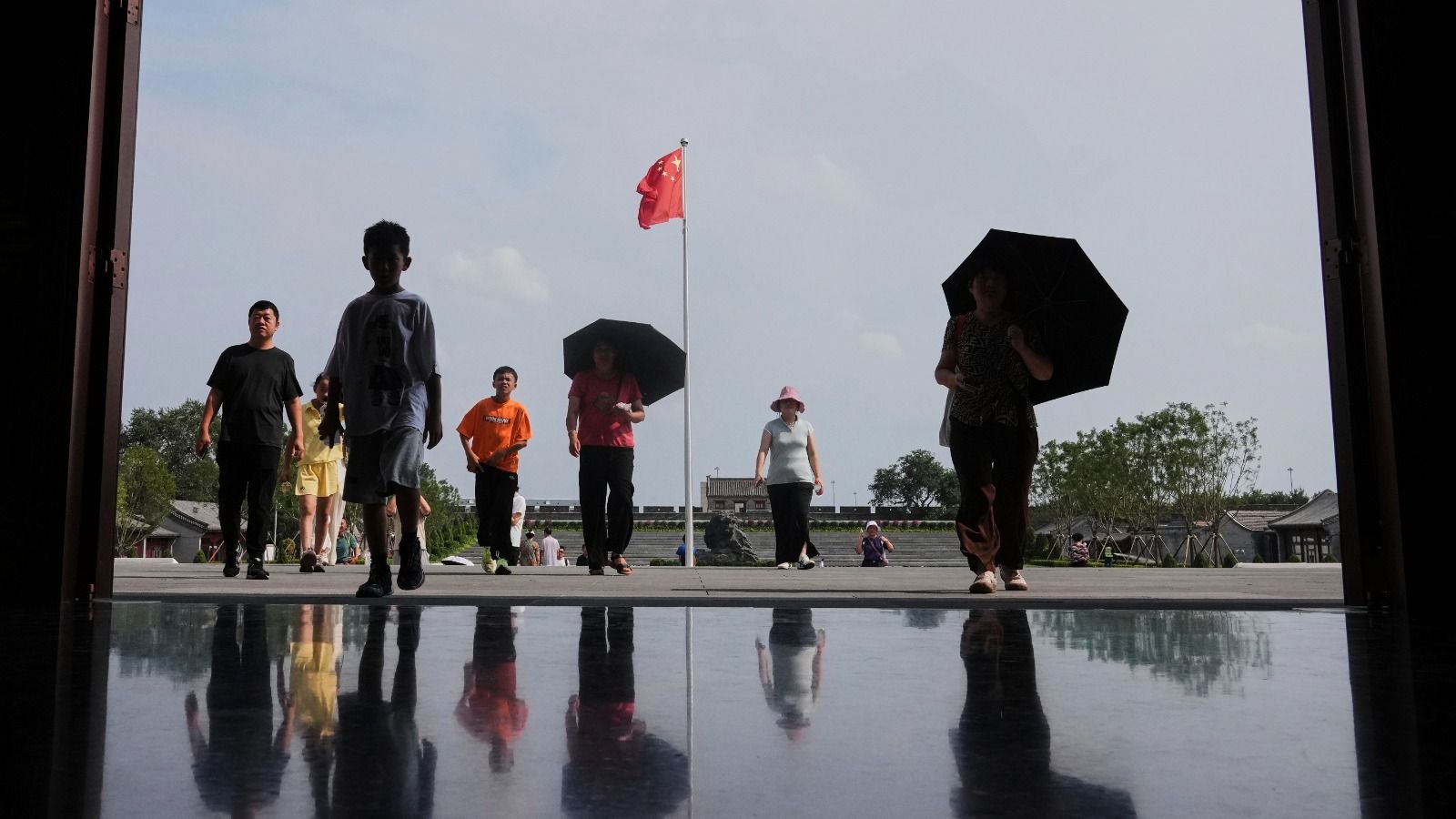 The unbearable heat is not unusual — it’s the snafu season, China’s hottest time of the year. What had caught people off guard, however, is the early arrival of the season this year. (AP)
As extreme heat engulfs eastern China, students are leaving their stifling dormitories in search of cooler environments. With temperatures soaring above 40°C (104°F), students are camping in hallways, supermarkets, and libraries—some even booking hotel stays for the comfort of air conditioning.
While hotels have become a refuge for many, the cost makes it a last resort. The BBC quoted a 20-year-old student from Changchun city as saying, “We sometimes go out to stay in hotels for the air-conditioning. There are always a few days in a year where it’s unbearably hot.”
The student added, “Checking into a hotel is a huge expense for us students.” On less desperate days, the student resorts to placing a bowl of ice cubes in front of a fan—his homemade air-conditioner, the BBC report added.
The unbearable heat is not unusual — it’s the snafu season, China’s hottest time of the year. What had caught people off guard, however, is the early arrival of the season this year.
According to the report, cities like Qingdao in Shandong Province have recorded temperatures up to 40.5°C, just shy of the city’s all-time high. Authorities in Qingdao warned that temperatures may exceed 40°C.
Concerns over the impact of the heatwave grew after a dormitory guard at the Qingdao University died in his room on Sunday. He was discovered in an “abnormal condition” and was pronounced dead by paramedics, with the cause under investigation.
Tributes flooded social media for the man, affectionately referred to by students as the dormitory “uncle” who cared for stray cats on campus. “The kittens don’t know that Uncle has gone far away. After today it met a lot of people, but never heard Uncle’s voice again,” BBC quoted a user who took to Weibo, a social media platform widely used in China.
The same day, a student from the university was hospitalised for heatstroke, a Reuters report said quoting Jimu News. The incidents have cast a harsh spotlight on campus facilities and staff living conditions.
Universities across Shandong Province, including Qingdao University and Yantai Nanshan University, have announced plans to install air-conditioning in dormitories. Some schools are allowing students to sleep overnight in libraries during renovation efforts, Reuters reported.
The situation has led to extraordinary measures across regions. In Jilin province, students were seen sleeping in tents in air-conditioned hallways. Others in Shandong took refuge in supermarkets, with video footage from Jimu News showing students sprawled on the floors to escape the heat.
The electricity demand has surged nationwide, with China’s power load reaching a record 1.47 billion kilowatts amid a spike in the usage of air-conditioners. Authorities said that more than a third of the power demand in eastern China was due to air conditioners.
This year’s heatwave is part of a broader trend of increasingly extreme weather in China. Scientists have tied these developments to global climate change. In 2022, China experienced its worst heatwave since 1961, with some regions suffering through a 79-day stretch of intense heat.
According to a 2023 report by The Lancet, quoted by Reuters, approximately 50,900 heat-related deaths occurred in China in 2022. The following year, Xinjiang recorded a scorching 52.5°C, the highest temperature ever noted in China.
Stay updated with the latest - Click here to follow us on Instagram