3 min read
Stay updated with the latest - Click here to follow us on Instagram

Journalism of Courage



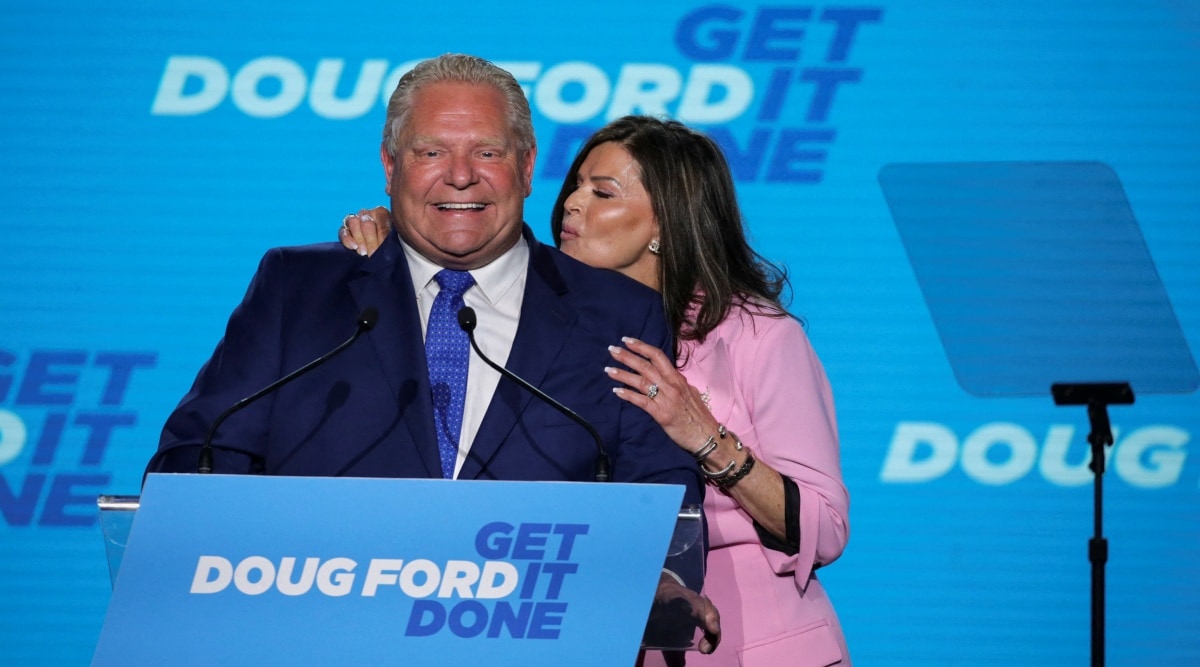 Ontario Premier Doug Ford, accompanied by his wife Karla, reacts at the podium during his Ontario PC Party provincial election night watch party at the Toronto Congress Centre in Etobicoke, Ontario, Canada. (REUTERS/Chris Helgren)
The Progressive Conservative party was projected to win re-election Thursday evening in Ontario, the country’s most populous province, the Canadian Broadcasting Corp said, handing a second term to premier Doug Ford.
The right-leaning Progressive Conservatives would win a majority of the provincial legislature’s 124 seats, CBC projected, shortly after the close of voting. The party held 67 in the last legislature.
The results are a victory for Ford, who weathered criticism over his handling of the coronavirus pandemic and the province’s strained health care system, but will retain power on the back of a promise to increase spending despite a massive existing debt load.
The projected outcome came quickly despite some election-day hiccups. Elections Ontario extended voting for up to two hours in some polls in 19 different electoral districts after delays to the start of voting.
Ford’s Progressive Conservatives swept to power in 2018 after 15 years of Liberal rule.
Ontario, home to just under 40% of Canada’s 38.2 million people, is Canada’s manufacturing heartland. It is also one of the world’s largest sub-sovereign borrowers, with publicly held debt currently standing at C$418.7 billion ($330.8 billion).
With inflation in Canada at a three-decade high, housing and cost-of-living issues drove the election campaign.
In a pre-election budget tabled in April, Ford promised billions of dollars of spending on infrastructure projects and outlined a tax credit for low-income earners, resulting in a higher budget deficit in the current fiscal year than the last.
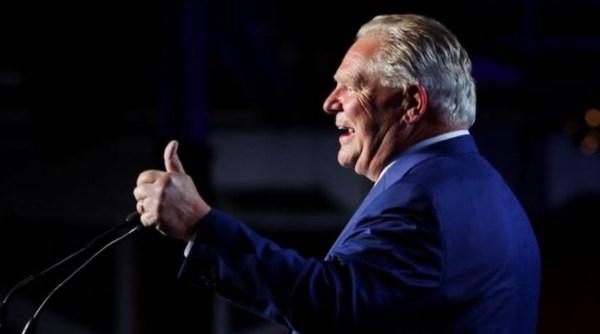 Ontario Premier Doug Ford gestures at his Ontario PC Party provincial election night watch party at the Toronto Congress Centre in Etobicoke, Ontario, Canada, June 2, 2022. (Reuters)
The budget also put forth a slower path back to balance than some analysts had expected.
With a debt-to-GDP ratio of 40.7%, Ontario’s debt load is higher than the next three most populous provinces and it pays more to borrow in the bond market.
Ford’s popularity plunged in 2020 amid accusations Ontario had bungled the Covid-19 epidemic.
But his fortunes revived this year, in part through some populist moves like eliminating license plate renewal fees and expanding a foreign buyer tax on homes.
The New Democrats’ leader Andrea Horwath campaigned on a promise to create annual speculation and vacancy tax on residential property.
The Liberals, led by Steven Del Duca, promised to reduce public transit fares while imposing a surtax on companies with annual profits exceeding C$1 billion.
Stay updated with the latest - Click here to follow us on Instagram