


Stay updated with the latest - Click here to follow us on Instagram
Tags:


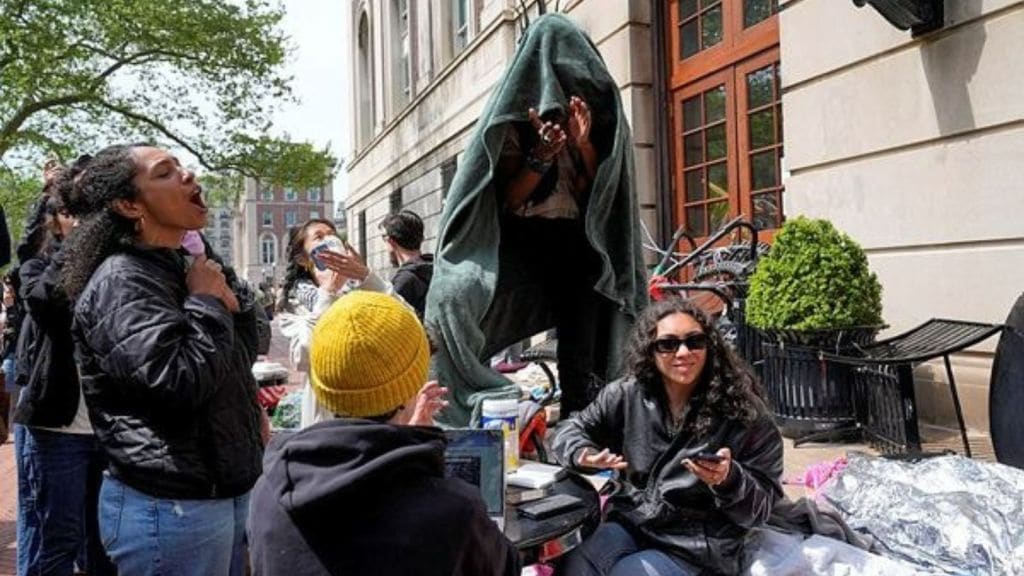
On the leafy campus of a Dutch-speaking university, students have for months been demanding that their institution break ties with Israeli academia over the war in the Gaza Strip.
Their campaign borrows extensively from the US campus protest playbook. The students have set up an encampment. They have staged daily demonstrations. And they have sometimes used slogans that many Jews view as a call for the elimination of Israel, like, “From the river to the sea, Palestine will be free.”

In the United States, the protests have taken place amid a hyper-polarized political environment, contentious relations between students and administrators, and acrimonious hearings in Congress. But in Belgium’s capital, the protest at Vrije Universiteit Brussel, or VUB, has been far more peaceful because of a unique combination of factors: a supportive political environment (Belgium is a vocal critic of Israel); a proactive rector; strict protest rules; and, crucially, a tiny campus Jewish community that has chosen not to confront protesters despite discomfort over some of the protests.
As a result, and as like-minded protests incited by the war have brought disorder and violence to campuses in the United States as well as in Europe, the students on the Brussels campus have taken pride not only in the success of their protest but also in its vibe.
“It’s really crazy to look at the United States and see what’s happening there,” Ruaa, a protester who has Palestinian roots, who said she did not want her full name used for security reasons.
The contrast between her campus’s setup and the protests the students have seen online and on social media has been stark, she said. In the United States, pro-Palestinian campaigns on college campuses have been amplified by widespread media coverage and a presidential election. There, campus confrontations have opened up a new line of attack for Republicans and forced President Joe Biden to directly address an issue that has divided his party.
The difference in Brussels, Ruaa said, was a reflection of the political context in Belgium. The Belgian government has been among the most outspoken critics of Israel’s conduct of its war in Gaza, and was among the first in the European Union to call for a cease-fire.

At VUB, students are tasked with safeguarding their encampment by enforcing a set of rules plastered on walls. Drugs and alcohol are prohibited, as are outsiders, violence, antisemitism and hate speech.
Ruaa credited the university’s leadership for engaging with the protesters from the start. Several pro-Palestinian and pro-Israel students at VUB said that Jan Danckaert, the university’s rector, had started a listening tour of the campus soon after Hamas led attacks on Israel on Oct. 7. About 1,200 people were killed and more than 200 were taken hostage in those attacks, according to Israeli authorities, setting off an aggressive Israeli military response that has killed more than 37,000 in Gaza, according to health officials there.
Pro-Palestinian students express frustration that Danckaert is not doing enough to support their cause. Pro-Israel students counter that he should do more to keep the campus neutral and free of graffiti and slogans. But both sides concede that he is being attentive to their concerns.
Danckaert authorized the encampment, but he designated a small space for it on the edge of the campus and insisted on stringent rules for the protesters. He has also pushed back on demands and slogans from the pro-Palestinian protesters, sometimes at the behest of Jewish students.
In an interview, Danckaert said he was firmly pro free speech but strictly anti-hate. “As long as the actions are peaceful and respectful toward the rest of the university community,” he said, “we believe that the protest falls under the freedom of expression and societal engagement of our students.”
In the United States, university presidents who have tried to stay above the fray, or appeared to evade questions at congressional hearings, have sometimes paid with their jobs.
And then there is the important issue of money. In the United States, students have been pushing their colleges to divest from endowments or investments that are linked to Israel or defense companies. In Europe, universities are largely state-funded.
That has allowed the pro-Palestinian student activists at VUB to focus more narrowly on the idea of academic boycotts and on scrutinizing their university’s partnership with Israeli institutions.
Responding to students’ demands, the university said its ethics committee was reviewing seven projects with Israeli partners and has already said it would pull out of one of them.
Jouke Huijzer, a doctoral student who teaches at VUB, said suspending that partnership on ethical grounds was a “courageous step.” But Huijzer, Ruaa and other students who are part of the pro-Palestinian movement, were adamant that there needed to be a broader suspension of ties to Israeli academic institutions — a demand that Danckaert, the rector, has rejected.
“VUB does not advocate a general academic boycott, as we believe it is better to engage in dialogue with critical voices within Israel,” the university said in a statement last month. “Universities are often places of resistance or at least offer a critical perspective towards authorities.”
In interviews with The New York Times, three Jewish students who asked not to be identified because of safety concerns said that there were only a handful of Jewish students at VUB but that they did not have an organized representative group. Instead, some of the Jewish students have spoken to Daeckert directly.
The university is a staunchly secular institution, which is why, according to one of the students, many practicing Jews choose other schools. The small campus Jewish community also reflects the fact that most Brussels-based Jews are French-speaking and prefer to attend Francophone universities like the Université Libre de Bruxelles, or ULB, which is down the road from VUB in Brussels.
The three Jewish students disagreed on politics, expressing views ranging from mostly pro-Palestinian to largely siding with the Israeli government line. But all said that slogans like “Give us back ’48” and calls for a “global intifada” were menacing.
Some said that, while they felt safe — if at times awkward — on campus, they felt the tenor of the student protests was having its biggest effect outside VUB, contributing to a broader atmosphere that tolerates antisemitism.
At the Francophone ULB nearby, where there is a larger Jewish student body, some pro-Israel students have directly confronted pro-Palestinian protesters, and in at least one instance, there were altercations that led authorities to intervene.
All three of the Jewish students interviewed by the Times for this article said they had experienced antisemitism on campus both before Oct. 7 and since, including on student forums and WhatsApp groups.
Organizers at the VUB protest said they were determined to ensure that their pro-Palestinian message was not confused with antisemitism. They also rejected suggestions that slogans they have used were anti-Jewish, pointing out that pro-Palestinian Jewish speakers had spoken at their protests.
“Antisemitism is a real thing, and Jewish people have faced a lot of hate throughout the years and right now,” Ruaa said.
The VUB protesters’ main goal, she said, is to end their university’s “complicity” in what they label a genocide, a charge that Israel strongly denies. It is not, she added, “to spread hate against anyone.”
Stay updated with the latest - Click here to follow us on Instagram


