24 min read


© IE Online Media Services Pvt Ltd



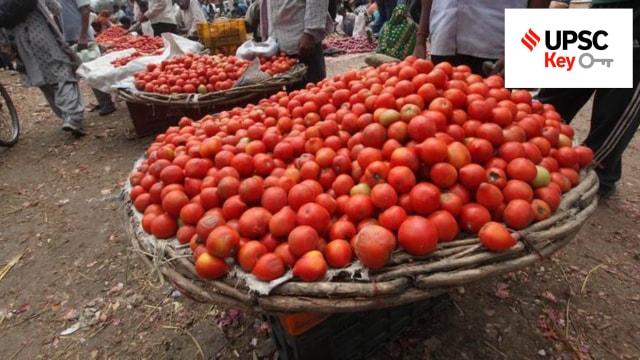 UPSC Key June 2023: Here's what you should be reading from the June 28, 2023 edition of The Indian Express. (Express Photo/Jaipal Singh)
 Important topics and their relevance in UPSC CSE exam for June 28, 2023. If you missed the June 27, 2023 UPSC key from the Indian Express, read it here
FRONT PAGE
Prime Minister pushes Uniform Civil Code, accuses Opposition of instigating Muslims
Syllabus:
Preliminary Examination: Indian Polity and Governance
Main Examination:
• General Studies II: Indian Constitution—significant provisions etc.
• General Studies II: Government policies and interventions for development in various sectors and issues arising out of their design and implementation.
Key Points to Ponder:
• What’s the ongoing story- In his first public push for a Uniform Civil Code, Prime Minister Narendra Modi said Tuesday that the country cannot have separate laws for its people, and that the Constitution obligates the State to secure a UCC for its citizens. Addressing BJP booth-level workers at a party event called ‘Mera Booth, Sabse Mazboot’ in Madhya Pradesh where Assembly elections are due later this year, Modi said the Opposition was trying to “instigate” Muslims on the UCC issue while not caring for their welfare.
• What is Uniform Civil Code?
• Article 44 of the Indian Constitution and Uniform Civil Code-What is the ongoing debate?
• Do You Know-A UCC would provide for one law for the entire country, applicable to all religious communities, in their personal matters such as marriage, divorce, inheritance, adoption etc. Currently, Indian personal law is fairly complex, with each religion adhering to its own specific laws. Separate laws govern Hindus including Sikhs, Jains and Buddhist, Muslims, Christians, and followers of other religions.
• What does the Constitution say about a Uniform Civil Code?
• What was the debate in the Constituent Assembly?
• What has the Supreme Court said?
• What exactly the 22nd Law Commission of India said on Uniform Civil Code?
• Why has the Opposition opposed the move?
• And, what exactly the 21st Law Commission of India said on Uniform Civil Code?
• 21st Law Commission of India on UCC and 22nd Law Commission of India on Uniform Civil Code-Compare and Contrast
• For Your Information-In the paper, the 21st Law Commission, headed by former Supreme Court judge Balbir Singh Chauhan, held that the “formulation of a Uniform Civil Code is neither necessary nor desirable at this stage”. Its recommendations were far-reaching. The Commission had commented, “Mere existence of difference does not imply discrimination, but is indicative of a robust democracy”. It had noted that most countries are moving towards the recognition of difference in place of legal provisions that are founded on uniformity between culturally diverse people — these are unfair to the weaker and vulnerable sections.
• “The most significant of the 21st Law Commission’s recommendations were about the economic rights of women”-Comment
• What do you understand by “Hindu coparcenary system — the Hindu Undivided Family (HUF) property”?
• Why is there no uniform code for personal law?
• What is Directive principles of State Policy (DPSP)?
• ‘Reform of Family Law’ report by 21st Law Commission of India on Article 44-Know in detail
• Issues and Controversy with Uniform Civil Code and Why it has not been Implemented even after seven decades of Independence?
• Know how the government’s stance on a uniform civil code (UCC) has evolved between the year 1991 to 2023?
Other Important Articles Covering the same topic:
IIT Bombay breaks into top 150 in QS world ranking, eight years after IISc first made it
Syllabus:
Preliminary Examination: Current events of national and international importance.
Mains Examination: General Studies II: Issues relating to development and management of Social Sector/Services relating to Health, Education, Human Resources.
Key Points to Ponder:
• What’s the ongoing story– The Indian Institute of Technology (IIT) in Mumbai has achieved its highest rank ever, breaking into the world’s top 150 universities in the latest edition of the QS World University Ranking released late Tuesday night. This marks the first time in eight years that an Indian higher education institution has made it to the top 150 list, with the Indian Institute of Science (IISc) Bangalore previously achieving this feat in 2016 with a ranking of 147.
• What is Quacquarelli Symonds (QS) World University Rankings?
• What are the Key Highlights of the recent (QS) World University Rankings Report?
• For Your Information-IIT Bombay has made a remarkable leap, climbing 23 positions to secure the 149th rank globally in this year’s edition of the rankings. However, the list has also seen significant fluctuations, with IISc falling 70 positions from 155th rank to 225. It now stands as the third-highest ranked Indian institution, compared to being the best Indian institution last year. Similarly, IIT Delhi fell from 174 to 197, IIT Kanpur from 264 to 278 and IIT Madras from 250 to 285, among others.
• How India Performed in QS World University Rankings?
• The QS World University Rankings are based on a methodology that considers a range of factors-what are those factors?
• How are the QS World University Rankings calculated?
• The UK-based ranking agency, QS Quacquarelli Symonds, has partly attributed the fluctuation to a revision of the assessment parameters this year. It introduced three new indicators-what are those?
• What are the significance of QS World University Rankings?
Other Important Articles Covering the same topic:
THE EDITORIAL PAGE
Syllabus:
Preliminary Examination: Indian Polity and Governance
Mains Examination: General Studies II: Functions and responsibilities of the Union and the States, issues and challenges pertaining to the federal structure, devolution of powers and finances up to local levels and challenges therein
Key Points to Ponder:
• What’s the ongoing story-Madan B Lokur Writes: Babasaheb Ambedkar spoke of constitutional morality in the Constituent Assembly on November 4, 1948. He said: “While everybody recognises the necessity of the diffusion of constitutional morality for the peaceful working of a democratic Constitution, there are two things interconnected with it which are not, unfortunately, generally recognised. One is that the form of administration has a close connection with the form of the Constitution… The other is that it is perfectly possible to pervert the Constitution, without changing its form by merely changing the form of the administration and to make it inconsistent and opposed to the spirit of the Constitution.”
• The Government of National Capital Territory of Delhi (Amendment) Ordinance, 2023-Know the key provisions
• Quick Recap- The Centre on Friday (May 19) promulgated an Ordinance extending powers to the Delhi lieutenant governor over services in the administration of the national capital – basically, the power to transfer and appoint bureaucrats posted to Delhi. The Government of National Capital Territory of Delhi (Amendment) Ordinance, 2023, is seen as a bid to nullify last week’s ruling by a Constitution bench of the Supreme Court that handed over the reins of “services” to the Delhi Government. The court had then underlined the importance of the people’s mandate in a democracy expressed through an elected government.
• Can a decision of the Supreme Court be undone?
• How does the ordinance fare against the judgement of the Supreme Court?
• What is constitutional morality?
• Can the Ordinance impact the basic structure of the Constitution?
• What was the Supreme Court’s verdict on May 11?
• What was the issue before the Court?
• For Your Information-In 2015, a Union Home Ministry notification said that the Lieutenant Governor of Delhi shall exercise control over “services”. The Delhi government challenged this before the Delhi High Court, which in 2017 upheld the notification. On appeal, a two-judge Bench of the Supreme Court referred the issue to a larger constitution Bench. In 2018, a five-judge Constitution Bench, headed by then CJI Dipak Misra, in a unanimous verdict laid down the law that governs the relationship between Delhi and the Centre. The ruling was in favour of the Delhi government. While the Constitution bench decided the larger questions, the specific issues were to be decided by a two-judge Bench. In 2019, two judges, (who were also part of the larger 5-judge Bench in 2018), Justices Ashok Bhushan and AK Sikri, delivered a split verdict on the specific issue of “services.” The split verdict then went to a three-judge Bench and eventually a five-judge Constitution Bench, which has now delivered its verdict.
• What was the bone of contention?
• What was the Centre’s argument?
• What did the court decide?
• What exactly Supreme Court said in its judgement?
• Do you agree that the Lt. Governor of Delhi has more power? Attest your opinion with some recent incidence.
• What is the 69th Constitutional Amendment Act of 1991?
• The Chief Minister of Delhi is appointed by the Lieutenant Governor (LG)-True or False?
• In Delhi, In the case of difference of opinion between the Lieutenant Governor (L-G) and his ministers, the Lieutenant governor’s (L-G) decision is taken into the consideration-True or False?
• Government of National Capital Territory of Delhi Act, 1991-Know the Key Provisions
• The Government of National Capital Territory of Delhi (Amendment) Act, 2021 and Government of National Capital Territory of Delhi Act, 1991-Compare and Contrast
• Know the Key Provisions of the Government of National Capital Territory of Delhi (Amendment) Act, 2021
• Articles 239AA and 239AB of the Constitution-Know in Detail
• There was Conflict between the Chief Minister of Delhi and the Lieutenant Governor (L-G)-What were the point of conflicts between the two?
• Supreme Court of India’s Verdict in Government of NCT of Delhi vs Union of India and Another in 2018 case-Know in Detail
• National Capital Territory of Delhi (NCTD) and Other Union territories-Compare and Contrast
• “NCTD, having a sui generis federal model, must be allowed to function in the domain charted for it by the Constitution”-What do you understand by this statement?
• “The Union and NCTD share a unique federal relationship. It does not mean that NCTD is subsumed in the unit of the Union merely because it is not a ‘State’,”-Comment
• The Legislative Assembly of NCTD has competence over entries in List II (state list) and List III (concurrent list) except for the expressly excluded entries of List II. The excluded entries are related to what?
• The Supreme Court also made it clear that “NCTD has legislative and executive power over services, that is, Entry 41 of List II of the Seventh Schedule.” Why did the Supreme Court have to come out with this directive?
• What Centre had contended with Entry 41 of List II of the Seventh Schedule?
• For Your Information-While the Supreme Court said that the legislative and executive power of NCTD over Entry 41 shall not extend to services related to public order, police, and land, these powers would remain with NCTD over “services such as Indian Administrative Services, or joint cadre services, which are relevant for the implementation of policies and vision of NCTD in terms of day-to-day administration of the region shall lie with NCTD”.
• “If a democratically elected government is not provided with the power to control the officers posted within its domain, then the principle underlying the triple-chain of collective responsibility would become redundant”-Elaborate further
• What is the extent of Delhi’s powers now?
• Extent of Delhi’s powers now- Article 239AA specifically excludes land, police and public order from the purview of the legislative powers of the Delhi government. The court acknowledged that these three issues can also have some overlap with “services” “The legislative and executive power of Delhi over Entry 41 (services) shall not extend over to services related to public order, police and land. However, legislative and executive power over such services such as Indian administrative services, or joint card of services, which are relevant for the implementation of policies and vision of NCT of Delhi in terms of day to day administration of the region, shall live with Delhi,” the court said.
Other Important Articles Covering the same topic:
📍The 360° UPSC Debate: Delhi Statehood Debate—Reasons For And Against
EXPRESS NETWORK
India has second largest highway network after US: Gadkari
Syllabus:
Preliminary Examination: Economic and Social Development-Sustainable Development, Poverty, Inclusion, Demographics, Social Sector Initiatives, etc.
Mains Examination: General Studies III: Infrastructure: Energy, Ports, Roads, Airports, Railways etc.
Key Points to Ponder:
• What’s the ongoing story-India’s network of national highways, at 1.45 lakh km, is now the second largest in the world after the United States, and it has increased by 59 per cent in the past nine years of the Modi government, said Nitin Gadkari, Union Minister for Road Transport & Highways on Tuesday.
• What is the basic infrastructure for roads?
• Why is road infrastructure important in India?
• Classification of Roads in India-How they are Classified?
• National Highways, State Highways, District roads and Rural Roads-Know the differences
• What issues and challenges do India’s road infrastructures face?
• What are the Government initiatives for Road Infrastructure?
Other Important Articles Covering the same topic:
📍Will the national champions model of infrastructure development work?
THE WORLD
Detainees face cruel treatment: First UN investigator to visit Guantanamo prison
Syllabus:
Preliminary Examination: Current events of national and international importance
Mains Examination: General Studies II: Important International institutions, agencies and fora- their structure, mandate
Key Points to Ponder:
• What’s the ongoing story– The first U.N. independent investigator to visit the U.S. detention center at Guantanamo Bay said Monday the 30 men held there are subject “to ongoing cruel, inhuman and degrading treatment under international law.” The investigator, Irish law professor Fionnuala Ní Aoláin, said at a news conference releasing her 23-page report to the U.N. Human Rights Council that the 2001 attacks in New York, Washington and Pennsylvania that killed nearly 3,000 people were “crimes against humanity.” Ní Aoláin said her visit marked the first time a U.S, administration has allowed a U.N. investigator to visit the facility, which opened in 2002.
• Map Work- Guantanamo bay detention camp
• What exactly U.N. independent investigator said?
• Where is Guantanamo Bay?
• Guantanamo Bay, US and Cuba-Connect the dots
• What happens to the Guantanamo Bay detainees?
Other Important Articles Covering the same topic:
📍Explained: Why half of Guantanamo’s prisoners could get out
ECONOMY
CAD down to 0.2% of GDP in Q4 FY23 as trade gap shrinks
Syllabus:
Preliminary Examination: Economic and Social Development-Sustainable Development, Poverty, Inclusion, Demographics, Social Sector Initiatives, etc.
Mains Examination: General Studies III: Indian Economy and issues relating to planning, mobilization, of resources, growth, development and employment
Key Points to Ponder:
• What’s the ongoing story– India’s current account deficit (CAD), a key indicator of the external sector, narrowed to $1.3 billion, or 0.2 per cent of the gross domestic product (GDP), in the January-March quarter (Q4) of fiscal 2022-2023 (FY23), mainly on account of moderation in trade gap and rise in services exports.
• Why this is a worrying sign?
• What do you understand by ‘Exports’ and ‘Imports’?
• Exports of India and Imports of India-Key Items under Exports and Imports
• What Is Balance of Trade (BoT) and Balance of Payments (BoP)?
• Balance of Trade (BoT) and Balance of Payments (BoP)-How they Connected?
• What do you understand by ‘Current account deficit’?
• What do you understand by “Current account surplus”?
• ‘India’s current account deficit (CAD), a key indicator of the external sector, narrowed to $1.3 billion, or 0.2 per cent of the gross domestic product (GDP)’-What have you understood by this statement?
• For Your Information-In the January-March quarter (Q3) of FY23, CAD — the difference between exports and imports of goods and services — was $16.8 billion, or 2 per cent of GDP. In Q3 of FY22, it was $13.4 billion, or 1.6 per cent of GDP, according to the data released by the Reserve Bank of India (RBI) on Tuesday. “The sequential decline in CAD in Q4 FY23 was mainly on account of a moderation in the trade deficit to $ 52.6 billion in Q4 FY23 from $71.3 billion in Q3 FY23, coupled with robust services exports,” the RBI said.
• What is the external commercial borrowing?
• Current account surplus implies a higher inflow of forex than outflow- still sometimes, it is not healthy for an economy, Why?
• India’s CADs have both desirable and undesirable components-What is desirable and undesirable components?
• The countercyclical nature of India’s CAD is a matter of concern-Why?
• India is currently facing the twin-deficit problem of high fiscal and CADs-Elaborate further
• What is meant by foreign exchange reserves?
• Which country has highest forex reserves as of now? How do foreign exchange reserves increase?
• What is a Currency Reserve?
• Currency Reserve is a part of foreign exchange reserves?
Other Important Articles Covering the same topic:
📍Explained: What is the Current Account Deficit, which widened in Q3 of the last FY?
Why has Google filed an appeal against NCLAT verdict?
Syllabus:
Preliminary Examination: Current events of national and international importance.
Main Examination: General Studies III: Effects of liberalization on the economy, changes in industrial policy and their effects on industrial growth.
Key Points to Ponder:
• What’s the ongoing story– Google has filed an appeal in the Supreme Court against a verdict by the National Company Law Appellate Tribunal (NCLAT) where it upheld a penalty of Rs 1,338 crore imposed by India’s competition regulation body on the company, for its anti-competitive conduct in the Android ecosystem. Google’s appeal comes just weeks after the Competition Commission of India (CCI) also appealed the NCLAT order in the Supreme Court. In January, the Supreme Court refused to suspend any of the antitrust remedies ordered by the CCI against Google last year. It had asked the NCLAT to hear the case on merit and rule by March end.
• Why has Google appealed the NCLAT order?
• What did the NCLAT order entail?
• How did Google score a partial victory in the NCLAT order?
• Could the order on Google shape India’s internet regulations?
• Competition Commission of India (CCI) and Google-Know the Background
• What have you understood by “abusing its dominant position”?
• What is the role of the Competition Commission of India (CCI) in India?
• Competition Commission of India (CCI)-Statutory Body or Constitutional Body?
• Monopolies and Restrictive Trade Practices Act, 1969 (MRTP Act) and Competition Act, 2002-Compare and Contrast
• Composition of Competition Commission of India (CCI)-Members and their Appointment
• Functions and Role Competition Commission of India (CCI)
• Landmark Judgements of Competition Commission of India (CCI)
• What is the role of the National Company Law Appellate Tribunal (NCLAT) in India?
• National Company Law Appellate Tribunal (NCLAT)-Statutory Body or Constitutional Body?
• National Company Law Appellate Tribunal (NCLAT)-Members and their Appointment
• Functions and Role of National Company Law Appellate Tribunal (NCLAT)
• Landmark Judgements of National Company Law Appellate Tribunal (NCLAT)
Other Important Articles Covering the same topic:
📍NCLAT upholds Rs 1,337 cr penalty on Google: What are the allegations against it?
EXPLAINED
Indian Ocean Dipole, and its potential to limit El Nino effects
Syllabus:
Preliminary Examination: Indian and World Geography
Mains Examination: General Studies I: Important Geophysical phenomena such as earthquakes, Tsunami, Volcanic activity, cyclone etc., geographical features and their location-changes in critical geographical features (including water-bodies and ice-caps) and in flora and fauna and the effects of such changes.
Key Points to Ponder:
• What’s the ongoing story– With the El Nino phenomenon almost certain to affect the Indian monsoon this year, high hopes are pinned on the development of a positive Indian Ocean Dipole (IOD) and its ability to counterbalance the El Nino effect. The IOD is an ocean-atmosphere interaction very similar to the El Nino fluctuations in the Pacific Ocean, playing out, as the name shows, in the Indian Ocean. It is also a much weaker system than El Nino, and thus has relatively limited impacts.
• What is Indian Ocean Dipole?
• What is the dipole of the Indian Ocean?
• Why does Indian Ocean have dipole?
• What is the positive IOD phase?
• What is the negative IOD phase?
• For Your Information-A positive IOD helps rainfall along the African coastline and also over the Indian sub-continent while suppressing rainfall over Indonesia, southeast Asia and Australia. The impacts are opposite during a negative IOD event. Compared to ENSO events, the impacts of IODs are much weaker. But hope lingers, including this year when a strong El Nino is expected to develop in the Pacific Ocean. As Professor Ashok pointed out, IOD events usually originate in the months of April and May. However, there is an example of a strong IOD event developing late as well.
• What are the conditions which causes El Niño?
• EL Nino Southern Oscillation or ENSO impact on Monsoon?
• How El Niño Impacts-Know Sector and region wise
• But why have El Niño conditions continued for three years?
• What is Inter Tropical Convergence Zone?
Other Important Articles Covering the same topic:
Syllabus:
Preliminary Examination: Current events of national and international importance.
Mains Examination:
• General Studies II: Functions and responsibilities of the Union and the States, issues and challenges pertaining to the federal structure, devolution of powers and finances up to local levels and challenges therein.
• General Studies III: Linkages between development and spread of extremism and Role of external state and non-state actors in creating challenges to internal security
• General Studies III: Role of external state and non-state actors in creating challenges to internal security.
Key Points to Ponder:
• What’s the ongoing story- In a video posted on Twitter on Monday (June 26), the Spear Corps of the Indian Army accused women activists in Manipur of “deliberately blocking routes and interfering in Operations of Security Forces” as the state struggles to contain the weekslong waves of rioting and unrest.
• Who are the Meira Paibis of Manipur?
• For Your Information-The Meira Paibis, also known as Imas or Mothers of Manipur, are Meitei women who come from all sections of society in the Imphal valley, are widely respected, and represent a powerful moral force. The Meira Paibis are loosely organised, usually led by groups of senior women, but have no rigid hierarchy or structure, or any overt political leanings.
They may become more visible during certain times, but their presence and importance in Manipuri civil society are permanent and palpable, and their role as society’s conscience keepers is widely acknowledged.
• What social role do the Meira Paibis play?
• What are some of the major actions undertaken by these women?
• Manipur Violence-What is the story so far?
• Which are the major communities residing in Manipur?
• There are many immediate triggers for the ongoing clashes-What are they?
• “Ethnic conflict is caused by the fear of the future, lived through the past.”-Decode the quote
• What do you understand by the term ‘ethnic violence’?
• What is the cause of ethnic violence in Manipur?
• What was the triggering factor that escalated to so much violence in Manipur?
• Collective fears of an ethnic group about their future, based on past memories, incite mobilisation and violence. This is the situation that is playing out in Manipur-How far you agree with the same?
• Regrettably, on the ground, the emphasis has been on short-term conflict management practices-What sort of short-term conflict management practices?
• Long-term conflict management practices and short-term conflict management practices for Manipur-what is the way ahead?
Other Important Articles Covering the same topic:
📍Manipur Violence Explained: Kuki vs Meitei Conflict, Biren Singh Govt’s Role, Army Action
📍P Chidambaram writes: Incompetence, Injury & Insult
Spring heat, early summer crash in prices: Why tomato is on fire now
Syllabus:
Preliminary Examination: Economic and Social Development
Mains Examination: General Studies III: Indian Economy and issues relating to planning, mobilization, of resources, growth, development and employment.
Key Points to Ponder:
• What’s the ongoing story-Over the last fortnight, the retail price of tomato has crossed Rs 60 per kg in towns and cities around the country — it was selling for more than Rs 100/kg at some places on Tuesday — and traders and growers do not expect prices to fall any time soon.
• Why are tomatoes so expensive?
• So what went wrong this year?
• Is the current price spiral in tomatoes unusual, even for this time of the year?
• When will prices come down?
• The real solution to tomato inflation may lie beyond the ambit of the RBI-Analyse this statement
• How linking tomato value chains to processing of at least 10 per cent of tomato production into tomato paste and puree during bumper years will help farmers to stabilise their incomes and avoid the typical cobweb problem they face in case of perishables?
• ‘Operation Green’ and tomatoes, onions and potatoes-Know in detail
• What is Inflation?
• Know the Types of Inflation like Moderate Inflation, Galloping Inflation, Hyper-Inflation, Stagflation, Deflation, Core Inflation etc.
• What are the causes of Inflation in the present situation
• How Inflation is Measured in India?
• What is the Long term, Medium Term and Short-term impact of Inflation?
• New Standard for Measuring Inflation in India and Old Standard for Measuring Inflation-Key Differences
• Steps or Measures Taken by GOI to Control Inflation
• What do you understand by Wholesale Price Index (WPI) and Consumer Price Index? WPI and CPI is published by whom?
• What is the Monetary Policy Committee?
• The Monetary Policy Committee (MPC) is a Statutory Body-True or False?
• What is the Primary Objective of monetary policy in India?
• There are several direct and indirect instruments that are used for implementing monetary policy-What are they?
• What is REPO rate?
• What is Current Repo Rate?
• What’s the RBI assessment on inflation?
Other Important Articles Covering the same topic:
For any queries and feedback, contact priya.shukla@indianexpress.com
The Indian Express UPSC Hub is now on Telegram. Click here to join our channel and stay updated with the latest Updates.

Read UPSC Magazine