


© IE Online Media Services Pvt Ltd
Tags:


Important topics and their relevance in UPSC CSE exam for December 21, 2023. If you missed the December 20, 2023 UPSC CSE exam key from the Indian Express, read it here
THE WORLD

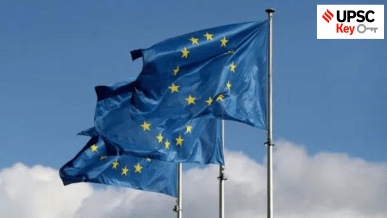
EU agrees on new rules for hosting migrants, seeks to reduce numbers
Syllabus:
Preliminary Examination: Current events of national and international importance.
Mains Examination: General Studies II: Effect of policies and politics of developed and developing countries on India’s interests
Key Points to Ponder:
• What’s the ongoing story- The European Union reached agreement early on Wednesday on new rules designed to share out the cost and work of hosting migrants more evenly and to limit the numbers of people coming in.
Representatives of the European Parliament and of EU governments reached an accord after all-night talks on EU laws collectively called the New Pact on Migration and Asylum that should start taking effect next year.
• What is the new EU Pact on migration and asylum?
• For Your Information-The laws cover screening irregular migrants when they arrive in the European Union, procedures for handling asylum applications, rules on determining which EU country is responsible for handling applications and ways to handle crises.
Migrant arrivals in the European Union are way down from the 2015 peak of more than 1 million, but have steadily crept up from a 2020 low to 255,000 in the year to November, with more than half crossing the Mediterranean from Africa, mainly to Italy.
Under the new system, countries not at the border will have to choose between accepting their share of 30,000 asylum applicants or paying at least 20,000 euros ($21,870) per person into an EU fund.
The screening system envisaged will seek to distinguish between those in need of international protection and others who are not.
People whose asylum applications have a low chance of success, such as those from India, Tunisia or Turkey, can be prevented from entering the EU and detained at the border, as can people seen as representing a threat to security.
• What is asylum?
• What is migrant and refugee?
• How asylum is different from migrant and refugees?
• What are the International Provisions to Protect the Rights of asylum seeker, migrant and refugee?
• What is UN’s position on migrants, refugees and asylum seekers?
• Know about United Nations High Commissioner for Refugees (UNHCR)
• What is Global Refugee Forum (GRF)?
• What is India’s Refugee Policy?
• 1951 Refugee Convention and its 1967 Protocol and India-Know in detail
• What do you understand by expression ‘right of non-refoulement’?
Other Important Articles Covering the same topic:
📍Explained: On ‘refugees’ and ‘illegal immigrants’, how India’s stance changes with circumstances
FRONT PAGE
Defining terror to death for lynching: LS nod for 3 Bills on new criminal laws
Syllabus:
Preliminary Examination: Indian Polity and Governance-Constitution, Political System, Panchayati Raj, Public Policy, Rights Issues, etc.
Mains Examination: General Studies II: Structure, organization and functioning of the Executive and the Judiciary-Ministries and Departments of the Government; pressure groups and formal/informal associations and their role in the Polity.
Key Points to Ponder:
• What’s the ongoing story- From expanding detention in police custody from the current 15-day limit to up to 90 days, bringing terror, corruption and organised crime under ordinary legislation for the first time to decriminalising homosexuality and adultery, the Lok Sabha Wednesday passed three key Bills – Bharatiya Nyaya (Second) Sanhita, 2023; the Bharatiya Nagarik Suraksha (Second) Sanhita, 2023; and the Bharatiya Sakshya (Second) Bill, 2023 – to completely overhaul the country’s criminal laws.
• Bharatiya Nyaya (Second) Sanhita, 2023; the Bharatiya Nagarik Suraksha (Second) Sanhita, 2023; and the Bharatiya Sakshya (Second) Bill, 2023-What are the highlights of these bills?
• ‘According to the government, three specific provisions that have been symbols of colonial imprint in the IPC have been repealed’-What are they?
• ‘Rajdroh’ to ‘deshdroh’-What is the difference between these two words?
• For Your Information-Sharing details of the changes made in the criminal justice laws, Home Minister said the CrPC had 484 sections, now the Bharatiya Nagarik Suraksha (Second) Sanhita, 2023 will have 531 sections; 177 sections have been changed; 9 new sections and 39 sub-sections have been included; 44 new explanations have been added; timelines have been added in 35 sections; and 14 sections have been repealed.
He said the IPC had 511 sections, and the Bharatiya Nyaya (Second) Sanhita will have 358 sections; 31 new offences have been included in the purview of the new law; the imprisonment period has been increased for 41 offences; penalty has been hiked in 82 offences; compulsory minimum punishment has been introduced in 25 offences; community service has been added as a penalty for 6 offences; and 19 sections have been repealed.
The Bharatiya Sakshya (Second) Bill, 2023 has 170 sections as compared to 167 sections in the Indian Evidence Act; 24 sections have been changed; two new sections have been added; and six sections have been repealed, he said.
Other Important Articles Covering the same topic:
📍Revised criminal reform Bills in Parliament: What has changed, and why
📍New criminal law Bills endanger civil liberties
In big AI push, Centre to step up compute capacity, offer free services to startups
Syllabus:
Preliminary Examination: Current events of national and international importance.
Mains Examination: General Studies III: Awareness in the fields of IT, Space, Computers, robotics, nano-technology, bio-technology and issues relating to intellectual property rights.
Key Points to Ponder:
• What’s the ongoing story- As part of an Artificial Intelligence Mission to develop its own ‘sovereign AI’, the Centre is looking to build computational capacity in the country and offer compute-as-a-service to India’s startups.
• What is sovereign AI?
• How will India regulate AI?
• For Your Information-As part of an Artificial Intelligence Mission to develop its own ‘sovereign AI’, the Centre is looking to build computational capacity in the country and offer compute-as-a-service to India’s startups.
The capacity building will be done both within the government and through a public-private partnership model, highlighting New Delhi’s intention to reap dividends of the impending AI boom which it envisions will be a crucial economic driver, a top government official said.
Earlier this month, Prime Minister Narendra Modi announced the AI Mission and said its aim was to establish the computing powers of AI within the country. This, he said, will provide better services to startups and entrepreneurs and also promote AI applications in the sectors of agriculture, healthcare and education.
In total, the country is looking to build a compute capacity of anywhere between 10,000 GPUs (graphic processing units) and 30,000 GPUs under the PPP model, and an additional 1,000-2,000 GPUs through the PSU Centre for Development of Advanced Computing (C-DAC), Minister of State for Electronics and IT Rajeev Chandrasekhar told The Indian Express.
For context, according to a 2020 blog by Microsoft, the company had developed a supercomputer for OpenAI – the firm behind ChatGPT – which consisted of 10,000 GPUs among other things.
A Cabinet approval would be needed to clear the proposal, with the government exploring various incentive structures for private companies to set up computing centres in the country – ranging from a capital expenditure subsidy model which has been employed under the semiconductor scheme, a model where companies can be incentivised depending on their operational expenses, to offering them a “usage” fee, Chandrasekhar said.
“Under the public model, we will look to build compute capacity within the C-DAC under the National Supercomputing Mission. They already have the Rudra and Param systems and we are planning to add 1,000-2,000 GPUs to them,” Chandrasekhar said.
Rudra is an indigenous server platform built by the C-DAC which has two expansion slots for graphic cards. Param Utkarsh is a high performance computing system setup at C-DAC which offers AI over machine learning and deep learning frameworks, compute and storage as a cloud service.
Computing capacity, or compute, is among the most important elements of building a large AI system apart from algorithmic innovation and datasets. It is also one of the most difficult elements to procure for smaller businesses looking to train and build such AI systems.
The government’s idea is to create a digital public infrastructure (DPI) out of the GPU assembly it sets up so that startups can utilise its computational capacity for a fraction of the cost, without needing to invest in GPUs which are often the biggest cost centre of such operations.
Apart from building computing capacities, the government is also working on building datasets and making them available to Indian startups. Last May, the IT Ministry released a draft of the National Data Governance Framework Policy under which it proposed the creation of an India Datasets platform, which will consist of non-personal and anonymised datasets from Central government entities that have collected data from Indian citizens or those in India.
The idea is that the non-personal data housed within this programme would be accessible to startups and Indian researchers, the draft proposal said. Among the stated objectives of the policy is to modernise the government’s data collection, with an aim to improve governance and to enable artificial intelligence (AI) and data-led research and startup ecosystem in the country.
• Why AI regulation is needed?
• If Regulated then what should be the limit?
• If regulated, then what are the risks associated with regulating AI?
• What has been India’s Response to demands for AI Regulation?
Other Important Articles Covering the same topic:
📍India is building its own ‘sovereign AI’. What does it mean?
THE EDITORIAL PAGE
Syllabus:
Preliminary Examination: Indian Polity and Governance
Main Examination: General Studies II: Parliament and State legislatures—structure, functioning, conduct of business, powers & privileges and issues arising out of these
Key Points to Ponder:
• What’s the ongoing story-Hilal Ahmed Writes: The suspension from the House of a large number of Opposition Members of Parliament in the Winter Session underlines the institutional weakening of our political system. Parliament has been converted into a zone of conflict, where the established norms of discussion and deliberation are being conveniently sidelined. The ruling party invokes the House rules to supersede the parliamentary customs and conventions simply to get rid of the Opposition while the Opposition uses the act of disruption as a legitimate political technique.
• “The idea of legislative discussion has lost its political significance”-Comment
• What is Opposition in a democracy?
• What is the role of opposition in the Parliament?
• Opposition in India-What you know in this regard?
• Importance of Opposition and parliamentary debate-Know in detail
• “The failure of parliamentarians to evolve a culture of mutual learning through healthy discussions and deliberations has weakened the democratic capability of Parliament as the supreme legislative body”-Discuss
• “Professionalisation of politics”-What do you understand by the same?
• Why ‘Professionalisation of politics’ is a problem?
• “There is a serious decline of political morality”-How far you agree?
Other Important Articles Covering the same topic:
EXPLAINED
Syllabus:
Preliminary Examination: Economic and Social Development
Mains Examination: General Studies III: Indian Economy and issues relating to planning, mobilization, of resources, growth, development and employment.
Key Points to Ponder:
• What’s the ongoing story- At the start of the current financial year — that’s in April — there were very few takers of the RBI’s forecast of 6.5% GDP (gross domestic product) growth. The GDP is essentially the total size of any economy and its annual growth rate tells us how that size is expanding from one year to another. Most professional economists believed that India’s GDP growth would underwhelm and clock a little slower than 6.5%.
• What is Gross domestic product?
• What are the different types of Gross Domestic Product?
• GDP-How it is Calculated?
• Gross domestic product (GDP) and Gross National Product (GNP)-Key Differences
• “India’s GDP growth in Q2 was pushed up by strong industrial growth especially in the manufacturing sector, which grew by almost 14% over the same quarter last year”-Discuss
• What had led to this massive jump in manufacturing output beyond the low base effect?
• Is the Indian economy, which was struggling before the pandemic, now completely out of the slowdown phase?
• Is this the start of a new growth phase?
• Are Indian companies selling more goods?
• Are Indian companies witnessing a jump in profits?
• Do the rosy numbers on GDP tables imply private businesses are finally starting to invest towards creating new productive capacities?
• ‘K-shaped industrial recovery’-Know in detail
• What led to a jump in Manufacturing output in Q2?
• What led to the jump in Sensex?
• Where is the K-shape in industrial recovery?
• Do higher profits mean companies are starting to invest more?
• For Your Information-A K-shaped recovery happens when different sections of an economy recover at starkly different rates.
According to Sajjid Chinoy, Chief India Economist at JP Morgan, “Households at the top of the pyramid are likely to have seen their in- comes largely protected, and savings rates forced up during the lockdown, increasing ‘fuel in the tank’ to drive future consumption. Meanwhile, households at the bottom are likely to have witnessed permanent hits to jobs and incomes”.
These cleavages are already visible. Passenger vehicle registrations (proxying upper-end consumption) have grown about 4 per cent since October while two-wheelers have contracted 15 per cent.
“With the top 10 per cent of India’s households responsible for 25-30 per cent of total consumption, one could argue consumption would get a boost as this pent-up demand expresses itself. But it’s important not to conflate stocks with flows, and levels with changes,” he points out.
Upper-income households have benefitted from higher savings for two quarters. What we are currently witnessing is a sugar rush from those savings being spent.
Other Important Articles Covering the same topic:
TRUMP DISQUALIFIED: WHAT IS THE US CONSTITUTION’S 14TH AMENDMENT
Syllabus:
Preliminary Examination: Current events of national and international importance.
Mains Examination: General Studies II: Effect of policies and politics of developed and developing countries on India’s interests
Key Points to Ponder:
• What’s the ongoing story-The top court in the US state of Colorado ordered former US President Donald Trump to be taken off the ballot in the state for the Presidential elections next year. On Tuesday (December 19), the Supreme Court in Colorado ruled that Trump stands “disqualified from holding the office of President under Section Three of the Fourteenth Amendment to the United States Constitution”.
• What is the 14th Amendment of the US Constitution?
• For You Information-According to the US government archives, the Amendment was passed and ratified by the US Congress between 1866 and 1868. It was brought in after the Civil War ended (1861-65) and “extended liberties and rights granted by the Bill of Rights to formerly enslaved people”.
Simply, it says that if any person previously elected to any government office took part in an insurrection or rebellion, they cannot hold office again.
The 13th, 14th and 15th Amendments were introduced after the Civil War ended. The war was fought between the Northern and Southern states over the issue of slavery. The History Channel states that as American states sought to expand westward, a growing divide between the two sides came to the fore. The North wanted slavery to be abolished, while the South wanted to retain it. The Southern states’ economies were also comparatively more dependent on agriculture, where most of the workers were African-American slaves.
Following the election of President Abraham Lincoln in 1860 and the support that he enjoyed from the Northern states, it took only a few months for seven southern states — South Carolina, Mississippi, Florida, Alabama, Georgia, Louisiana and Texas — to secede from the United States. The war then began between the Unionists (The North) and the Confederacy (The South).
The war ended with the victory of the Unionists and the led to subsequent abolishment of slavery. The three amendments were gradually brought in to accord rights to the former slaves. Under the 14th Amendment, “All persons born or naturalized in the United States” were granted citizenship, including the formerly enslaved people.
In an article in The Conversation, Mark A Graber, a law professor from the University of Maryland, writes: “To me as a scholar of constitutional law, each sentence and sentence fragment captures the commitment made by the nation in the wake of the Civil War to govern by constitutional politics. People seeking political and constitutional changes must play by the rules set out in the Constitution. In a democracy, people cannot substitute force, violence or intimidation for persuasion, coalition building and voting.”
Therefore, the idea that an elected official would have rebelled against the constitution itself would be seen as a threat to that system of constitutional politics. The clause would also further the principles of sovereignty and unity, damaged by the war. Graber further writes that an insurrection has been interpreted as “when two or more people resisted a federal law by force or violence for a public, or civic, purpose.” It does not necessarily mean an overthrow of the government, but rather an expression of disobedience of existing laws and structures.
• Finally, how could it impact Trump’s candidacy for 2024?
• What was the Colorado case and what have the judges ruled?
• What then is the significance of the Colorado ruling on Trump?
Other Important Articles Covering the same topic:
📍What is Donald Trump’s big legal setback, and could it prevent him from running for President?
Syllabus:
Preliminary Examination: General issues on Environmental ecology, Bio-diversity and Climate Change – that do not require subject specialization.
Mains Examination: General Studies III: Conservation, environmental pollution and degradation, environmental impact assessment.
Key Points to Ponder:
• What’s the ongoing story- Earlier in December, the United Kingdom’s ad regulator banned advertisements from Air France, Lufthansa, and Etihad for allegedly misleading consumers regarding the environmental impact of air travel.
This isn’t the first time that airlines have come under fire for false advertising about their sustainability efforts and accused of ‘greenwashing’. On Tuesday (December 19), a case filed against Dutch airlines KLM for alleged greenwashing through one of their advertising campaigns went to trial in Amsterdam.
• What is Greenwashing?
• How Greenwashing Works?
• What are the examples of Greenwashing?
• Why greenwashing is a problem?
• For Your Information-Greenwashing is when firms or governments give a false impression that all of their products or activities are climate-friendly or help in reducing emissions. Moreover, greenwashing may also occur when a company highlights sustainable aspects of a product to overshadow its environmentally damaging activities.
“Performed through the use of environmental imagery, misleading labels, and hiding tradeoffs, greenwashing is a play on the term ‘whitewashing,’ which means using false information to intentionally hide wrongdoing, error, or an unpleasant situation in an attempt to make it seem less bad than it is,” according to a report by Investopedia.
Take for example the infamous 2015 Volkswagen scandal, in which the German car company was found to have been cheating in emissions testing of its supposedly green diesel vehicles. This was a case of greenwashing.
In the Dutch airline KLM’s case, the company ran an advertising campaign telling its customers to “Fly Responsibly”. Environmentalists sued KLM for false advertising, arguing that there is no environmentally friendly way to fly as of now, and accused the airlines of greenwashing.
• ‘The trade in carbon credits comes under the scanner in any discussion on greenwashing’-Why?
• What is Carbon Credit?
• How does carbon credit work?
• Carbon Trading and Carbon Credit-compare and contrast
• Difference between ‘Net Zero’ and ‘Carbon Neutral’?
• Aviation industry and emissions-Know in detail
• Do You Know-Currently, the aviation industry is responsible for approximately 2.5% of all human-produced CO2 emissions, according to the UN Intergovernmental Panel on Climate Change’s (IPCC) 2022 estimates. This may seem like a modest contribution to the overall emissions, but it is set to grow at a very fast pace. The IPPC has said that aviation’s contribution could increase to 5% of the total contribution by 2050 if measures are not taken to address these emissions. The highest predicted value is 15%.
Not only this, it isn’t just CO2 emissions that the aviation industry is releasing. According to the UN Climate Change, if non-CO2 emissions, like water vapour, are also accounted for, the airline industry would be responsible for causing almost 5% of historical global warming.
There is another worry over how aviation emissions are attributed to countries. Emissions from domestic flights are attributed to a country’s emission accounts. However, emissions from international flights are not attributable to any country. They are instead counted as ‘bunker fuels’ and no country has any responsibility to curtail these emissions.
Other Important Articles Covering the same topic:
📍Red flags over ‘greenwashing’ at COP27 — what is it?
📍What Is Greenwashing? How It Works, Examples, and Statistics
Bihar to develop Sita’s birthplace: history and mythology of Mithila region
Syllabus:
Preliminary Examination: Current events of national and international importance.
Mains Examination: General Studies II: Government policies and interventions for development in various sectors and issues arising out of their design and implementation.
Key Points to Ponder:
• What’s the ongoing story-Bihar Chief Minister Nitish Kumar recently launched a Rs 72-crore development plan for Goddess Sita’s birthplace at Punaura Dham in Sitamarhi. His party, JD(U), also slammed the Centre for “concentrating too much on the Ayodhya temple and Lord Rama, and doing little for Sita”. To understand this, it is imperative to understand Sita’s Bihar connections and her importance in the Bihari religious imagination.
Acharya Kishore Kunal, former IPS officer and ex-chairman of the Bihar State Board of Religious Trust, on whose report the Punaura Dham was included in the Centre’s Ramayana Circuit, spoke to The Indian Express on the history and mythology of Mithila in Bihar, and its indelible links to Sita. Excerpts:
• What are the mentions of present-day Bihar in the Ramayana?
• What is the geographical extent of Mithila?
• Which is the birthplace of Sita in Sitamarhi, the Janaki temple or the Punaura Dham?
• What is the history of Janakpuri in Nepal?
• What are some historical references of the present-day Sitamarhi?
• What are the Bihar government’s plans for Punaura?
• What does the plan involve?
• Map Work-Sitamarhi
• For Your Information-The Bihar government’s plan for Sitamarhi comes even though it features in the Centre’s list of 15 tourism-cum-religious places on the Ramayana Circuit, which is one of the 15 thematic circuits identified for development under the Swadesh Darshan scheme of the Union Ministry of Tourism. The projects under the scheme are identified in consultation with the state governments or Union Territory administrations.
The state government’s plan includes the setting up of a parikrama path (a path to circumambulate the temple) with a roof and sandstone pillars. A Sita Vatika (Sita’s garden), Luv-Kush Vatika (Luv-Kush garden) and a shanti mandap (area for meditation) are also being planned besides a cafeteria and a parking lot. A 3-D animation film, depicting Sita’s life, is also in the pipeline.
As a part of the plan, the state’s tourism department is also working to redevelop at least a dozen sites believed to be associated with Lord Ram and Sita.
• What is Swadesh Darshan scheme?
Other Important Articles Covering the same topic:
📍A day in the life of ‘birthplace’ of sita: Looking for Sita in Sitamarhi
For any queries and feedback, contact priya.shukla@indianexpress.com
The Indian Express UPSC Hub is now on Telegram. Click here to join our channel and stay updated with the latest Updates.
Subscribe to our UPSC newsletter and stay updated with the news cues from the past week.


