8 min read
© IE Online Media Services Pvt Ltd
Latest Comment
Post Comment
Read Comments



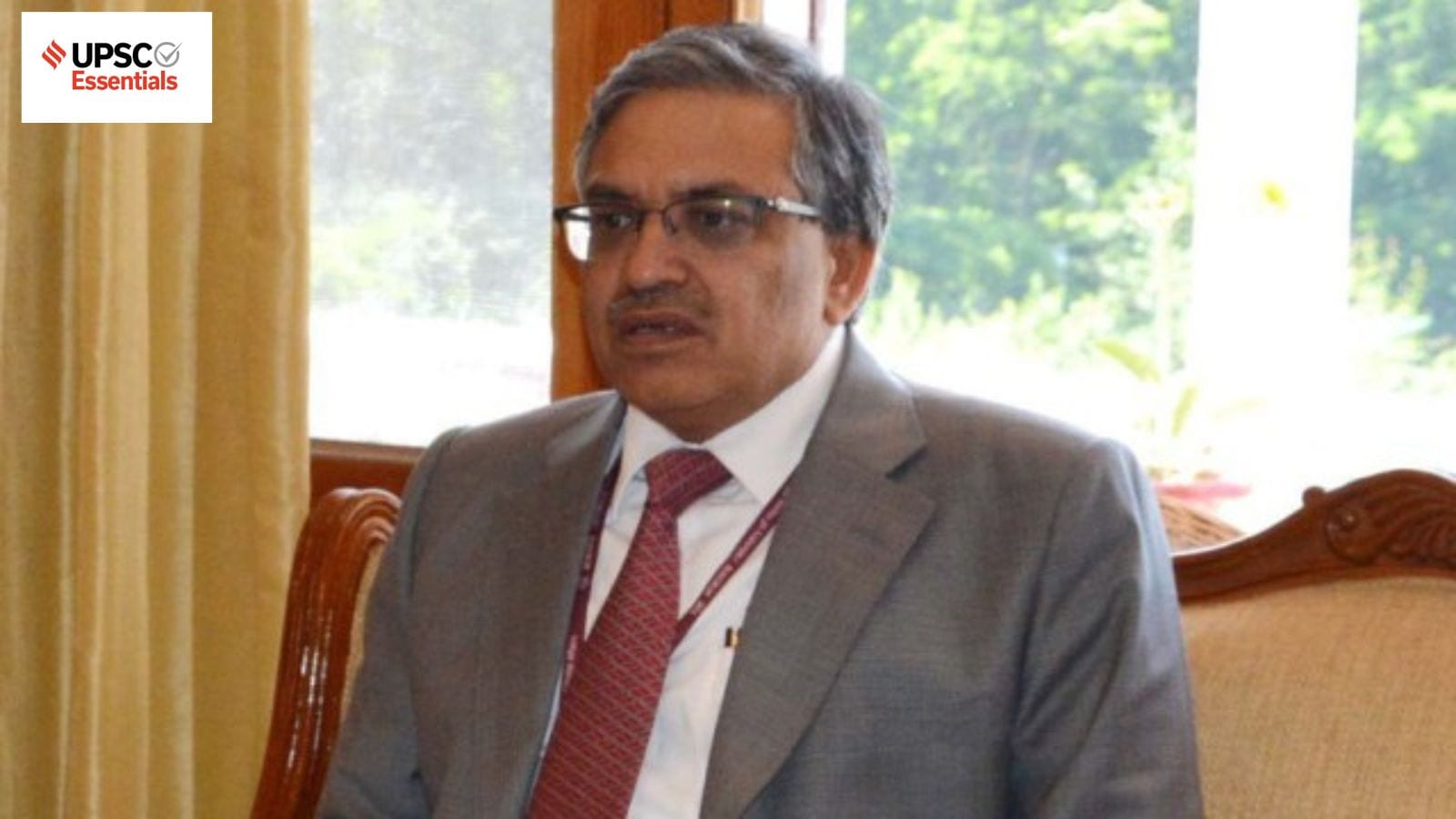 Attempt a question on the advisory opinion of the SC on the limits of the mapping by Election Commission in today's answer writing practice. (File Photo)
UPSC Essentials brings to you its initiative for the practice of Mains answer writing. It covers essential topics of static and dynamic parts of the UPSC Civil Services syllabus covered under various GS papers. This answer-writing practice is designed to help you as a value addition to your UPSC CSE Mains. Attempt today’s answer writing on questions related to topics of GS-2 to check your progress.
🚨 Click Here to read the UPSC Essentials magazine for December 2025. Share your views and suggestions in the comment box or at manas.srivastava@indianexpress.com🚨
Discuss the role of technology and field verification in managing mapping irregularities during the electoral roll revision process.
“India’s growing engagement with Afghanistan’s economic corridors reflects India’s strategic approach to regional connectivity.” Discuss in the context of disruptions in Afghanistan-Pakistan trade and India-Afghanistan trade initiatives.
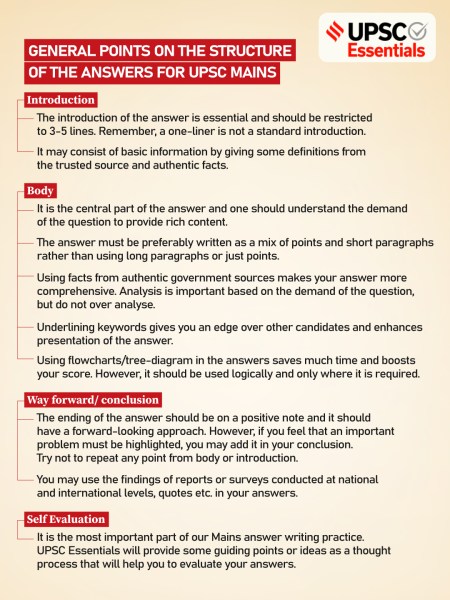
QUESTION 1: Discuss the role of technology and field verification in managing mapping irregularities during the electoral roll revision process.
Note: This is not a model UPSC answer. It only provides you with thought process which you may incorporate into the answers.
Introduction:
— ECI uses the term ‘mapping’ to indicate the relationship of an elector in the 2025 electoral roll with the 2002 roll prepared after the last SIR.
— Recently, after collecting all enumeration forms in West Bengal as part of the Special Intensive Revision ( SIR ), the Election Commission of India (ECI) is now working to publish a draft electoral roll. According to ECI sources, the most important and challenging aspect of this exercise is progeny mapping.
Body:
You may incorporate some of the following points in your answer:
There are three categories of mapping done by the Election Commission:
— Self mapping: Electors in the 2025 roll whose names can also be found in the 2002 roll will be considered to have done self mapping.
— Progeny mapping: Electors whose names do not appear in the 2002 roll but who have other blood relations in the list — father, mother, grandparents, etc. — will be considered for progeny mapping.
— No mapping or un-mapped: Electors are neither in the 2002 electoral roll nor have any relatives in that roll will be labelled by the ECI as un-mapped. They will compulsorily be called for a hearing where they will have to furnish documents to prove that they are a legitimate voter.
— Electors who are either in the 2002 rolls or have a blood relation in those rolls need not furnish any further documentary proof during the verification and hearing phase of the SIR.
— But many irregularities have surfaced in the latter category. For instance, many 2025 voters who don’t appear in the 2002 rolls have linked themselves to 2002 voters as their parents, but these links contradict the parental names listed in their current 2025 records.
— The District Electoral Officer is responsible for compiling a list of electors suspected to have provided false information. After a hearing and verification of documents, the ECI will decide whether their names should be included in the final electoral roll or not.
Conclusion:
— The electoral roll is compiled in line with well-defined protocol and procedure, as well as the principle of natural justice, which requires providing reasonable chance to electors and all stakeholders, including political parties.
— The electoral roll is continuously updated throughout the year, with the exception of during an election in a constituency, which lasts from the last date of filing nominations to the completion of the election process.
— The Commission maintains complete openness at all stages of roll revision, allowing anyone to verify entries in the electoral roll ahead of time and file any claim or protest, avoiding post-facto objections or grievances.
(Source: SIR process: Why ECI is focusing on progeny mapping in West Bengal, http://www.eci.gov.in)
Points to Ponder
Read more about SIR
Read more about the Election Commission of India
Related Previous Year Questions
Examine the need for electoral reforms as suggested by various committees, with particular reference to the ‘‘One Nation–One Election’’ principle. (2024)
Discuss the role of the Election Commission of India in the light of the evolution of the Model Code of Conduct. (2022)
QUESTION 2: “India’s growing engagement with Afghanistan’s economic corridors reflects India’s strategic approach to regional connectivity.” Discuss in the context of disruptions in Afghanistan-Pakistan trade and India-Afghanistan trade initiatives.
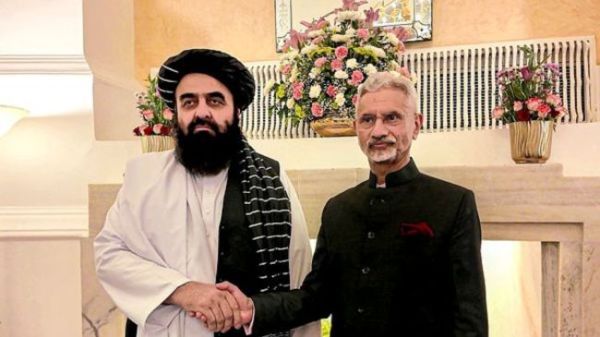 (@HafizZiaAhmad/X)
Note: This is not a model UPSC answer. It only provides you with thought process which you may incorporate into the answers.
Introduction:
— India’s growing engagement with Afghanistan’s trade routes, particularly through the Chabahar port and air corridors, is a strategic pivot to counter Pakistan’s trade disruptions and China’s influence, ensuring regional connectivity by bypassing blocked land routes, boosting Afghan exports with favourable tariffs, and establishing direct air links for critical goods.
— The Pakistani government has suspended cross-border trade in the midst of the most severe deterioration in relations between Afghanistan and Pakistan in decades. It intends to punish the Taliban administration for failing to control associated terrorists who attack Pakistan and seek safety on the other side of the border.
— The suspension of trade is hurting millions of farmers, traders and members of close-knit communities in Afghanistan and Pakistan as trucks full of coal, cement, pomegranates, cotton, medicines and other goods worth $2 billion in bilateral trade last year have not crossed in nearly two months.
Body:
You may incorporate some of the following points in your answer:
— Afghanistan has scrambled to shift trade routes. Yet Pakistan, with its market of 250 million consumers and the land access it offers to India, has been vital to a beleaguered Afghan economy, which has already been hit this year by aid cuts worth hundreds of millions of dollars, two deadly earthquakes and the forced return of more than 2.5 million Afghans from neighboring countries.
India’s Strategic Approach and Initiatives
— India sees Iran’s Chabahar Port as a critical lifeline, connecting it to Afghanistan via the Zaranj-Delaram highway and providing a stable, Pakistan-free route for commodities to Central Asia and beyond.
— India provides large duty discounts and intends to increase bilateral trade above $1 billion, thereby aiding Afghan industries and value addition.
— By engaging economically, India broadens its regional footprint, counterbalances Chinese influence (the Belt and Road Initiative), and develops ties with Kabul, all of which are critical for regional peace and security.
— Indian enterprises are encouraged to invest in Afghan technology and value addition, which promotes local prosperity rather than commodity trading.
Conclusion:
— The Taliban administration has been seeking new business routes: India announced last month that it would launch air cargo services with Afghanistan “very soon,” and Afghanistan’s and Iran’s chamber of commerce signed a trade agreement last month to boost bilateral exchanges.
Points to Ponder
Read about India-Afghanistan relations
Read about India-Cental Asia relations
Related Previous Year Questions
‘Terrorism has become a significant threat to global peace and security.’ Evaluate the effectiveness of the United Nations Security Council’s Counter-Terrorism Committee (CTC) and its associated bodies in addressing and mitigating this threat at the international level. (2024)
A number of outside powers have entrenched themselves in Central Asia, which is a zone of interest to India. Discuss the implications, in this context, of India’s joining the Ashgabat Agreement, 2018. (2018)
UPSC Essentials: Mains answer practice — GS 3 (Week 132)
UPSC Essentials: Mains answer practice — GS 3 (Week 133)
UPSC Essentials: Mains answer practice — GS 2 (Week 132)
UPSC Essentials: Mains answer practice — GS 2 (Week 131)
UPSC Essentials: Mains answer practice — GS 1 (Week 131)
UPSC Essentials: Mains answer practice — GS 1 (Week 132)
Subscribe to our UPSC newsletter and stay updated with the news cues from the past week.
Stay updated with the latest UPSC articles by joining our Telegram channel – IndianExpress UPSC Hub, and follow us on Instagram and X.

Read UPSC Magazine