10 min read


© IE Online Media Services Pvt Ltd



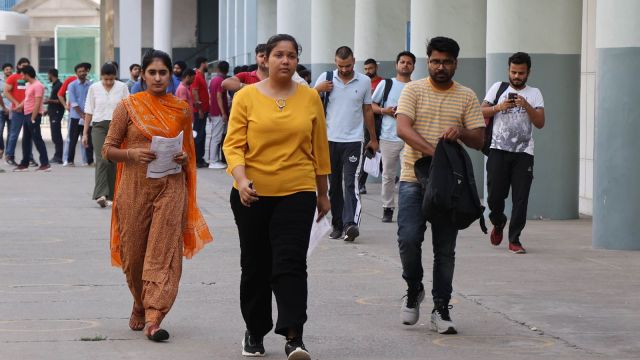 UPSC Civil Services Prelims was held on June 16. (Representative image/ Express Photo by Gurmeet Singh)
Dear UPSC Aspirants,
After a day’s gap, let us talk about the most important question in your mind. How was UPSC CSE Prelims 2024? When everyone around you is saying that it was easier, was it really easy enough to get you qualified? Did UPSC break its ‘unpredictability’ norm and test your basics? Was CSAT too simple to qualify?
Let’s analyse the Prelims exam of 2024 in 10-pointers.
While there was not much change this year in the number of questions asked from each section, Geography saw the maximum count, and History (particularly Modern and Medieval History) saw a dip from the past year.
| Section/Subject Areas | Questions in 2024 | Questions in 2023 |
| Economy | 14 | 14 |
| Environment | 15 | 12 |
| Geography | 18 | 16 |
| History, Art & Culture | 12 (Modern history : 3 approx.) | 13 |
| Polity and Governance | 15 | 12 |
| General Science and Technology | 13 | 15 |
| Miscellaneous (International Relations, Schemes, Social Issues, Military exercises, Books and Authors etc.) | 13 | 18 |
Seems like UPSC decided to test basics in the GS section with not many surprises this time. However, aspirants found few innovation in the the form of three columns in ‘Match the following type’ of questions, an increase in ‘Assertion-Reason’ type of questions etc. The number of ‘pair-type’ questions were less, but did it make the questions tough? No.
Deepanshu Singh, an educator and a mentor for UPSC aspirants who also discussed a list of prelims revision checklist for UPSC Essentials agrees that the paper was simpler than last year. He adds that Geography was application based and there is a need to know articles and Constitutional provisions for Polity. But there is an important caution with easy questions — there is no scope for silly mistakes.
Rohit Pande, UPSC mentor (he has given us a prelims trend analysis in the past), gave three takeaways from the first look of the paper. Firstly, factual questions on the lines of state PCS were high. Secondly, questions on armed forces and the environment were tough. These were generally not from topics that usually aspirants study. Also, polity, economics and geography were easy.
If you had revised Geography with the help of Atlas, the questions would have been easier for you. Also, if you had focussed on basic concepts, Geography might open your doors to Mains.
Ganga and its tributaries, waterfall regions, border questions etc., demanded some map work during your preparation. Questions on climatology, volcanic eruptions, June 21, cocoa production, rainfall, and peatland gave diversity to the section. Overall, the questions were worth attempting. However, over-attempting and taking a chance on such questions are not advisable. It’s okay to get a zero than to earn a negative mark for yourself.
The number of questions asked remained approximately the same as last year. The questions didn’t quiz the aspirants much on constitutional ideals, conceptual themes, case laws or complicated statements. Maximum questions were from expected themes and were factual. Questions on Parts of the Constitution, writs, money bills, basics of the union budget, speaker of Lok Sabha, prorogation and dissolution of the house, delimitation, ethics committee in Lok Sabha etc., might have excited the aspirants at first look. However, the easier the questions, the more disheartening it is if you get them wrong. Isn’t it?
Did you invest a lot of time in preparing for Modern Indian History? Well, there is nothing wrong with it considering the huge syllabus. But the only surprise UPSC could think of for you this year was to reduce the number of questions from Modern India to approximately three and that too easy ones — Government of India Act 1935, Revenue collection by Cornwallis and Provisional presidency of Constituent Assembly (Post Independence).
What usually made History tough was the chronology questions in the past year which did not find place this year. Even Medieval India didn’t occupy much space in the question paper (UPSC’s favourite Vijaynagar Empire was asked indirectly). However, Culture and Ancient India took the number of questions to a respectable 12. Buddhism is UPSC’s constant theme. If you are not preparing it well, you are bound to miss at least two questions, where others would gain. World Heritage List, Intangible Cultural Heritage List, playwright Bhasa, and archaeological sites quizzed aspirants on one basic principle — If you know, you know.
Just like polity, there was not much variation in the number of questions asked from the previous year. Majority of the questions were from Banking and Finance. Questions from the static part of the syllabus dominated the current affairs section. In fact, it appeared that current affairs was linked to static; that isn’t new. Some basic knowledge of the digital rupee, total fertility rate, CSR, types of capital, sectors of the Indian economy, corporate bonds and government securities, etc., would have helped the aspirants sail through the questions easily. Aspirants were expected to stay updated with a few current affairs news on USA Government debt, imports of apples, airports and green field projects etc. To cut the story short, the section on the economy explored almost all the areas of the economy not always found in NCERT books. So, the economy section was not tough too, only if you have no preconceived fear of economy.
There weren’t big surprises in science section. Every question might have given a feeling that you almost knew the theme or must have come across the terms somewhere in the coarse of your preparation. The questions revolved around definitions (NCERT), current affairs and applications. From basics on blood vessels and blood flow to general awareness on giant stars, hydrogel, emerging technologies etc. — the science section, like previous years, tested not the depth but your ‘general’ understanding and know how of science in news and in your basic books. Of course, it was one section where it was wiser to skip the question than to make silly judgements.
https://www.youtube.com/watch?v=wsnxUastCeM?si=1Qe7PHosVuJ7GoXp&w=560&h=315
There is one definite favourite area of UPSC when it comes to environment and ecology i.e. species. This year too atleast five questions revolved around species or their habitat with an addition of a question on foreign species. Wildlife Protection Act and contemporary topics like ‘100 Million Farmers’, source of SO2 emission made the environment section look simpler. However, questions and their options took the level of difficulty high in many questions and as it is said, PYQs remain relevant. Were you able to answer the ‘Chewing gum’ and ‘World Toilet Organisation’ question?
Questions on International Relations were on predictable lines and easy if you prepared current affairs and burning issues well. Questions on countries in news, Sahel region, Red Sea etc., were sourced from newspaper and revision checklists. Defence related questions was the main highlight of the paper. Similarly, government schemes were on predictable lines and so the whole miscellaneous section easier. Will this section take the cut-off high this time?
CSAT wasn’t a ‘shocker’ like the last time, but it was lengthy with few changes. Mudit Gupta, mentor and faculty for the UPSC Civil Services exam, who also provides expertise to aspirants through UPSC Essentials’ CSAT Simplified, told The Indian Express that the Number system had detailed questions which non-Math background students might have found difficult. Questions on topics like Permutation & Combination and Probability found no place this time. Some of the English Comprehension questions had ambiguous language hence those who just relied on it were in a disadvantageous position. Statement and Conclusion type questions in logical reasoning were a new addition. Should we expect this trend to continue in CSAT? Mudit Gupta advises to prepare for the worst when your are preparing for UPSC.
Well, there is no dilemma that the cut-off will be much higher than last year as both GS and CSAT were simpler compared to last year, especially the CSAT. The dilemma is that how much is enough? When the paper is easier, fact based and balanced in the quality of questions, the cut-off generally goes higher. Experts and students are predicting the cut off around 95-100 for general category. Will that be true? Only time will tell. For now, it is advised to the aspirants to continue with their preparation, of course after taking a short break.
To conclude, a general takeaway from this year’s UPSC Prelims paper can be that the commission made basic reading sources, newspaper reading, general awareness, facts, and concepts relevant again. What appears easy at face value may differ in difficulty level as per individual’s preparation level. Of course, one can’t afford to commit careless mistakes as the competition is very tough. A balanced paper means a balanced preparation. Is this going to be the new trend? Of course NOT. One can’t predict the ‘unpredictable’ UPSC.
Subscribe to our UPSC newsletter and stay updated with the news cues from the past week.
The UPSC articles of Indian Express is now on Telegram. Join our Telegram channel- Indian Express UPSC Hub and stay updated with the latest Updates.
For your answers, queries and suggestions write at manas.srivastava@indianexpress.com.

Read UPSC Magazine