4 min read

Journalism of Courage



 (Image credits: dole777 on Unsplash)
 Elon Musk recently announced that Twitter’s working on a new update that will enable users to see if they’ve been “shadow banned.” This came after a second “Twitter Files” instalment that claimed some teams at Twitter worked to reduce the reach of certain right-wing accounts in the US. Instagram beat Twitter at that, though, updating its app with a similar feature a day before Musk’s announcement. Today, we take a look at how various social platforms implement shadow bans and their implications.
If you are a creator and have noticed a sudden, significant drop in engagement on your content then chances are that you’ve been shadowbanned. When that happens, your account and its posts become a “shadow” that fewer people – or even no one but you – can see. This differs from an outright ban where the account becomes inaccessible. Social platforms typically don’t inform users that they’ve been shadowbanned to reduce the chances of them trying to workaround it by, say, creating a new account.
Instagram on Wednesday announced that it’s expanding the Account Status page to help people with professional accounts tell if they’re shadow-banned.
“We’re expanding Account Status to help people with professional accounts understand if their account’s content is eligible to be recommended to non-followers, and what they can do if it’s not,” the company’s blog post read.
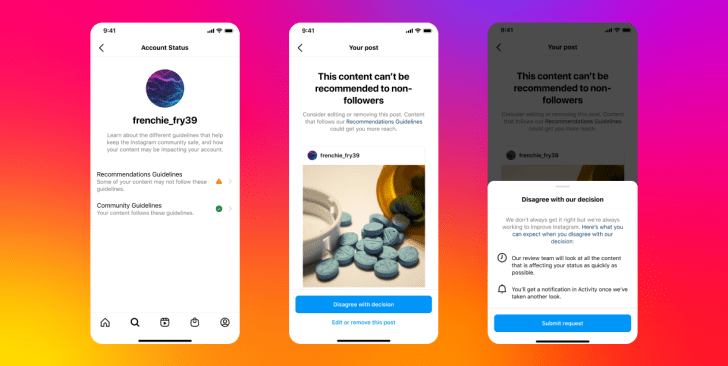 You can visit Account Status via Settings > Account > Account Status (Image credits: Instagram)
Shadowbanning isn’t a term that’s officially used by Instagram, but the platform is known to deprioritise accounts if they’re found to violate terms. With this update, however, Instagram is making things clear. If your account’s content cannot be recommended on Explore, Reels, and Feed recommendations anymore, your account’s status will reflect that.
You can check this by tapping on your profile picture in the bottom right of the bottom action bar, and tapping in the top right. Then navigate to Settings > Account > Account status.
If you feel that your post has been unfairly removed, you can request Instagram’s review team to take another look.
Facebook denies the existence of blatant shadowbans on the platform. But Meta CEO Mark Zuckerberg, in a Joe Rogan podcast from August, had pointed toward “demotions.” Posts that are flagged as misinformative or fall into harmful content categories are “less shown,” according to Zuckerberg. This isn’t anything out of the ordinary, though, since most platforms take steps to limit the reach of harmful content.
However, since a lot of the demotions are handled by the “system,” Zuckerberg admitted that there are “mistakes.” These can be due to “some bug in the system” or because “some system didn’t work like it was supposed to.”
If you feel like your content’s been removed unfairly on Facebook, you can appeal against it by following the steps below:
1. Click your profile picture in the top right of Facebook.
2. Navigate to Settings & privacy, then select Settings.
3. Click on Support Inbox.
4. Open the message sent to you about your removed content.
5. If you see the option, click disagree with decision.