


© The Indian Express Pvt Ltd
Tags:


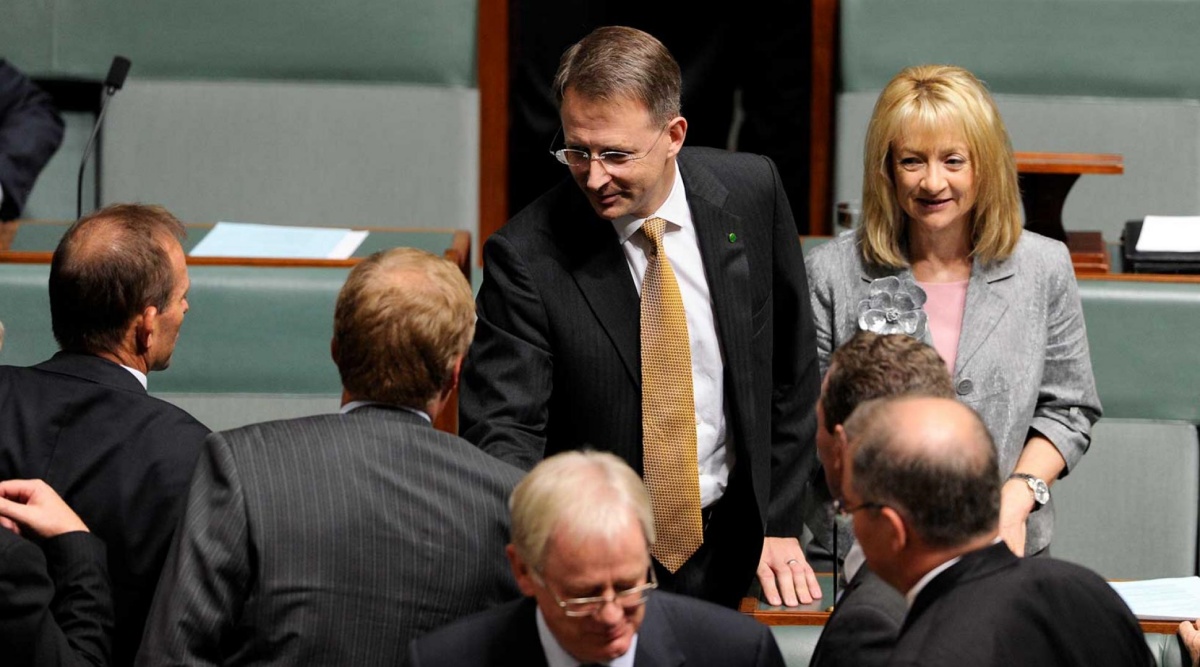
If countries like India consider a law similar to Australia’s News Media Bargaining Code, they should first gather economic evidence to support the proposal, said Paul Fletcher, a Member of Parliament in Australia, who was its Minister of Communications when it passed the code in 2021. In an interview with Soumyarendra Barik and Anil Sasi, he spoke about how Australia formulated the media code, handled pushback from Google and Facebook and brought them onboard, and how the law can be replicated in other countries. Edited excerpts:
How did you set out with the news media bargaining code, and how did you arrive at having a negotiating feature in the law while also having an arbiter?


The reason for this was the fundamental problem that Google and Facebook were very successful in attracting eyeballs, monetising that and generating digital advertising revenue. But as part of doing that, they were using content generated and paid for by news media businesses. As a consequence the revenues that support journalism were being eroded, which was reducing the amount of journalism and that was creating a negative feedback loop. There was a lot of pushback from Google which threatened to block search services in Australia and Facebook which temporarily disabled news on its platform in the country. Since the code has come into effect, Google has entered into commercial negotiations and deals with at least 19 media organisations and Facebook with 13.
From what the digital platform enquiry started out to do till the way it panned out, do you think there could have been some improvements on the way given that it seems Facebook extracted certain concessions on what was the initial proposal?
We released a draft of the code in July 2020 and invited stakeholders’ comments. And as a result of that, there were some modifications in the version that was introduced to the Parliament, then, over that period, in the lead up to the legislation being voted on, there were some other fairly modest changes that were made. And that was as a consequence of some direct negotiation between Google and Facebook. But the fundamentals did not change. And indeed, Facebook restored all of those pages.
Was it a strategic move from the Australian government when it started speaking to Microsoft about bringing its Bing search engine in the country in a big way? Was it done to paint a picture for Google?
So, we had this proposal from Google that they might exit the market, although it was never clear how that could actually be executed. But Microsoft reached out and indicated that they’d be interested to speak to us. And our Prime Minister said, that’s a very good idea. We would like to speak to them. So we had a conversation between our Prime Minister and the Chief Executive of Microsoft. I subsequently had some follow up discussions with Brad Smith, who’s president of Microsoft and head of their global legal and regulatory functions. He subsequently issued a blog post, in which he said that Microsoft supported what the Australian government was doing. We were very interested to know if Microsoft would expand its operation in Australia. And it was certainly a conscious decision on our part that we did not want to just sit there being at the receiving end of threats. We welcome all businesses, but we also have a strong principle that if you do business in Australia, you need to comply with the laws.
Policy seems to be playing catch up with technology. How do you see that panning out over the coming years?
When the internet exploded, it happened so quickly that governments were caught on the backfoot. But over time, governments have been catching up and building a sense of confidence. Also the idea that the internet should be beyond the reach of the government, which was seriously argued 20 years ago, is not something that is acceptable in any democracy.
Some of India’s recent regulatory proposals for the internet have attracted criticism from some people for perhaps allowing government overreach. Where do you stand on the issue of having wide exemptions for governments in such policies?
I think ultimately those are matters for sovereign governments. So I am certainly not going to make any comment about the Indian government’s policies in terms of data sovereignty. But these are decisions that governments should make and not a tech company headquartered in California, or any other place. Sovereign decisions should be made by sovereign governments. Albeit, what is very important is that governments make every effort to understand technology and to consult not to make rash decisions.
How would you propose replicating the Australian code in India given the reality that from a revenue point of view, India is not a big market for most tech companies, and wages of journalists is also low compared to countries like Australia, USA etc.?
A key principle is to gather the economic evidence and weigh up these matters. Now, the way the news media bargaining code in Australia operates, is that ultimately, what we want to do is to encourage commercial deals between Google and Facebook on the one hand, and a news media business on the other. And the logic of it is that in an ordinary market, where Google and Facebook didn’t have such market power, they wouldn’t be sitting down and doing these deals, it would be impossible for them to come into any country. And the arbitration was a fallback, all those deals that have been done, have not required going to the arbitrator at all. In each case, they’ve been commercial deals. And so I think the answer to the question you raise is, that would be a matter commercially, to be negotiated. There will be many, many differences between Australia and India, but the key principle is the parties should be at the table doing deals.


