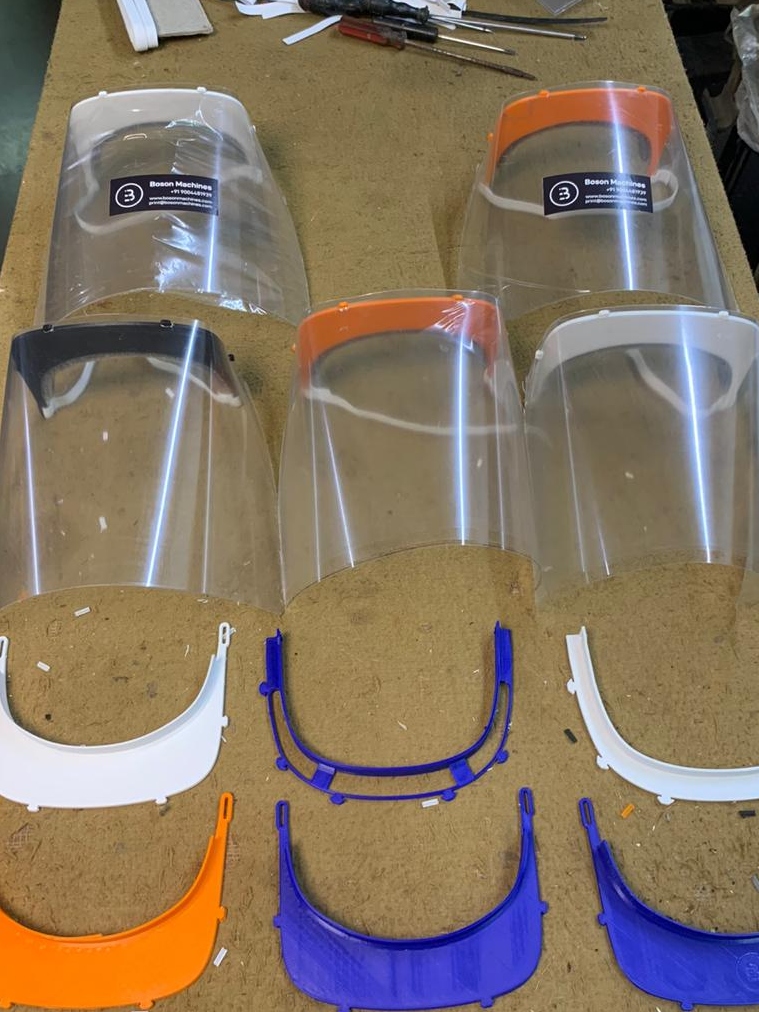
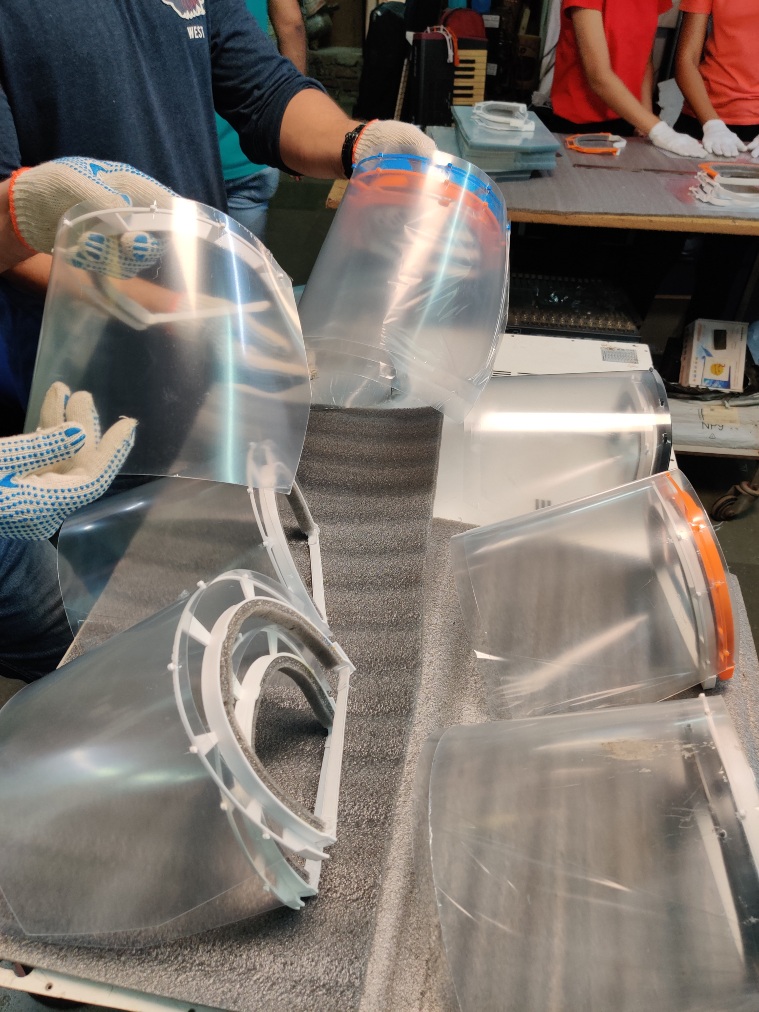
The 3D printing company is providing support to medical professionals by printing face sheilds. (Image credit: Parth Panchal/ Boson Machines)
It’s been busy days for Parth Panchal and Arjun Panchal, co-founders of Boson Machines, a Mumbai-based startup that has been printing 3D face shields for doctors and health workers. The company got into 3D printing of face shields five days back after it was approached by Mumbai’s Jaslok Hospital.
“We went to the hospital for three days, worked on three to four iterations of the design and sat with a panel of five to eight doctors to finalise the design of face shields as recommended by them. Once that was done, we started production of 20 to 30 3D printed face shields,” said Parth, the 26-year-old who started the 3D printing firm in 2017.
You’ve Read Your Free Stories For Now
Sign up and keep reading more stories that matter to you.
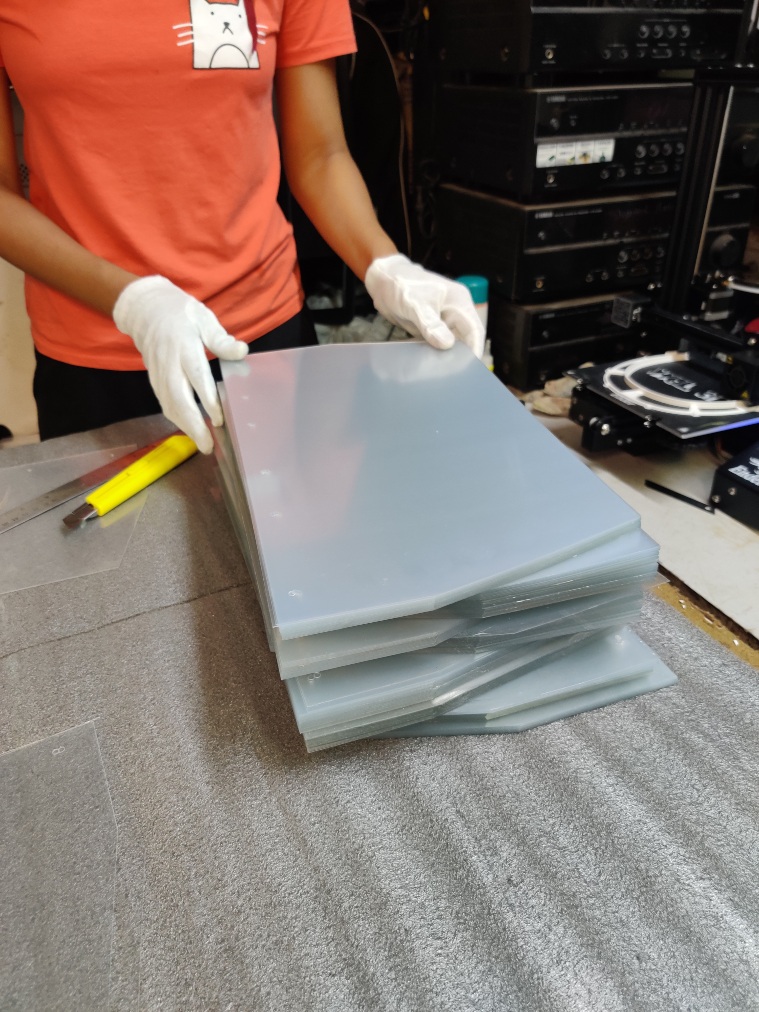
Unlike N95 masks, which only cover your nose and mouth, face shields are attached to the wearer’s head and have a transparent PVC film that covers most of the user’s face and even ears. “These are recommended for doctors as they protect them from the risk of being exposed to a sneeze, cough or any type of spatter on the facial region,” he says. However, Panchal also adds that these shields are not a replacement for regular masks recommended by doctors but act as an extra layer.
Face shields are attached to the wearer’s head and have a transparent PVC film that covers most of the user’s face and even ears. (Image credit: Parth Panchal/ Boson Machines)
The 3D face shields are now being used only for one patient after which the doctors discard them though the front visor can also be sterilised using autoclaving. Also, though the shields are widely used across the world, it is not clear how effective they are in the end.
Express Tech is now on Telegram. Click here to join our channel (@expresstechnology) and stay updated with the latest tech news
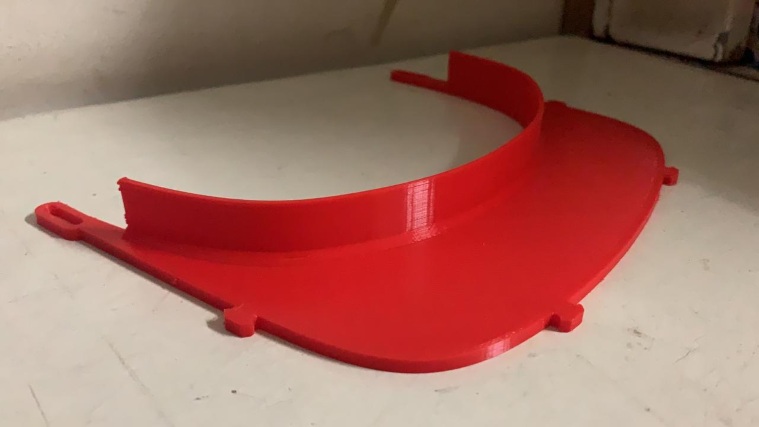
The frame is made out from PLA (polylactic acid), one of the most popularly available raw materials for 3D printing, which cannot be sterilised like the visor. But Panchal says the company can sterilise the frame by using 70 per cent rubbing alcohol, soaking them in a 30 per cent KOH solution followed by a round in ethylene oxide (EO) gas oven designed specifically for sterilising plastic medical equipment.
Each sheild takes about 90 minutes to print and costs between Rs 150 and Rs 200 depending on the design. (Image credit: Parth Panchal/ Boson Machines)
The Panchals and their team are working round the clock to meet the demand for 3D printed face shields, which are being made at a factory in Goregaon, Mumbai. Boson Machines is currently producing 500 to 800 3D printed face shields per day, and now the company aims to manufacture anywhere between 5000 and 8000 units per day to meet the growing demand.
Story continues below this ad
With orders coming in on WhatsApp and social media channels, Parth says the company has deployed all 40 of its 3D printers. Now, the team is coordinating with colleges across the city which have 3D printers and can lend support to the company.
The frame is made out from PLA (polylactic acid). (Image credit: Parth Panchal/ Boson Machines)
Parth says the advantage of 3D printing is that one person can handle 20 machines at the same time and each machine can print a product overnight without monitoring. Each sheild takes about 90 minutes to print and costs between Rs 150 and Rs 200 depending on the design — there are variations, including one that is enclosed from the top.
As the coronavirus pandemic continues to spread across India, health agencies and hospitals are facing acute shortages of N95 masks. This is why, Parth says, a lot of big and small hospitals, testing labs and government agencies have shown interest in 3D printed face shields, including KEM Hospital and Kasturba Hospital in Mumbai, Mumbai Police Force, the Customs Department and multiple hospitals from Jaipur, Bihar, Bangalore, and Pune, among others.
Boson Machines is currently producing 500 to 800 3D printed face shields per day, (Image credit: Parth Panchal/ Boson Machines)
Boson Machines, which manufactures 3D printers and runs a design house where it creates new products, is making the files freely available for anyone to download and print. “Anyone can go to our website, download the file and immediately start printing. We had to work very hard to get the design right with a doctor, but everyone shouldn’t have to reinvent the wheel, they can use our designs, start production and distribution,” he said.
Story continues below this ad
Commonly referred to as additive manufacturing, 3D printing creates three-dimensional parts from computer-aided design (CAD) models by successively adding material layer by layer until the physical object is created. Both metal and plastic products can be made with a single machine without any kind of tooling.
3D printing technology has existed for quite some time but its popularity has seen a steady rise in recent years, especially in healthcare, aerospace and automotive sectors where they are used to create prototypes. However, the cost of raw materials, as well as limited production capacities, are still limitations.
Meanwhile, Parth says his design team is already working with a few hospitals in Bengaluru and Mumbai to work on 3D printed ventilators. “It’s complicated but we’ll figure it out,” he said.
Anuj Bhatia is a seasoned personal technology writer at indianexpress.com with a career spanning over a decade. Active in the domain since 2011, he has established himself as a distinct voice in tech journalism, specializing in long-form narratives that bridge the gap between complex innovation and consumer lifestyle.
Experience & Career: Anuj has been a key contributor to The Indian Express since late 2016. Prior to his current tenure, he served as a Senior Tech Writer at My Mobile magazine and held a role as a reviewer and tech writer at Gizbot. His professional trajectory reflects a rigorous commitment to technology reporting, backed by a postgraduate degree from Banaras Hindu University.
Expertise & Focus Areas: Anuj’s reporting covers the spectrum of personal technology, characterized by a unique blend of modern analysis and historical context. His key focus areas include:
Core Technology: Comprehensive coverage of smartphones, personal computers, apps, and lifestyle tech.
Deep-Dive Narratives: Specializes in composing longer-form feature articles and explainers that explore the intersection of history, technology, and popular culture.
Global & Local Scope: Reports extensively on major international product launches from industry titans like Apple and Google, while simultaneously covering the ecosystem of indie and home-grown tech startups.
Niche Interests: A dedicated focus on vintage technology and retro gaming, offering readers a nostalgic yet analytical perspective on the evolution of tech.
Authoritativeness & Trust
Anuj is a trusted voice in the industry, recognized for his ability to de-jargonize trending topics and provide context to rapid technological advancements. His authority is reinforced by his on-ground presence at major international tech conferences and his nuanced approach to product reviews. By balancing coverage of the world's most valuable tech brands with emerging startups, he offers a holistic and objective view of the global technology landscape.
Find all stories by Anuj Bhatia here.
You can find Anuj on Linkedin. ... Read More