2 min read
© IE Online Media Services Pvt Ltd



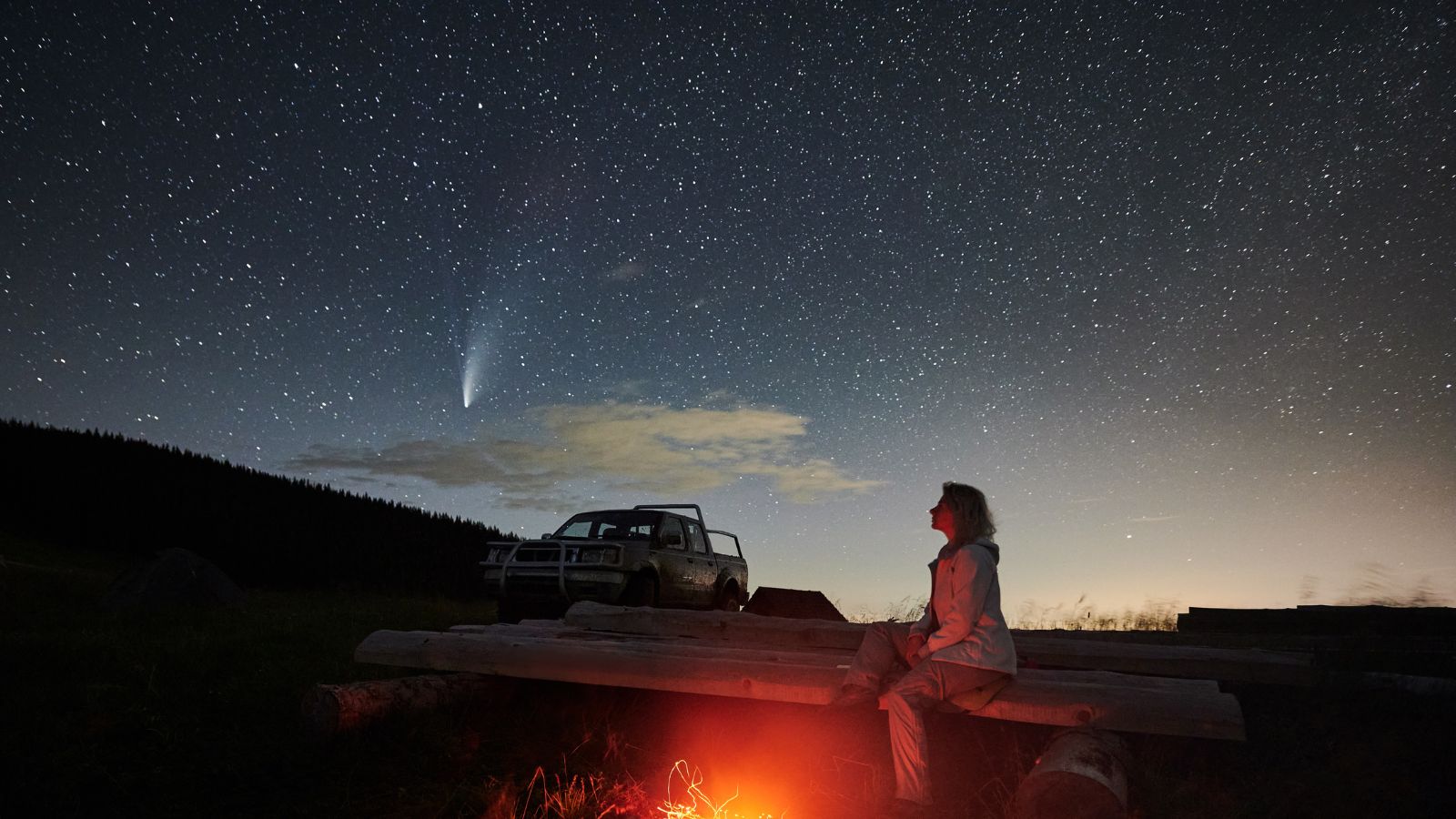 The upcoming month and the following year 2026 will have a lot of stargazing events lined up, from a supermoon to planet sighting. (Image: freepik)
Skywatchers across the globe can look forward to a busy period of astronomical events from the final months of 2025 through the early part of 2026. With major planetary positions, bright meteor showers and a significant lunar eclipse on the calendar, the coming season offers plenty of reasons to step outside and look up.
The year ends with a noticeable lunar event — a supermoon on December 24, when the full Moon appears slightly larger and brighter due to its closer distance to Earth. As skies get longer and clearer in winter, prominent planets like Jupiter and Saturn remain visible in the evening hours. The Geminid meteor shower, known for producing bright meteors, continues to be active in mid-December under generally favourable dark skies.
Planet enthusiasts start the year strong. Jupiter reaches opposition on January 10, making it the brightest and it will appear throughout the year. Opposition places the planet directly opposite the Sun from Earth’s viewpoint, offering ideal visibility throughout the night.
The first major event of the year arrives on March 3, with a total lunar eclipse, commonly referred to as a “blood moon”. During totality, the Moon takes on a reddish colour as it passes through Earth’s shadow.
In the months ahead, several noteworthy planetary alignments and night-sky phenomena will occur: A close conjunction in the evening sky brings Jupiter and Venus into a tight visual pairing. A total solar eclipse becomes the most significant daylight event of the year, drawing global attention as the Moon completely blocks the Sun along a narrow path. The prolific meteor showers, Perseids, peaking in mid-August, and the Geminids in December continue to be reliable annual displays.
On October 4, Saturn will reach opposition, making its rings and major moons easier to observe. November 16 will feature a close approach between Jupiter and Mars, placing two of the brightest planets together in the sky.