3 min read
© IE Online Media Services Pvt Ltd



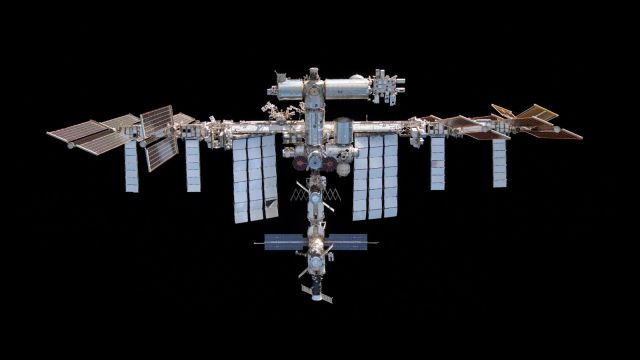 The study found that most of the conditions, such as the vacuum of space, microgravity, and drastic temperature changes, did not affect the moss spores back on Earth. (Image: NASA)
Scientists have discovered that moss spores survived a long journey into space. Before returning to Earth after spending nine months outside the International Space Station (ISS), more than 80 per cent of the spores were still capable of reproducing.
According to the researchers’ findings, published in the journal iScience on November 20, the discovery enhances our understanding of how plant species survive in harsh environments.
According to Live Science, moss is a perfect candidate to survive in the extreme environment of space, where life-forms are pushed to their limits by extreme temperature fluctuations, altered gravity, and high radiation exposure. Moss thrives in some of the most extreme environments on Earth, from the cold peaks of the Himalayas to the dry, scorched sands of Death Valley.
First, the researchers tested three cell types of P. patens from various stages in the moss’s reproductive cycle. They found that sporophytes — cell structures that encase spores — showed the greatest stress tolerance when exposed to ultraviolet (UV) light, freezing, and heat.
Following that, sporophyte samples were stored in a special exposure facility attached to Japan’s Kibo module outside the International Space Station (ISS) for around nine months in 2022. Afterwards, the samples were returned to Earth.
“Surprisingly, over 80 per cent of the spores survived, and many germinated normally,” Tomomichi Fujita, a plant biology professor at Hokkaido University in Japan, wrote in an email to Live Science. Based on this research, Fujita and his colleagues created a model indicating that moss spores may be able to endure in space for up to 5,600 days, or almost 15 years.
The study found that most of the conditions, such as the vacuum of space, microgravity, and drastic temperature changes, did not affect the moss spores back on Earth. Samples exposed to light, especially high-energy UV wavelengths, performed worse. Light damage significantly decreased the levels of pigments that the moss uses for photosynthesis, such as chlorophyll a, impacting the moss’s subsequent growth.
P.patens performed considerably better than other plant species examined under comparable conditions, although some moss samples were harmed by space conditions. According to Fujita, the spores’ spongy, protective shell may help defend against dehydration and UV rays.
“This protective role may have evolved early in land plant history to help mosses colonise terrestrial habitats,” he says.
The “spores’ success in space could offer a biological stepping stone for building ecosystems beyond our planet,” says Fujita, even though this might seem to be an exercise in pushing the boundaries of a single species. He plans to test additional species in the future to learn more about how these resilient cells withstand such demanding circumstances.