A partial lunar eclipse occurring on the intervening night of Saturday and Sunday (October 28-29) will be visible from all places in India.
Though the Moon will enter penumbra at Saturday midnight, the umbral phase is expected to start in the early hour of Sunday.

Lunar eclipses are not as rare as solar eclipses. Once or twice or more times every year, the Earth, the Moon and the Sun line up in just the right way to create the “shadowplay” that we call an eclipse, according to NASA. There are three different kinds of lunar eclipses—total, partial and penumbral.
Here are 10 key points to note about the partial lunar eclipse:
The partial lunar eclipse will be occurring on the intervening night of Saturday and Sunday (October 28-29).
The duration of the eclipse will be 1 hour 19 minutes. The umbral phase of this eclipse will begin at 1.05 IST on Saturday and will end at 2.24 IST.
The partial eclipse will be visible from all places of India. It will also be visible in the region covering Western Pacific Ocean, Australia, Asia, Europe, Africa, eastern South America, northeastern North America, the Atlantic Ocean, the Indian Ocean and the South Pacific Ocean.
A lunar eclipse occurs on a full moon day when the earth comes in between the Sun and the Moon and when all the three objects are aligned.
A total lunar eclipse occurs when the whole moon comes under the umbral shadow of the Earth, while a partial lunar eclipse occurs only when a part of the moon comes under shadow of the Earth.
During partial eclipses, Earth's shadow usually appears very dark on the side of the Moon. But what people see from Earth depends on how the Sun, Earth and Moon align.
During partial eclipses, Earth's shadow usually appears very dark on the side of the Moon.
Unlike a solar eclipse, lunar eclipses are safe to view with the naked eye and with other viewing equipment. You can make use of binoculars or a telescope to get a better view of the eclipse.
The eclipse is totally safe to watch, unlike the partial phase of a solar eclipse and you can stare at the eclipsed moon for as long as you want. You may also eat all you want. The same is true for pregnant women and ill people.
The next lunar eclipse, which is going to be a total lunar eclipse, will be visible from India on September 7, 2025.
The last lunar eclipse which was visible from India was on November 8, 2022. It was a total eclipse.


 1 min read




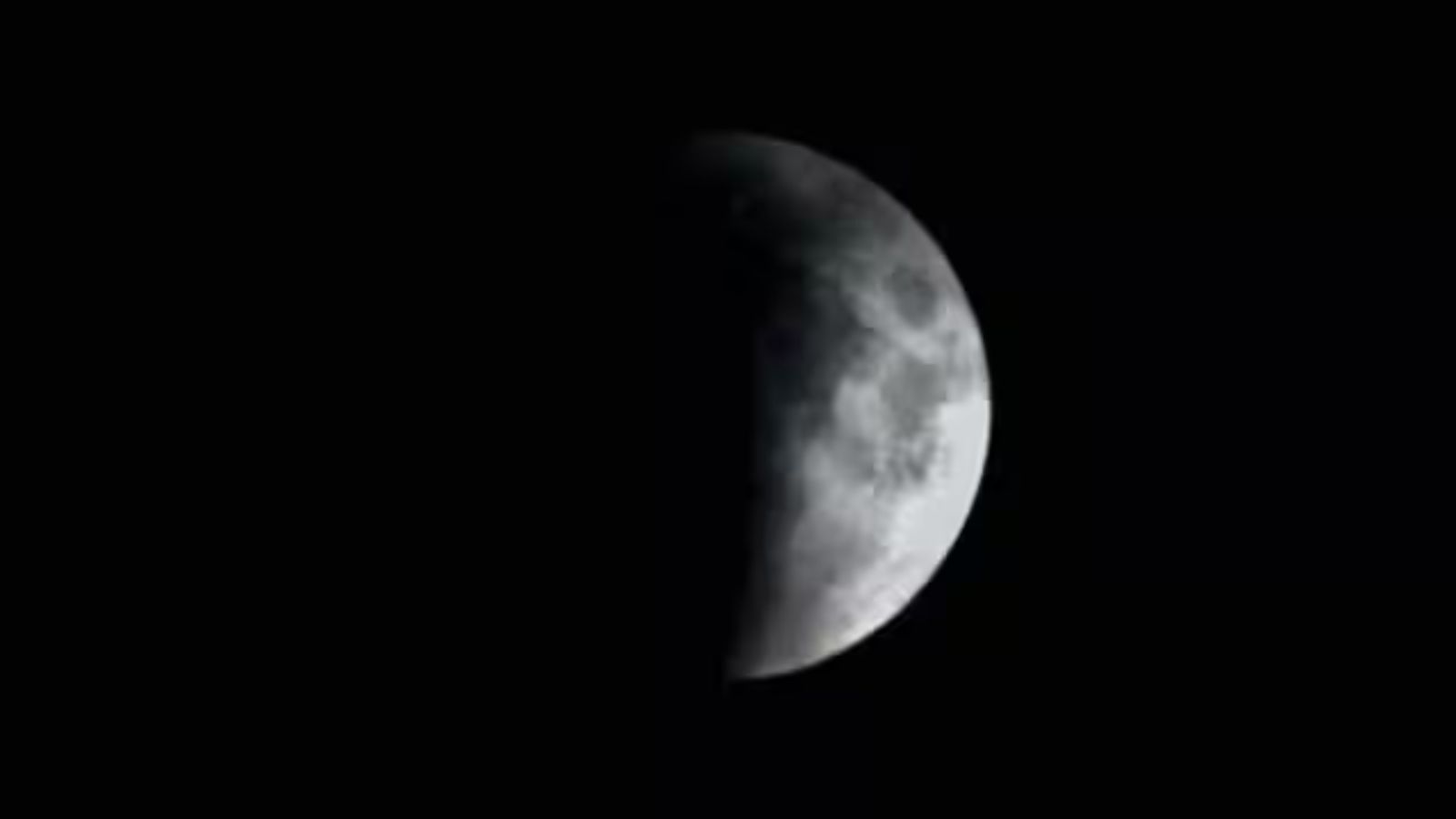 The next lunar eclipse, which is going to be a total lunar eclipse, will be visible from India on September 7, 2025. (Representational)