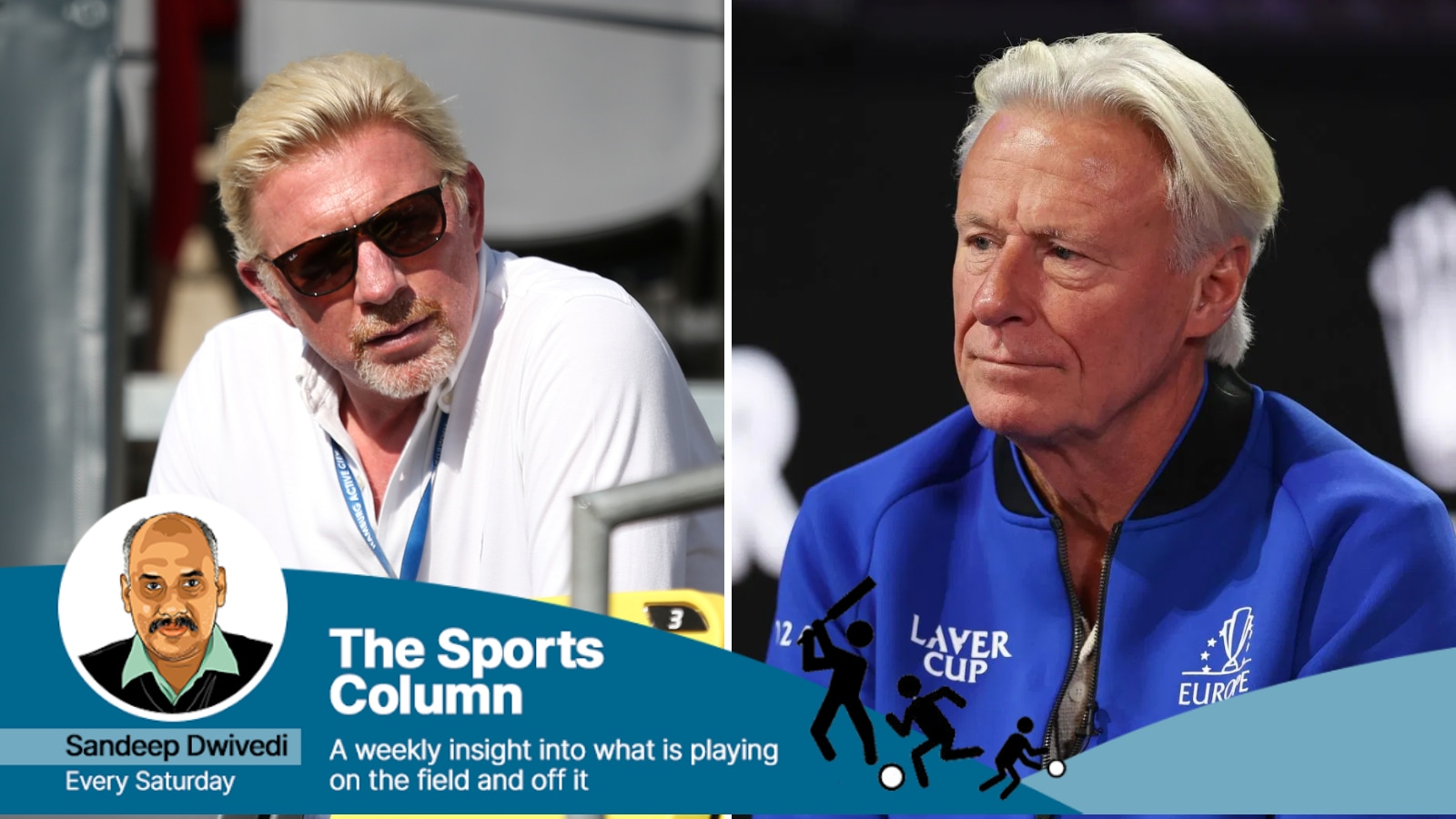
Bjorn Borg’s heart is beating like a jungle drum. Well after his retirement, on way to play a veterans match in a small city in the Netherlands, the tennis great had collapsed on a small bridge arching over a canal.
This is the mid-1990s. Borg, in his 40s, had returned to the court after two decades of drugs, pills, alcohol, bad relationship decisions and worse business calls.

Having called time on his career at 26, the legions of Borg fans were desperately hoping this was the proverbial second wind. And here he was breathless, that famously robust heart of his – legend has it that his resting pulse rate used to be 29 – refusing to beat. His father stood over him helplessly, dreading that life’s ultimate tragedy might soon unfold – watching his son die.
This is the dramatic start of Borg’s just-released memoir Heartbeat. “There is a little devil that sits on my shoulder and persistently tries to drag me down into a suffocating darkness. That fateful day in Holland was the closest he came to succeeding” – is how he completes the compelling first chapter.
Thankfully, Borg lived to tell his tale. As a kid, the silent Swede was called ‘Burken’ – jar in Swedish – by his coach. That jar – rather a can full of intoxicated and depressed worms – had opened.
Heartbeat reveals the troubled mind of the Jesus Christ lookalike. For tennis fans of a certain vintage, if there was ever a picture that defined serenity; it was Borg kneeling on the Wimbledon turf after his fifth title, fists clasped together like a faithful at the altar, that flowing blond hair tied with a Fila headband and his all-wood Donnay racket lying next to him.
Without his Donnay, he was no God. Without the four-time-a-year high of a Grand Slam, he would look for alternatives. In 1989, reports would emerge of him being rushed to hospital one night. There would be whispers of a suicide attempt, but Borg’s team would blame it on sleeping pills.
Story continues below this ad
The tell-all memoir reveals it was a cocktail of drugs that was responsible for his second near-death experience.
“The first time I tried cocaine, I got the same kind of rush I used to get from tennis. The feeling itself was new, and it made me feel incredibly energised. I was hooked immediately,” he writes.
Heartbeat reveals how the humdrum of daily life gets harrowing for those used to live under the spotlight and also answers the question that has perplexed fans for ages – Why the sharpest sporting minds do the stupidest things? And it isn’t just Borg.
Tormented geniuses
Why couldn’t the fearless Vinod Kambli deal with the demons within without getting intoxicated? George Best would dodge past the best of defenders, see a way where none existed but failed to negotiate the labyrinth called life? Or how could Boris Becker throw it all away.
Story continues below this ad
A Wimbledon champion at 17, his coaches said Boom Boom rarely repeated a mistake. But after doing time behind bars for tax evasion in early 2000, he would be sentenced to 30 months’ imprisonment in jail for charges under the Insolvency Act in 2022.
Like five-time Wimbledon champion Borg, the German wunder kid, who dived around the All-England Centre Court like it was the carpet of his living room, couldn’t handle life without tennis. As coincidences go, like Borg, Becker too is starting again. He too has come out with a book – a third biography.
This time, he wants to speak about how he survived those 230 days in prison and it’s aptly called Inside: Winning. Losing. Starting Again. The book is also about his third wife and the soon-to-be-born fifth child.
So much happens in Becker’s life that he needs to keep his fans abreast with updates about his tumultuous times. And for someone struggling for cash, book deals are too lucrative to look the other way.
Story continues below this ad
In a unique metaverse moment, Becker appears in the Borg book. They have a lot in common and thus a lot to talk about. “I really relate to Boris. He’s made a lot of bad decisions and business deals too … he’s also way too trusting … There aren’t many who can truly understand what we’ve experienced. Boris calls us BB1 and BB2. I’m BB1, of course. Sometimes he’ll text me: ‘Hello BB1, how are you?’.”
Normal is boring
Few years back, BB2 was at the Berlin film festival where his documentary ‘Boom! Boom! Boris Becker vs The World’ explained why the likes of him and Borg mess up their second innings.
“To win a Wimbledon at 17, you have to be a little bit crazy … you do things that nobody has done before in order to achieve something that nobody has achieved before. We are different. Otherwise, we wouldn’t be better than, in my case, thousands of other tennis players.
“So to have that mindset and live a normal lifestyle is almost impossible because in my heart of hearts, I am a tennis player. And when the going gets tough, I usually get better. I’m not afraid of a tie-break. I’m not afraid of a final. But in real life, that’s a problem sometimes.”
Story continues below this ad
In the real world, one needs to be afraid, cautious and conservative.
Men with such storied lives, often struggle to find company that keeps them engaged. Becker retired at 31 and would end up spending evenings with everyday people with everyday stories.
“You drink up because the people you’re talking to are so boring. With a bit of wine, you make it more interesting,” Becker, on a book tour, tells The Sunday Times.
But when these tough men are thrown into a crisis, the mental toughness comes handy. Becker, the book says, entered the prison in England wearing a Ralph Lauren suit and Wimbledon tie. In a truly cinematic coincidence, the All-England club was just two miles away from Wandsworth prison, Becker’s temporary home. The great survivor would see through this crisis too.
Story continues below this ad
Coming in handy was the famous Becker charisma. A giant Lithuanian drug dealer and a paedophile-hater would be his protector, a Sri Lankan murderer would be his barber and prisoners would use “cups, cutlery, chairs and belts” to make a happy ruckus when Novak Djokovic, who Becker coached once, won Wimbledon 2022. “In my mind, I was flying,” he writes in his latest book.
Borg would have heard these jail tales from Becker often. The Swede champ has a cozy comfortable home at Ibiza where he often hosts his colourful German friend.
“We’ve had many long, deep conversations at Ibiza, about tennis and about life … On the island, we can be carefree, just take a boat to a quiet cove, dive into the turquoise water and float. Hear the music and laughter from other boats, toss a ball around and let the waves rock us. Talk about life, laugh until we cry.”
Oh, what it would be to be a dragonfly on those turquoise waters.


 7 min read



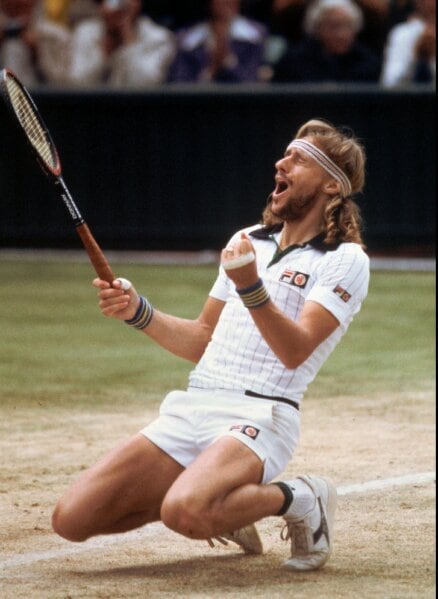 For tennis fans of a certain vintage, if there was ever a picture that defined serenity; it was Borg kneeling on the Wimbledon turf after his fifth title. (AP)
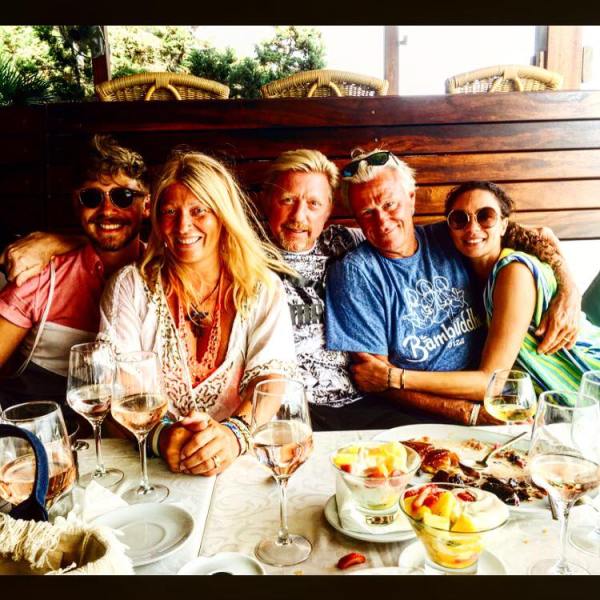 Boris Becker with Bjorn Borg’s family in Ibiza.