8 min read
Stay updated with the latest sports news across Cricket, Football, Chess, and more. Catch all the action with real-time live cricket score updates and in-depth coverage of ongoing matches.
© IE Online Media Services Pvt Ltd



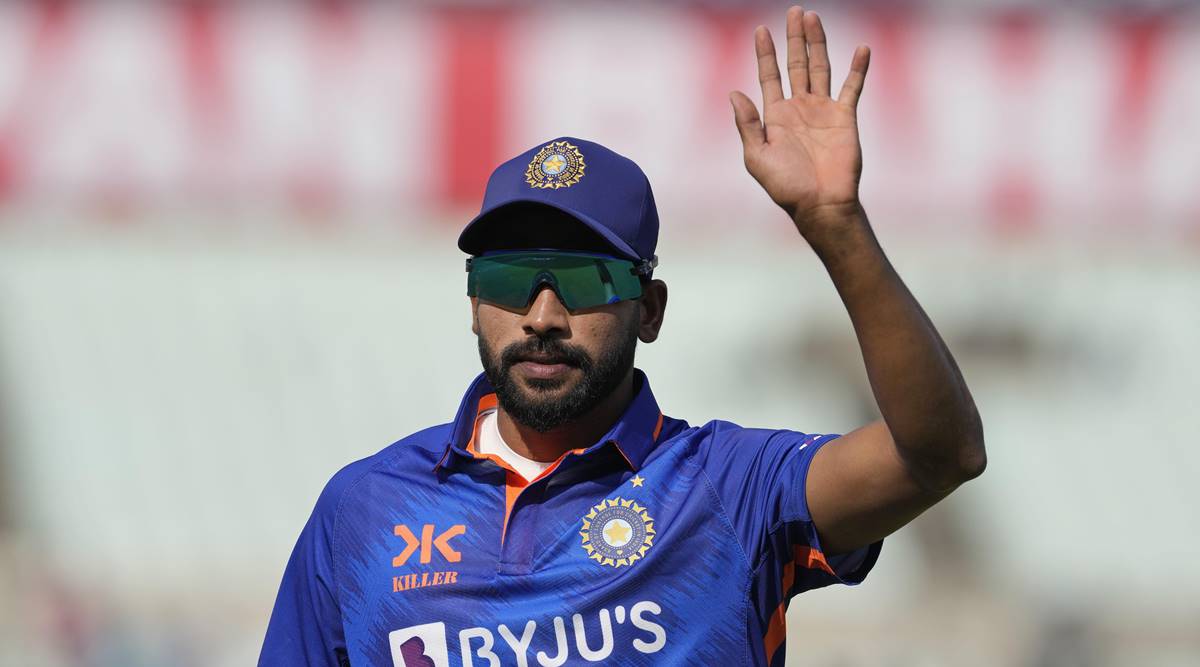 Indian cricketer Mohammed Siraj. (AP Photo)
 At the Eden Gardens, unused for nearly 30 overs, Mohammed Siraj made his impatience visible. He would fret and fidget near his exiled station at deep square-leg, he would strike up a conversation with the ball boys, he would grin and grimace, he would wave randomly at his captain Rohit Sharma for no perceptible reason, he would shadow-bowl, talk to himself, slap the side of his head, carve out imaginary angles with his hands, and would barge into a mid-pitch conversation among the brains-trust uninvited. And finally, when Sharma summoned him for the 40th over, he broke into a wide smile and rushed to the crease.
The supreme rhythm that he is enjoying, he simply does not want to stop bowling, as though he were unbothered about the workload he is shouldering as the lead bowler in this format, as though he were in such divine bowling space that he does not want to go un-bowled, or under-bowled. The happiness in his bowling flows onto his demeanour.
Siraj’s emotions are so spontaneous that you could read his mind just by watching his body, or precisely his speed along the ground, the way he explodes into his run-up, runs through his run-up, the gather and the leap, the whir of the shoulders during the release and the smooth landing. When he is in rhythm, he is smooth and bristling, when not he staggers and stutters, sometimes stops in his run-up, sometimes loses his footing, remeasures his steps and shakes his head in rage.
In the last 12 months, the latter Siraj has barely shown up. It has been a season of resurgence, a period wherein he has steadily drifted from living under the shadow of Jasprit Bumrah and Mohammed Shami and cast his own long shadow on the game. From the spunky sidekick, he has emerged as the lead man in a period wherein Bumrah, India’s gun bowler still, has spent more time on the physio’s table and in rehab rooms, and Shami has battled inconsistency in Tests and profligacy in ODIs.
It would not be an exaggeration to say that since his comeback from a hamstring injury he sustained in Johannesburg, Siraj has been the country’s most influential fast bowler in Tests, ODIs, and whenever furnished a look-in, in T20Is as well (8-1-41-6 reads the combined analysis of his last two T20Is). It could be that nothing gives him satisfaction like bowling with the red ball, as he admitted in Bangladesh; it could be that without the T20 platform that the IPL offered, he would have withered unseen, but it is the white ball in 50-over cricket that has harnessed the best out of him.
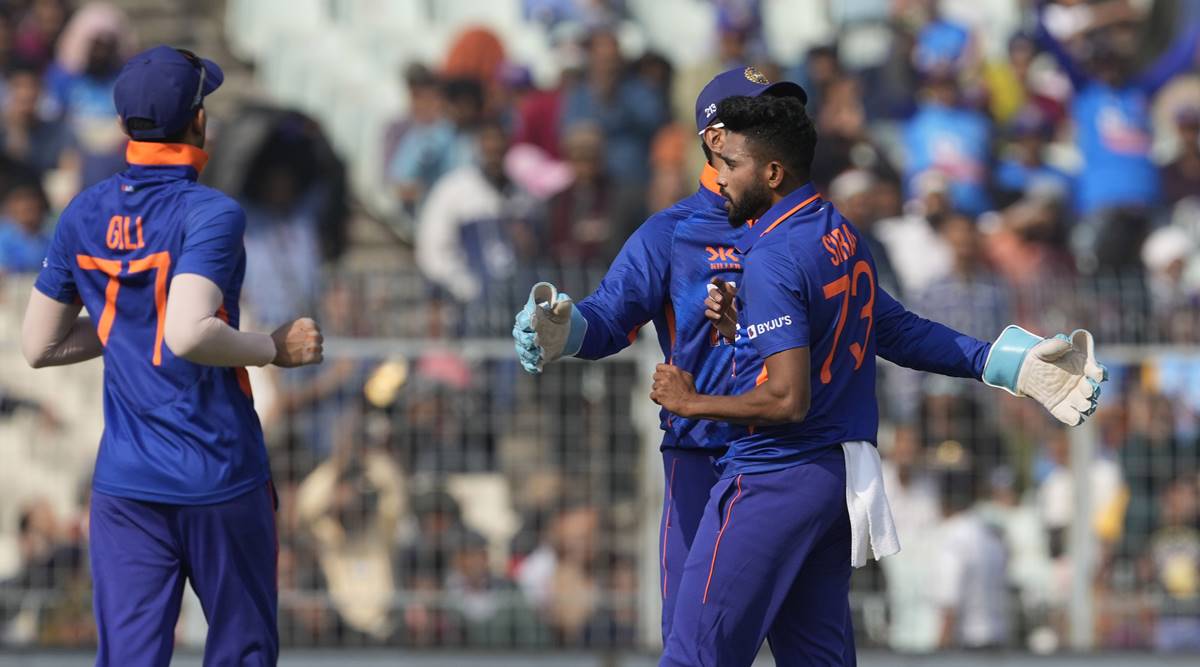 A teammate congratulates India’s Mohammed Siraj. (AP Photo)
Since his ODI return—against West Indies in Ahmedabad last February—Siraj has been India’s most successful, economical and influential bowler. In 17 ODIs, he has bagged 29 wickets at an average of 21.51, an economy-rate of 4.63 and a strike-rate of 27.8. Shami is an apt point of comparison; in his last 17 ODIs, he has picked up 26 wickets, but has also bled 6.24 runs an over, his strikes have come every 32.3 balls and have cost 33.69 runs apiece. In the recent past, Siraj has outshone Bumrah as well—who in his previous 14 ODIs has plucked just 18 wickets at an average of 38.16 and an economy-rate of 5.16.
New-ball potency
Siraj, thus, gives more fire as well as thrift, bark as well as bite. Both attributes had seldom dwelled together in the immediate build-up to his restoration. To strike a contrast, in the 17 games before Siraj’s reentry, after a horrible debut in 2019, India had conceded as many as seven 100-plus partnerships for the opening wicket. Since he began assuming new-ball duties, not once has a pair of openers managed a three-figure-plus stand. Definitely, it eventually hinges on how effectively a team bowls with the new ball, but it’s no coincidence that India have utilised the new ball more effectively with Siraj around.
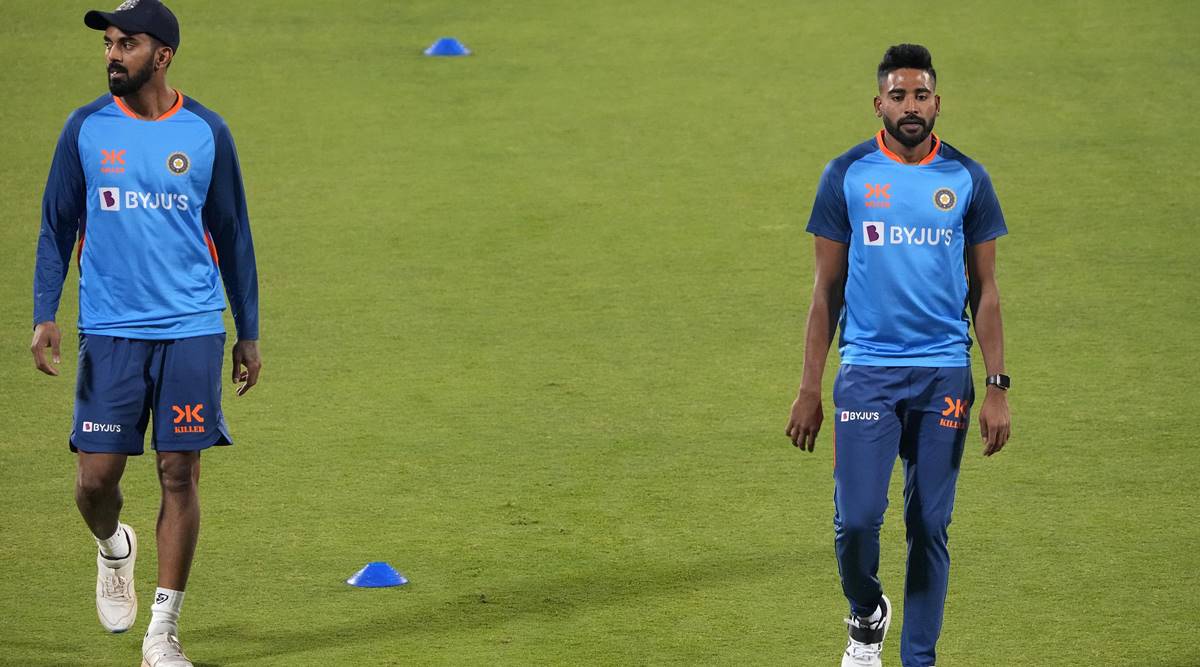 Indian cricket players K L Rahul, left and Mohammed Siraj during a practice session. (AP Photo)
The first couple of overs with the white new ball: that’s the game for him. It swings or it doesn’t, you get the breakthrough or you don’t. In that time, Siraj processes the wicket, measures the batsmen, and figures out the lengths that suit the surface. If there is a hint of assistance, a drop of moisture or an iota or movement, Siraj will exploit it to the fullest. His out-swinger starts wickedly guffawing. His wobble-seamed off-cutters begin to devilishly grin.
Even if there is negligible assistance off the surface, he makes the ball talk in an intimidating language. Like at the Eden Gardens, he hit back of length, extracted away-movement off the seam, and hurried and hassled batsmen with the lift he generated. Siraj is not a classical hit-the-deck bowler, he is more comfortable peddling the fuller and good lengths. He is not too tall to extract discomfiting bounce, his bustling action would cajole batsmen into thinking that he doesn’t do much bounce. Except that he does, albeit with a slightly higher point of release and more vigour in his action. But that’s all the clues he throws up. Batsmen are taken aback, they are a split-second slower to respond, they are stuck in a dilemma. Siraj preys on this dilemma. Thus, a short ball could be a more deceptive weapon at the hands of someone not expected to bowl one rather than one who deploys it as his staple ball.
Similarly, he is a nuanced manipulator of length. Watch him closely in the last two games against Sri Lanka, you could see how subtly he alters his length, from full-length to good-length and back-of-length. The dismissal of Avishka Fernando is instructive. He bowled a full-length ball, followed by a good-length one and then pulled the length back a fraction, perhaps by a decimal. Fernando assumed the ball was drive-able. It was not, and the ball snaked back through the boulevard of space between his bat and pad to rattle the stumps.
Like Bumrah, the captain could throw him the ball at any time of the game and expect a wicket or an intense, tight spell. In the middle overs, he transforms into an entirely different bowler, a heavy-length-banging enforcer-kind, and shape-shifts into a yorker-spewing death-over destroyer. That his skills go unsung is a testament to the aloofness of the 50-over format; or perhaps it is masked in the energy that he expends on the turf. All his theatrics, the bagful of celebrations, the intensity and vibrancy all seem but a veneer to mask his insuperable craft.
But as immense as he has been, an eye should be kept on his workload. With Bumrah’s comeback getting distant than ever before, Siraj would be India’s cross-format bowling mainstay. In the last year alone, he has featured in four of the seven Tests, 17 of 26 ODIs, four T20Is and the IPL. A packed season awaits him—provided he is fit, he will feature in all four Tests against Australia, the full IPL and the ODIs in the prelude to the World Cup. His workload should be carefully monitored and managed lest he fatigues or injures. But now, in the form he is, he himself would say he does not want to stop bowling. That he wants to bowl every ball that he could, after the season wherein he has emerged out of the Bumrah-Shami shadow and spread his own shadow.
Stay updated with the latest sports news across Cricket, Football, Chess, and more. Catch all the action with real-time live cricket score updates and in-depth coverage of ongoing matches.