6 min read
© The Indian Express Pvt Ltd



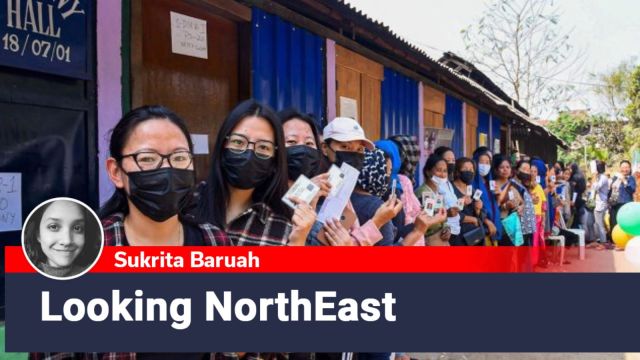 In 2018, Congress contested in only 18 out of 60 Assembly seats and won none. In last year’s Assembly elections, it contested 23 out of 60 seats, pulling a blank again. (PTI Photo)
On June 4, the Congress rose from near oblivion in Nagaland to win the state’s only Lok Sabha seat. This was no mean feat as the last time the party won the Nagaland Lok Sabha seat was in 1999 and the state last elected a Congress MLA in 2013. Less than a month later, Nagaland elected members for its municipal corporations and town councils for the first time in 20 years and the results were very different, with the Nationalist Democratic Progressive Party (NDPP) that governs Nagaland sweeping all three municipal councils. Its ally BJP finished second with 25 seats while the Congress won just seven seats.
The Congress’s performance in the long-pending civic polls makes its surprise win in the Lok Sabha elections even more remarkable. With its consistent decline in Nagaland, the Congress barely has any organisational strength in the state, to the extent that it struggles to field candidates for election. In 2018, it contested in only 18 out of 60 Assembly seats and won none. In last year’s Assembly elections, it contested 23 out of 60 seats, pulling a blank again.
These civic polls were no different and, fresh off its Lok Sabha victory, the Congress struggled once again and had only 40 candidates across the 278 municipal corporation and town council seats. Despite the far superior networks and organisational strength of the NDPP, which has 25 MLAs and won 153 seats in the civic polls, and the BJP, which has 12 MLAs and supported the NDPP’s Chumben Murry in the Lok Sabha polls, the Congress pulled off a victory in the parliamentary election with a 52.76% vote share.
Though the Congress continues to be in a difficult position in the state, its Lok Sabha win is largely being seen as a pushback against the strident Hindu nationalism associated with the BJP at the national level. NDPP MLA Moatoshi Longkumer spelt this out during the civic election campaign in Dimapur last month by declaring that the ruling party was “punished” for “somebody else’s fault”. The allies had contested against each other in many seats in the civic polls, where they were not a part of any pre-poll alliance unlike for the Assembly and parliamentary polls.
“This municipal election we are not aligned with anybody. There is no seat sharing. We learned a big costly lesson in the Lok Sabha election. Because of somebody’s fault, we were punished. We all understand that. Because of Hindu fanatics who have committed so many atrocities, who have burned down 249 churches in Manipur. The Assam Assembly passed a resolution: anti-healing services. There are more than 1,000 evangelists who work in Assam. The anti-healing service is targeted at our Christian community … In the Lok Sabha, because of this, churches were involved. Public minds were disturbed,” Longkumer said, referring to the ethnic strife in Manipur and the 2024 Assam Healing (Prevention of Evil) Practices Bill.
Amid strong murmurs of an ongoing rift between the NDPP and the BJP because of the Lok Sabha outcome, the two parties were even pushed to put out a joint statement earlier this week after the civic election results, stating that the alliance “is as strong as ever.” In the statement, the parties said the contests against each other in the local elections were “friendly contests”.
The alliance may be alive but BJP leaders in the state also admit that several factors, especially the ongoing Manipur conflict, have dented the party’s image in the state, where more than 87% of the population are Christians.
“It is very clear that the burning of churches in Manipur had its impact on the Christians of Nagaland and the Congress were also able to present it as something that the BJP allowed to happen since there’s a BJP-led government in Manipur,” said a BJP leader in Nagaland. “Even though it is an ethnic conflict and some temples were also damaged, that was all lost in the din. That was a big reason for a wave against the BJP and the NDPP … The perceived anti-Christian tag of the party will definitely take some time to be addressed but people are seeing development on the ground. We underline that there are no Christians persecuted in Nagaland itself and our Christian BJP MLAs should be our ambassadors against persecution elsewhere.”
The BJP leader also pointed to a manipulated video clip that was circulated widely in the state before the Lok Sabha polls. The video was doctored in a way to make it appear that Assam Chief Minister Himanta Biswa Sarma was saying that “Christianity should be ended like corona”. While Sarma did not make the statement, following the Lok Sabha results in which the BJP and its allies lost all the seats in Nagaland, Meghalaya and Manipur, he said that a “particular religion had gone against the NDA” in these states, alluding to Christianity. “It is not a political defeat. Nobody can fight against a religion,” said Sarma, who is also the convener of the BJP-led North East Democratic Alliance.
The new MP and Nagaland Congress president Supongmeren Jamir said he agreed with Sarma on the question that “secularism and religion matter.”
“The people have given a mandate for a secular party … What’s happening in Manipur as well as things happening in Assam like the anti-healing practices Bill and demands to remove portraits of Jesus Christ are disturbing people,” he said, referring to a controversy earlier this year in which a radical Hindu group in Assam demanded that all Christian iconography be removed from missionary schools in the state.
The Church itself intervened and issued an appeal before the Lok Sabha elections, and the Nagaland Baptist Church Council (NBCC), the apex body of Baptist churches in the state, warned of the dangers of “right-wing extremism” and “Hindu majoritarianism”. The NBCC had issued similar “warnings” before the last two Assembly elections as well, but combined with the developments closer home in the Northeast, it appears to have had an impact on the electoral outcome this time unlike in the state elections.
However, the civic poll performances make it clear that the message of the Lok Sabha result may have been an ideological one, but for now, the NDPP-BJP combine is still a clear choice when it comes to local and state governance.