This is an archive article published on November 6, 2024
J&K parties welcome resolution, but wish ‘half-hearted’ Omar govt had gone further
PDP says may move an amendment to the resolution, Sajad Lone wishes language was more “unambiguous”; Congress says it reflects what was will of people during polls.
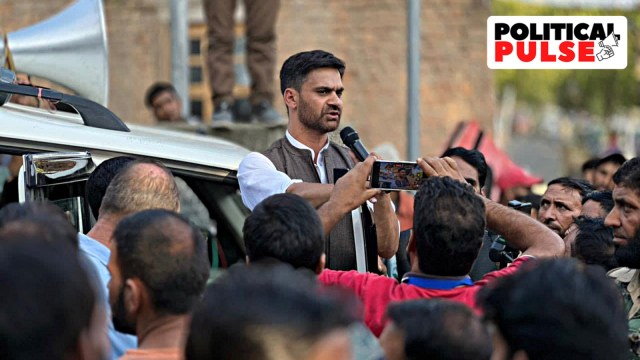
PDP leader Waheed Para told The Indian Express his party would move an “amendment” in the resolution. (FB)
While it supported the resolution moved by the National Conference-led government in the Jammu and Kashmir Assembly, the Peoples Democratic Party hit out asking why it does not explicitly reject the scrapping of the special status.
PDP president Mehbooba Mufti called the resolution “half-hearted”, for not stating “that 370 should be restored”. “Instead, they have said they (NC) are concerned (about the scrapping of the special status) and have sought a dialogue (for its restoration),” Mufti said.
“Who should a dialogue be held with?” she added, pointing out that the BJP whose government is in power at the Centre had even opposed the Omar government’s resolution in the Assembly.
Mufti also questioned the government resolution underlining “national unity” when seeking measures to restore special status. “This has nothing to do with national unity. This nation is known for its diversity and this is why J&K had joined hands with India in 1947,” she said.
Mufti mentioned as contrast the resolution moved by PDP MLA Waheed Para on Monday, the first day of the Assembly Session, which not just beat the government to it but also condemned the scrapping of the special status. The resolution, which was rejected by the Speaker, said: “This House opposes the revocation of special status of J&K and the constitutional disempowerment of Jammu and Kashmir through the J&K Reorganisation Act, 2019, and calls for its complete rescinding.”
Para told The Indian Express that the PDP would move an “amendment” to the Omar government’s resolution. “There was a political message in it and that has been sent, but they are begging for a ‘dialogue’ to restore special status. They have not even opposed or rejected it… We will move notice for amendment of resolution on behalf of the PDP… In point 1 (of the resolution), we want to replace ‘expresses concern’ with ‘opposes the unilateral move’.”
Other parties in the J&K Assembly too supported the Omar government’s move, with the CM saying “the Assembly has spoken and the people of J&K have spoken”.
Story continues below this ad
People’s Conference president Sajad Lone said the current House is “the most potent and relevant institution”, especially with it being the first elected Assembly after Article 370’s abrogation. “Legalities apart, today’s resolution is a moral and political rejection of August 5 2019 (when the abrogation took place)… It is a good start but the will of the people of J&K in the context of August 5 needs to be expressed even more unambiguously.”
While Congress MLAs kept pointedly away from the ruckus in the Assembly on the issue, Congress Legislature Party (CLP) Leader Ghulam Ahmad Mir noted that the party has earlier spoken of the resentment of people “against the downgrading and bifurcation of erstwhile J&K state”. “It was crystal clear during the Assembly elections that people vehemently oppose the reorganisation of J&K and want their dignity and honour restored,” Mir said.
Another INDIA ally, the CPI(M)’s Mohammad Yousuf Tarigami, was more generous about the resolution. “The government of India took a unilateral decision on August 5, 2019, without including the stakeholders. They took away our constitutional rights and special status. Today, this House has voted to correct that and sought restoration of a credible process of dialogue so that our special status can be restored.”
Bashaarat Masood is a Special Correspondent with The Indian Express. He has been covering Jammu and Kashmir, especially the conflict-ridden Kashmir valley, for two decades. Bashaarat joined The Indian Express after completing his Masters in Mass Communication and Journalism from the University in Kashmir. He has been writing on politics, conflict and development. Bashaarat was awarded with the Ramnath Goenka Excellence in Journalism Awards in 2012 for his stories on the Pathribal fake encounter.
Expertise and Experience
Two Decades of Frontline Reporting: Bashaarat has spent 20 years documenting the evolution of Kashmir, from high-intensity conflict and political shifts to socio-economic development.
Award-Winning Investigative Journalism: He is a recipient of the prestigious Ramnath Goenka Excellence in Journalism Award (2012). This honor was bestowed for his reporting on the Pathribal fake encounter, a series of stories that highlighted his ability to handle sensitive human rights and security issues with investigative rigor.
Specialized Beats: His authoritative coverage spans:
Political Transitions: Tracking the shift from statehood to Union Territory, electoral dynamics, and the pulse of local governance.
Security & Conflict: Providing nuanced reporting on counter-insurgency, civil liberties, and the impact of the conflict on the civilian population.
Development: Documenting the infrastructure, healthcare, and educational landscape within the Valley.
Academic Background: He holds a Masters in Mass Communication and Journalism from the University of Kashmir, providing him with a localized academic and professional foundation that is rare in regional reporting. ... Read More
Naveed Iqbal is a Senior Assistant Editor at The Indian Express, and reports from Jammu and Kashmir. With a career spanning over 15 years in frontline journalism, Naveed provides authoritative reporting on the region’s transition, governance, and the socio-political implications of national policies.
Expertise
Regional Specialization: Based in the Srinagar and New Delhi bureaus, Naveed has spent over a decade documenting the unique challenges of Jammu and Kashmir. Her reporting is distinguished by deep contextual knowledge of the region's post-Article 370, statehood debates, and local electoral politics.
Key Coverage Beats: Her extensive body of work covers:
Politics & Governance: Tracking the National Conference (NC), PDP, and BJP dynamics, including in-depth coverage of J&K’s first Assembly sessions and Rajya Sabha polls following the reorganization of the state.
Internal Security & Justice: Providing rigorous reporting on counter-insurgency operations, terror module investigations, and judicial developments involving political detainees and constitutional rights.
Education & Minority Affairs: Highlighting systemic issues such as quota rows in J&K, public service commission reforms, and the challenges faced by minority communities. ... Read More


 4 min read