3 min read


© The Indian Express Pvt Ltd



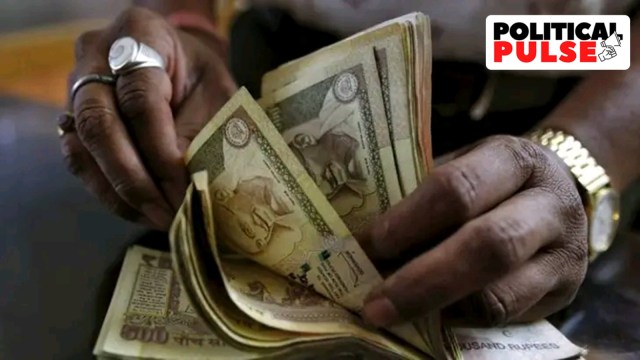 The share of bonds in TMC’s total donations above Rs 20,000 increased from zero in 2017-2018 to 68.72% in 2018-19, 92.55% in 2019-20, 99.49% in 2020-21, 99.92% in 2021-2022 and 99.38% in 2022-23. (Representational Photo)
Over the past six financial years since its introduction in 2018, electoral bonds have replaced all traditional forms of funding for at least three political parties — TMC, DMK, and BJD — now exclusively receiving all donations above Rs 20,000 through this method.
Over half of all donations through electoral bonds, around Rs 6,500 crore, has gone to the BJP. However, significantly, for the ruling regional parties TMC, BJD, and DMK, electoral bonds began to dominate other forms of funding and completely overshadowed others in 2022-23.
The Indian Express looked at the annual audit accounts of state parties over the last six years and found that the TMC, which is in power in West Bengal, received nothing through electoral bonds in the first year 2017-18, then Rs 97 crore in 2018-19, Rs 100 crore in 2019-20, Rs 42 crore in 2020-21, Rs 528 crore in 2021-22 and Rs 325 crore in 2022-23. The share of bonds in TMC’s total donations above Rs 20,000 increased from zero in 2017-2018 to 68.72% in 2018-19, 92.55% in 2019-20, 99.49% in 2020-21, 99.92% in 2021-2022 and 99.38% in 2022-23.
Similarly, the DMK, in power in Tamil Nadu, got no funding through bonds in the first two years, but since then the share of bonds in its total contributions (above Rs 20,000) has increased to almost 100%. From 94.18% in 2019-2020 when it received Rs 45 crore through this channel, the share of bonds in the DMK’s donations dipped in 2020-21 to 70.17%, before increasing to 99.3% in 2021-22 and 99.26% in 2022-23. It received Rs 306 crore and Rs 185 crore in the last two financial years via bonds.
In BJD’s case, electoral bonds have been becoming an increasingly popular instrument of donation since 2018-19 in which it received Rs 213 crore (or 87.9%). Since then, the share of bonds in the total contributions (of over Rs 20,000) of the party has only increased to 99.99% in 2020-2021 and 100% in 2021-22 (Rs 291 crore) and 2022-23 (Rs 152 crore).
The impact of the SC verdict on these three parties is unclear at the moment. TN Chief Minister M K Stalin welcomed the SC judgment saying, “The Hon’ble Supreme Court has rightly held that the Electoral Bonds are unconstitutional. This will ensure a transparent electoral process and the integrity of the system.”
TMC spokesperson Kunal Ghosh said, “People have a right to know the source of funds received through electoral bonds. We welcome the Supreme Court’s decision. We feel that one political party, which had introduced the electoral bonds, will cease to exist.”
Other regional parties that have had a majority of their contributions come from EBs are BRS which had an average of 55% of all voluntary contributions in the form of EBs, and the YSRCP, whose average was 66%. In the election year of 2019-20, BRS got 99.54% of its donations in EBs, which dipped to zero in 2020-21 and again jumped to 79% and 77% in 2021-22 and 2022-23, respectively. The YSRCP had 99.99% of its donations in the form of EBs in 2020-21.
Over the six years, State Bank of India has sold a total of 12,008.59 crore in EBs, as per a Right to Information reply to The Indian Express.