4 min read

Journalism of Courage



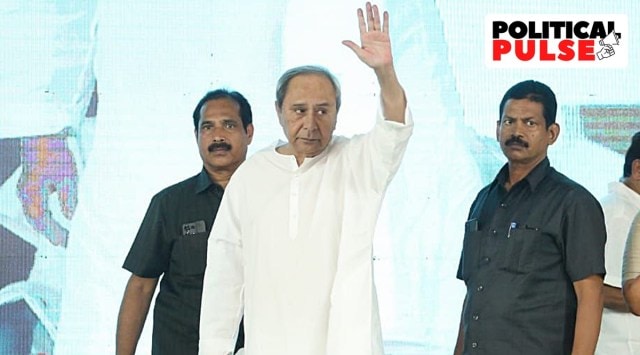 Although elections in Odisha are largely not contested along caste or religious lines, the Naveen Patnaik-led BJD government’s decision seems to be an attempt to be one step ahead of the Opposition by reaching out to backward groups. (Facebook/Naveen Patnaik)
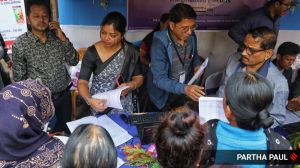
 A recent survey conducted by the Odisha government puts the number of Socially and Educationally Backward Classes (SEBCs), or Other Backward Classes (OBCs) — in the state at 39.31%, sources in the government told The Indian Express. However, the Opposition and some government officials have questioned the survey methodology as it was a voluntary exercise that saw people report to designated centres or submit their information online between May 1 and September 17.
As per the survey’s findings, conducted by the Odisha State Commission for Backward Classes (OSCBC), 53,96,132 households comprising 1,94,88,671 people belong to the SEBC category. The 2011 Census places Odisha’s population at 4.19 crore. As per the OSCBC’s projections, it will be 4.95 crore in 2023.
As many as 11 districts — Ganjam, Puri, Nayagarh, Kendrapada, Jagatsinghpur, Bhadrak, Dhenkanal, Balangir, Boudh, Sonepur and Nuapada — have been identified as “very highly” SEBC-populated, with the community’s population here exceeding 45% of the total population. Other districts such as Khurda, Balasore, Angul, Cuttack, Jajpur, Deogarh, Bargarh, and Kalahandi have been classified as highly SEBC-populated districts, with their numbers between 30% to 45%.
While the findings have not been made official yet, sources said 36.6% of those belonging to the SEBC category do not have more than primary-level education, with only 3% of them having government jobs.
State government officials said the actual number of people in the SEBC category “could be more” and flagged issues with the survey methodology. The information was either collected at survey centres designated by the OSCBC, or online.
“The 39.31% number is the bare minimum. The survey was voluntary and door-to-door enumeration such as in the case of the Bihar caste survey was not conducted. The participation of SEBCs in urban areas was very low. In rural areas, the participation was satisfactory although not 100%. Many who migrated to other states for work could also not be covered,” said a senior government officer.
The official said the government would take a final call on “when they want to release the data”. Odisha identified 209 SEBC communities and the state Cabinet included 22 more in the category this year, taking the number to 231. SEBCs enjoy 11.25% reservation in government jobs but there is no reservation for them in education.
Odisha Congress president Sarat Pattanayak called the survey an eyewash and said many were not covered. He also demanded a special session of the Assembly to discuss issues about SEBCs and demanded a door-to-door enumeration exercise.
Former Union Minister Srikant Jena of the Congress, one of the strongest advocates of the caste survey, said the data should not be released as the survey had not been “properly conducted”.
Although elections in Odisha are largely not contested along caste or religious lines, the Naveen Patnaik-led BJD government’s decision seems to be an attempt to be one step ahead of the Opposition by reaching out to backward groups.
When contacted, Odisha’s SC/ST Development and Backward Classes Welfare Minister Jagannath Saraka said the government was examining the findings. “We wanted to collect data on the social and educational conditions of the backward classes. If needed, the state government will formulate target-oriented welfare schemes or announce special assistance for the SEBCs for their upliftment,” he told The Indian Express.