
Opinion The Hindi on the Nile
Egypt is a civilization and will always land on its feet even though it may have,as at present,its head in the sky.
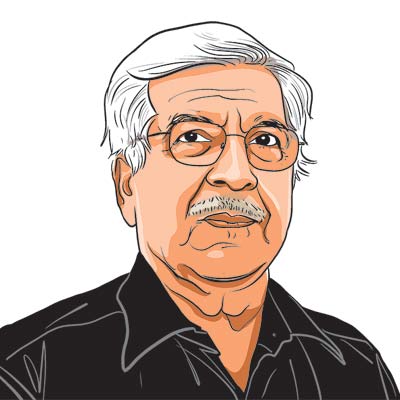

Javed a young friend who lives in Ahmedabad expressed great concern on events in Egypt. I told him not to worry because Egypt is a civilization and will always land on its feet even though it may have,as at present,its head in the sky.
Building a revamped food security system for them,I was staying in the Nile Hilton,not very far from the Tahir Square where all the action now is. Nasserite Egypt built up a food security system which gave loaves of baladi bread and some accompaniments free of cost to everybody.

It was one of the poorest countries of the world and yet free of hunger,much like what Madam Gandhi is trying to do now. International agencies wanted all of it changed and the Egyptians dug in. I was asked to write a paper on modernizing the food system. I knew the abuses such a system would lead to but I also knew its worth and was working on the usual lines. Restrict it to its original version of bread and get out of all the later add ons.
Concentrate on the needy and the backward regions. I travelled to the other port towns and to Upper Egypt which was in fact lower Egypt and the Desert Directorates. I argued in my presentation that most of the remaining malnutrition was amongst women in Upper Egypt.
When this was belittled I said caustically to a senior retired fauji interlocutor that Egyptian soldiers were born from these women and they would not be strong if their mothers were weak. They implemented most of the reform quickly. Grain prices were advertised on TV at different locations so that trade would iron out fluctuations,and an information system set up.
My wife joined me in one of my trips and she said that Cairo and its suburbs were the one city in the world where an Indian lady in a sari felt absolutely safe,even at night.
This is in and near the Tahir Square,or Dokki,which is like the Karol Bagh of Cairo or Khan e Khalili an old bazaar where caravans used to rest in serais centuries ago and where the coffee serais are still popular and the hookahs. In the old eating places here,Kebabs and Sheekhs are sold by the kilo.
The Egyptians call what we call Seekhs,Kebab and what we call Kababs,Seekhs. There is in Egypt a great reservoir of friendship for the Hindi (Indians as they call them). In one of my trips to Cairo JNU signed agreements on student and faculty exchanges with the great Al Azhar. Memories go back for centuries.
I was told that Sheikh Burhunudin wrote the first translations from Sanskrit texts into Arabic fifty eight years after Islam came to India in Buxar and the manuscripts lie in Al Azhar. The first foreign student hostels in that historic seat of learning were for Indian students. Of course the memories go back to Pharaonic times.
JNUs agreements with Al Azhar were reported in Al Ahram and the next day some Indian students came to meet me and asked me why we were offering fellowships to them when they were not getting them. I told them that citizens of big countries dont think in small terms and anyway they were enjoying Egyptian food including the kebabs and sheekhs.
Lucknowi tehzeeb and cooking came through when one of them said forlornly huzoor tukras of meat cant be called Seekhs and Kebabs. But even in this the links remain. One of the finest invitation to me was to give a lecture at the newly established Biblioteca Alexandrina,starting a dialogue of civilizations.
I spoke on Non farm opportunities as a tribute from one peasant culture to another which produced one of the more enduring forms of economic organization,the tiller of the soil.
As Egypt moves over to its new avatara the bond between Misre and the Hindi will remain. So lets rejoice with them and wish them well.
 Share
Share


