
Opinion IndiGo’s denial of dignity
The incident involving a passenger with disability shows the airlines' staff wasn't sensitised, much like a large section of the society
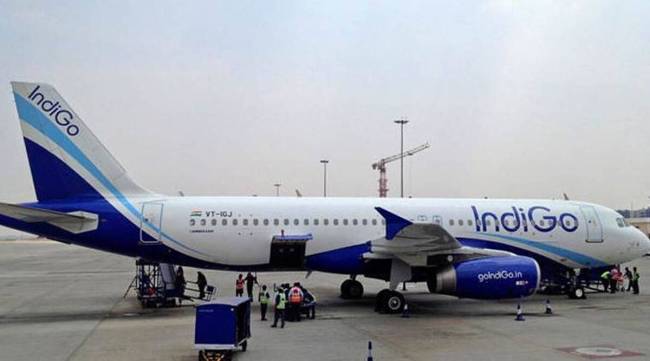 IndiGo stands in flagrant violation of DGCA Guidelines for “Carriage by Air -- Persons with Disability and/or Persons with Reduced Mobility”, writes Muralidharan.

Despite IndiGo being the only domestic airline that has a provision for ramps, and safety instruction card in Braille and claims to be disabled-friendly, the lean, clean flying machine has been caught on the wrong foot, once again.
The latest incident in which a passenger with disability was denied boarding at Ranchi is just one of the many involving disabled passengers. These keep repeating at regular intervals, notwithstanding the guidelines issued by the Directorate General of Civil Aviation (DGCA) as also the Supreme Court orders in the Jeeja Ghosh case. Jeeja Ghosh, a disability rights activist and frequent traveller, was deboarded from a Spicejet flight in February 2012. Ironically, she was on her way to speaking on disability issues at an international conference in Goa. The crew onboard noticed her drooling a bit (which is common in people with cerebral palsy) and decided she is unfit for travel.

In December 2013, the author of One Little Finger, Malini Chib, was forced to sign an indemnity bond at the Kochi airport by the ground staff of Indigo. Paradoxically, again, Malini, also a person with cerebral palsy, was returning after attending the conference of the National Platform for the Rights of the Disabled.
As reported in the media, in the current case, the young boy was in a state of panic when the family arrived at the airport. Autistic people are prone to anxiety and distress, which in extreme situations may lead to panic attacks. The uncomfortable car ride to the airport, combined with hunger and thirst may have triggered the reaction. But the experienced parents quickly brought the situation under control.
IndiGo stands in flagrant violation of DGCA Guidelines for “Carriage by Air — Persons with Disability and/or Persons with Reduced Mobility”. As per these guidelines: “Once persons with disability or reduced mobility report at the airport with valid booking and intention to travel, the airline shall assist to meet their particular needs and ensure their seamless travel from the departure terminal of the departing airport up to the aircraft and at the end of the journey from the aircraft to the arrival terminal exit, without any additional expenses”.
The guidelines also mandate that all airlines, airport operators, security, customs, and immigration bureau organisations at the airport should conduct training programmes for all personnel engaged in passenger services to sensitise them about assisting persons with disability or reduced mobility, and also alert them to eschew negative perceptions and attitudes towards such passengers.
As was evident, the training was not enough and the staff was not sensitised either to the disability or the specific needs of the passenger, let alone negative perceptions.
IndiGo also stands, prima facie, in violation of Schedule VI of the Aircraft Rules, 1937. Non-compliance with directives issued under rule 133A (under which the CAR has been issued) constitutes a Category III offence, which is punishable with imprisonment for a term not exceeding six months or with a fine not exceeding two lakh rupees, or both. Unfortunately, despite repeated offences by various airlines, in not a single instance has the DGCA sought to enforce this provision. However, in Jeeja Ghosh, the Supreme Court did impose a fine of Rs. 10,00,000 on Spicejet.
Nevertheless, it also needs to be underlined that such humiliation, ill-treatment and discrimination are part and parcel of the daily life of India’s disabled citizens. It is very common to see the disabled being taunted and abused by drivers and conductors when they try to board buses. In many cases, co-passengers refuse to get up and leave the seats reserved for them.
It’s not just airline staff, but at times passengers have also refused to sit next to a disabled co-passenger. Rajiv Ranjan a disability rights activist from Chennai recalls such a case. The staffer may face the brunt, and may even be axed. But he himself may be a victim of limitation, ignorance and lack of training. To overcome this we need training beginning at the school level and sensitise children “to promote values of inclusion, tolerance, empathy and respect of diversity”, as the Rights of Persons with Disabilities Act, 2016 mandates. The Act also lays down that this should be included in the curriculum of schools, colleges and universities. But is this happening? Bestowing divine status with a “divyang” label will not alter attitudes and perceptions.
Lastly, the question to be asked is: Don’t tiny tots, with or without disability cry, throw tantrums and create nuisance? What do airlines do when handling such passengers?
The writer is general secretary National Platform for the Rights of the Disabled
 Share
Share


