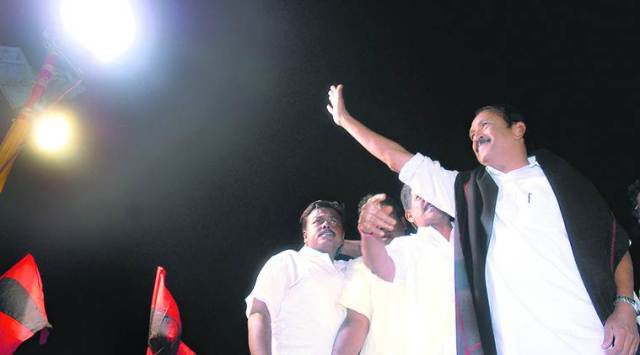
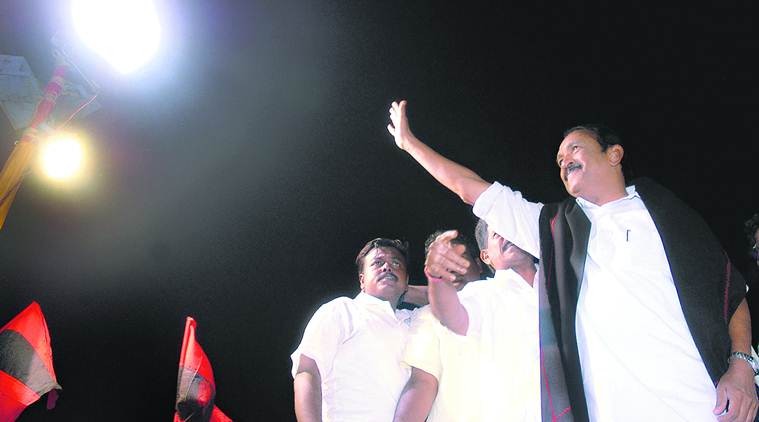
V Gopalaswamy, popularly known as Vaiko, was sentenced to a year in prison on charges of sedition for a speech he made during the release of his book Naan Kuttram Saatugiren… (I accuse…) in 2009. Knowing Vaiko, this was no surprise to anyone at all. However, it has come at a time when he is all set to contest as a Rajya Sabha MP and given his alliance with the DMK, he is expected to sail through.
Jail is not something new to the Marumalarchi Dravida Munnetra Kazhagam (MDMK) leader. A former member of parliament, thrice of the Rajya Sabha and twice from the Lok Sabha, he was among the first to be arrested in Tamil Nadu on the Prevention Of Terrorism Act in 2002. He spent 18 months in jail and refused to apply for bail for quite a long time. His family and partymen were shocked, but that is Vaiko. He had spent more than a year in jail fighting the Emergency, and was arrested multiple times for various agitations; an interesting one was for showing a black flags to Indira Gandhi during her visit to Tamil Nadu when she was not in power.


An agenda setter in Tamil Nadu politics, he has however failed to make his party, the MDMK, electorally relevant or make it a viable political force.
Two images of Vaiko remain etched in the memory of the Tamils. Once in 1989, he just travelled across the Palk Strait to meet with LTTE leader Prabhakaran. He was too much of a firebrand then for him to take care for petty niceties like visas and passports, or the fact that he was a Rajya Sabha MP. Later on, when he was sent out of the DMK by Karunanidhi, more than six of his supporters committed suicide, most of them through self immolation.
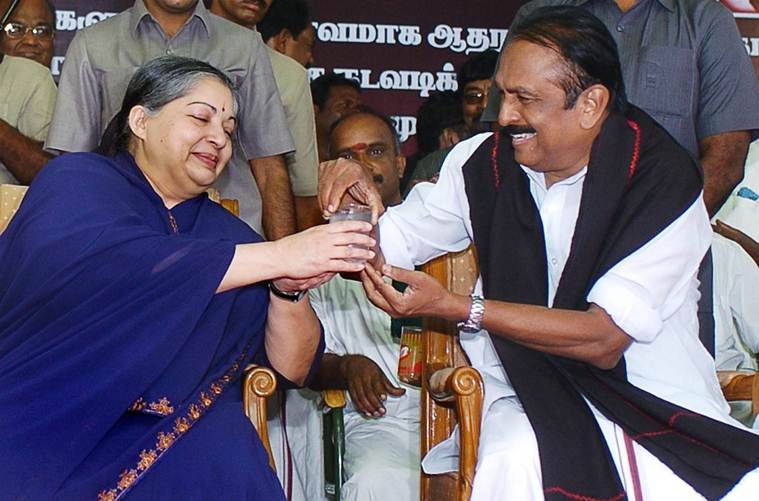
He comes with this ability to evoke blind passion and commitment. His fans speak about his diction, his body language and his sincerity. He was seen as an uncompromising leader, lapped up by the DMK cadre and the party voters, always partial to fiery speakers. Mazzini, Garibaldi, Napoleon and Lincoln, make their appearances frequently in his speeches, and bring to the Tamils an age of passion, courage and sacrifice. Emotional, he becomes teary-eyed at meetings, press conferences and at private functions.
His only shot at power was when he was sent out of the DMK by Karunanidhi in 1993 and when he formed the MDMK a year later. He was able to rustle up the support of a substantial number of cadres and leaders to his cause. Nine district secretaries walked out along with him when he set out to form the MDMK. And that was the only time that the DMK, a cadre-based party, faced a substantial split.
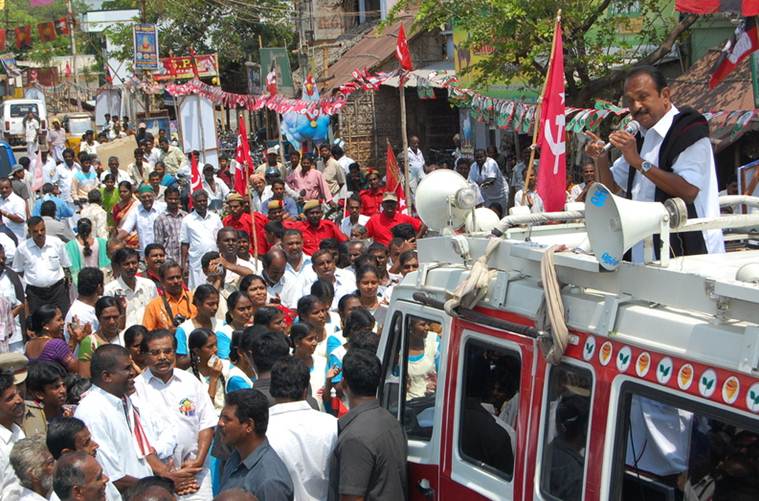
But perhaps the timing of his new party was not right. In 1996, his party contested the Assembly elections and Vaiko was defeated by a thin margin of less than 1000 votes. This was also a very unique election for Tamil Nadu when Jayalalithaa was swept away from power. She even lost as an MLA from her Bargur constituency and the AIADMK lost almost all the seats. It was a tough time to be contesting as a fledgling party. The elections led to a steam roller majority for the DMK; his prime rival, and it had been downhill for the MDMK since then.
After the assassination of Rajiv Gandhi in 1991, Tamil voters have increasingly kept away from blatantly pro-LTTE sentiments and Vaiko’s clout and relevance was restricted to hardcore DMK voters. He became a prisoner of his own rhetoric and could never move centrestage politically.
Though untainted by scams and scandals, and looking like the Mr Clean of Dravidian politics, he could never capitalise on his strengths as his stridency and rhetoric pushed him repeatedly to the fringes and from where he could never return. It seemed that he was more comfortable with emotional themes than with the nitty gritty of party building and governance.
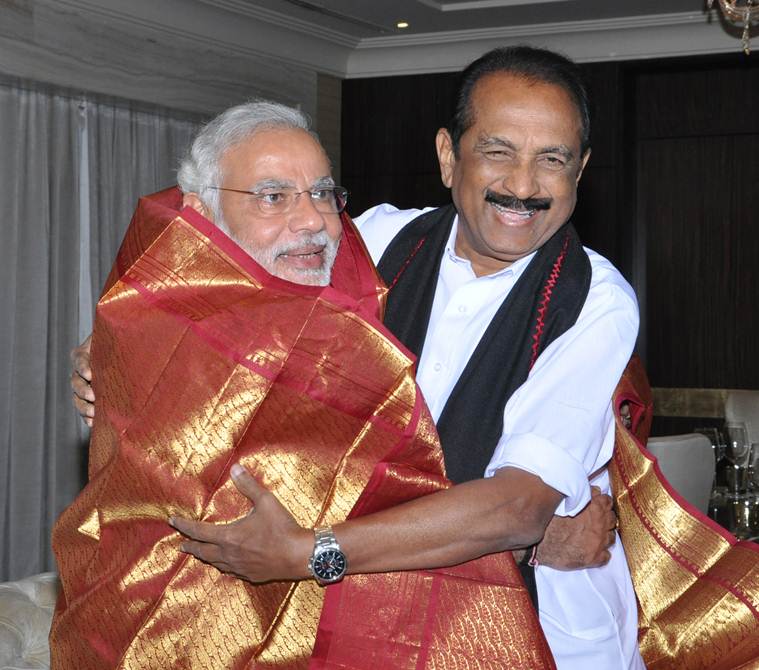
Despite his stridency, he has been quite agile trying to carve a niche by moving across the political spectrum and allying with different parties. His MDMK has allied with the DMK, AIADMK, the Left parties, and was part of the NDA and UPA alliances. He can move unscathed through many alliances and coalitions as the spoils of power is not the prime mover of his politics.
His party was once a partner of NDA under Vajpayee and UPA under Manmohan Singh. In both these governments, he could have been part of the union cabinet if he had so desired. He let his colleagues become ministers. This is almost unthinkable in a state like Tamil Nadu where power is sought to be cornered by families.
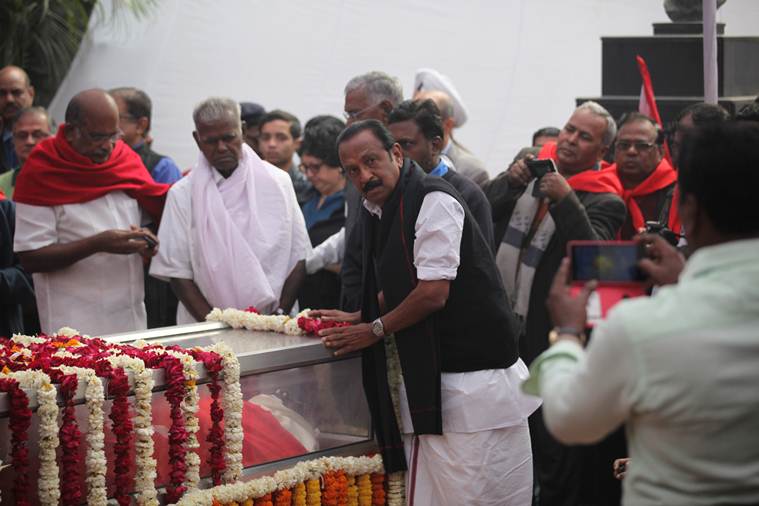
Fatigued and tamed, the Tiger is now in the DMK-Congress alliance waiting for a Rajya Sabha seat. Crowds no longer brave the sun to hear him out, and there are newbies trying the same trick; of mixing the dreams of Tamil pride and starry eloquence.
He was apparently sent out of the DMK in 1993, as he was seen as a potential rival to Stalin. Now it is with Stalin’s help that he is planning to enter the Rajya Sabha. A series of such contradictions has taken its toll, and now he is a mere shadow of his former self. Undeterred by a stable party to back him up, he has turned a freelancer who single-handedly brings an energy and verve into political campaigns.
He might be down for now, but he is not fully out.


