
Opinion Enabling people with information
Responsible open access is the key to innovation and knowledge-sharing in the post-pandemic world
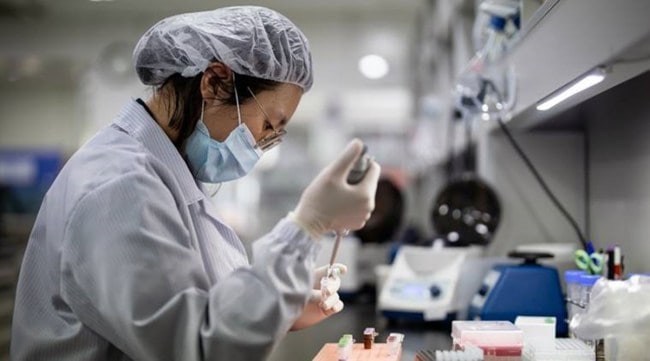 Researchers at University of Arizona found that India was the fifth-leading producer of Covid-related scientific research. (File)
Written by Vikas Gupta
Open access is a publishing model for scholarly communications that makes research information available to readers at no cost, as opposed to the traditional subscription model. In today’s world, the open research revolution is being driven by new, digital tools for scientific collaboration, experiments and analysis, which make scientific knowledge more easily accessible by professionals and the general public, anywhere, at any time. The question is often asked: What does open access stand for? The answer is: Increased openness, increased reproducibility and increased accountability.

Being more open as an industry help take the research community forward. Research needs to be available to the public to drive innovation and enable people to find the information they need to make crucial decisions. Research data is as important as the published article. When researchers share data, the process becomes more efficient as others analyse and evaluate findings with ease. When collaboration is easy, researchers can focus on the impact instead of the process. Tools to facilitate collaboration help authors strengthen their networks and work in global teams.
A lot of the researcher’s work goes unrecognised. However, with tools to help researchers get credit for their professional contributions—from authoring to reviewing—researchers can advance their careers. There is evidence that open access improved the accessibility of content, giving authors more impact for their published work.
 Research published last year by Jenny Lee and John Haupt of the University of Arizona examined “scientific globalism” in the context of Covid-19 research. Looking at scientific research published from January through May 2020, they found that “despite the tense geopolitical climate, countries increased their proportion of international collaboration and open-access publications during the pandemic.” They also found that India was the fifth-leading producer of Covid-related scientific research.
The renewed trends point the publishing industry towards a more open future, where open access, preprints, and transparency of data, methods and peer-review will continue to grow in importance and amplify the impact of research globally. The promise of open access is particularly powerful in the country as India advances a comprehensive science, technology and innovation policy.
There are a few external agents which compromise the security of libraries and institutions to gain unauthorised access to scientific databases and other proprietary intellectual property, as well as to illegally harvest journal articles and e-books. In case of such interrupting agents, it is important to take legal action to help solve the cyber-security challenges threatening the integrity of the research eco-system and the safety of university and personal data, which seriously harms the many large and small publishers, academia, university presses and others involved in scholarly communication.
While it is important to expand open access offerings, it is equally important to do so legally and sustainably so that allows a vibrant research ecosystem to thrive. A lot of publishers, these days, are taking concentrated actions to drive transparent open access business models. This is being done through partnering with consortia to achieve transitional agreements, increasing open access article output, investing in OA technologies and journals and flipping subscription journals to open access journals.
As enabling open access and discovery is gaining centre stage in responding to the realities of the present-day world, it is important for us to ensure that it is done in a responsible, legal and sustainable fashion. It is only then that open access will truly succeed in its endeavours to lead the world of research and scientific discovery.
The writer is MD, Wiley India

 Share
Share


