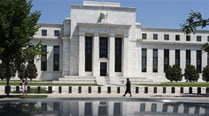
Indications from the US Fed are that it may raise interest rates in 2015, earlier than expected. While India has been stable in the period of the actual taper, as a large part of the correction in the exchange rate took place after Ben Bernanke’s taper speech, it remains to be seen how global markets will react to the increase in interest rates by the US Fed. The RBI must focus on keeping inflation low and stable. In case inflation goes up and the rupee appreciates in real terms, it is likely that when US interest rates start rising, there will be a decline in the nominal value of the rupee so that the real rate corrects.
RBI Governor Raghuram Rajan has taken a number of measures to increase dollar inflows. However, many of these involve raising India’s external debt. While on the one hand, higher dollar flows and reserves send a signal of stability, if these are due to borrowing more, beyond a point the policy can backfire. Thus, from now on, the RBI should let the rupee float so that the exchange rate is not misaligned. The less the misalignment, the greater the chance of stability. The combination of a floating exchange rate with low inflation can help ensure a stable rupee when the time comes for the US to raise rates.


This will ensure that, one, there is little pressure on the rupee, and two, even if there is pressure, India does not react in a knee-jerk manner with capital controls and restrictions on financial markets, as it did last time. There is no substitute for an approach that seeks to shore up the basics. The NRI deposit flows have come at a cost, where the RBI has partly paid the price of hedging. It is ultimately the tax payer who is paying these costs. This should be avoided next time.


