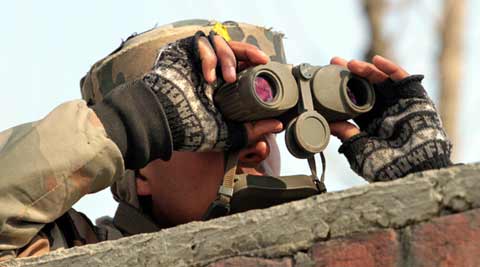


As Indian troops battled terrorists in Pampore on Monday, jihadist anthems broadcast from the town’s mosques wafted through the air. They ought to be heard by the powers-that-be in New Delhi. True, the firefight may have been relatively inconsequential despite the tragic loss of lives: Violence in Kashmir, in sharp decline since 2002, remains at historically low levels. But the signs of a looming crisis cannot be missed. In December, the last rites of slain Pakistani jihadist Abdul Rehman — also known as Abu Qasim — drew over 60,000 people, as the residents of three villages clashed over the right to bury him. Less than a tenth of that number appeared in events marking the passing of Chief Minister Mufti Mohammad Sayeed, or, indeed, for any recent political mobilisation. The flag of the Islamic State has appeared with increasing frequency; online, new Kashmiri recruits to the jihad against India are extolled as heroes. In Pampore itself, thousands of protesters had to be held back from reaching the fighting site, where they hoped to protect men seen as warriors for their cause. Even in the 1990s, Pakistani jihadists were rarely hailed as popular heroes. Now that has changed — and Delhi can ill-afford to ignore it.
This jihadist sunrise comes over a wasteland of despair. The failure of successive elected governments to deliver development has led the state’s youth, born into the searing violence of the 1990s, to become increasingly disillusioned with democracy. Large numbers have turned, instead, to the other-world anti-politics of groups like the Lashkar-e-Taiba. Also, few young Kashmiris have the tools to capitalise on opportunities in the new economy, even as the old one is in terminal decline. Then, there is the problem of competing communalism. Prime Minister Narendra Modi’s rise has stoked fears of a predatory Hindu India preparing to crush Kashmir — a meme long stoked both by Islamists and Hindu nationalist politicians.


