
The results of the 17th general elections of Singapore, which took place on September 11, were a resounding triumph for the People’s Action Party (PAP), which has been in power since the founding of the republic in 1965. This was no ordinary victory. The ruling party, despite grim predictions, brought home an overwhelming haul of 83 seats out of a total 89. Its vote share of 69.9 per cent marked an increase of 9.8 percentage points compared to the 2011 polls.
By Indian standards, the campaign, which lasted all of nine days with a “cooling-off day” in the end, was an intense but short, non-violent and orderly affair. Over 93 per cent of eligible voters cast their ballots. This is not surprising, since voting is compulsory in Singapore. However, judging by the intensity of the campaign and the determined efforts of all contestants — from the ruling party as well as opposition parties — this election was not merely a ritual but a real battle of wills.


The long shadow of the 2011 polls formed an ominous backdrop. Social inequality was cited as a major issue by the Workers’ Party, which was expected to capitalise on it. The outlook for Singapore’s export-dependent economy appeared grim. The economy contracted a sharp 4.6 per cent in the second quarter and rose a feeble 1.7 per cent from the previous year. Other issues, such as a surge in immigration, crowding of public transportation, and concerns over healthcare and retirement savings had caused public resentment. Besides, housing and property prices were much contested topics. Finally, after many years of one-party rule, many were concerned about accountability and transparency. Politicians’ salaries remain among the highest globally. This had spurred accusations that the PAP was out of touch with ordinary Singaporeans, particularly on income disparity.
Despite these challenges from the opposition, the government, rising over the appeals of populism, had resisted calls for universal healthcare, showcasing its financial prudence and solicitude for stable governance. The policy debates will surely continue. But the scale and spread of the electoral triumph should be seen as a strong endorsement of the leadership of the PM, with his central message of continuing with the achievements of Singapore — economic growth, stability, environmental sustainability, communal harmony and a robust, forward-looking attitude to life. The PM declared: “Tomorrow will be better than today, SG100 will be better than SG50. Thank you very much.”
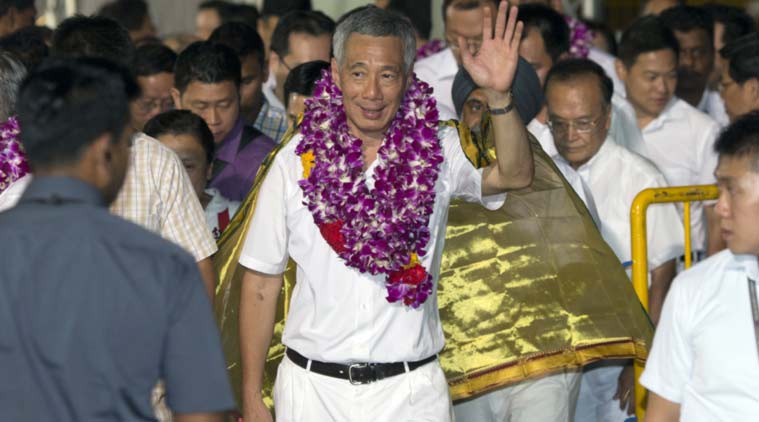
Throughout the campaign, his ubiquitous, smiling face on election hoardings, his genial walkabouts — mingling with crowds without anything like the security cordon that filters ordinary folks from the leadership in most countries — made this election something of a personal achievement for him. With this election, Lee has finally emerged from under the towering presence of his father.
Plus ça change? Sceptics who scoff at the idea of an Asian democracy and see it merely as a truncated version of the real thing are wide off the mark. Underneath the facade of a ruling party, with its highly efficient party machine and a state machinery that has mentored the rise of a barren island into first-world prosperity, a vital change is taking place in the nature of Singapore’s national identity, community and political process. Just as the Congress’s dominance in the first two decades immediately after Indian independence established the key parameters of Indian politics — independence of the judiciary, the Election Commission, the army’s political neutrality and the sanctity of the basic rights of ordinary citizens — so too has the stewardship of the PAP given Singapore its political and moral foundation.
The writer is director, Institute of South Asian Studies, NUS, Singapore, and emeritus professor of political science, South Asia Institute, Heidelberg University, Germany


