
Opinion New horizons
While South Korea is a neglected and natural partner, Mongolia signals a fresh diplomatic vision.
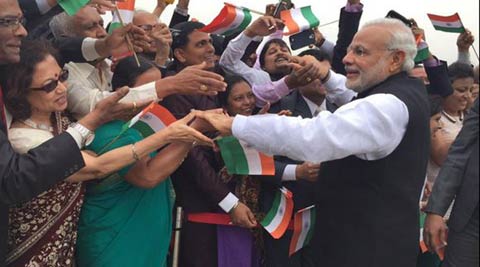


Prime Minister Narendra Modi’s visits to Mongolia and South Korea, as part of the three-nation tour that began with China, has been a demonstration of peripheral diplomacy. Both countries are democracies and important neighbours of China and there is a larger strategic interest at the heart of India’s outreach to Seoul and Ulaanbaatar, at a time when Beijing has been extensively cultivating its economic and strategic ties with countries in the Indian subcontinent. While this is reflected in defence being a key component of the discussions in the two capitals, there’s more to these two states.
South Korea is an important economic and strategic partner for India, in many ways, a “natural partner”, which has been subjected to prolonged political neglect by Delhi. The upgrade of the bilateral relationship to a “special strategic partnership”, while a welcome signal to the world, is in effect a message to industry and bureaucracy to scale and speed up. Korea will invest $10 billion in Indian infrastructure, particularly in the smart city project, railways and power generation. Delhi also made a push for manufacturing LNG tankers in India, with the sharing of Korean knowhow.

Given the persistence of delays and tax issues, a dedicated channel for Korean investment has been announced. A key corollary of an enhanced partnership would naturally be closer security ties. So, annual summit meetings and joint commissions led by the foreign ministers have been announced, even as cooperation between the Indian and Korean armed forces is strengthened and the national security councils regularise their consultations. Seoul has also extended support for Indian membership of the Nuclear Suppliers’ Group and other export control regimes.
Mongolia, which Modi is the first Indian PM to visit, needs to be seen in the context of Delhi’s use of its imagination, whereby a shared heritage of Buddhism is being leveraged not only to reaffirm old cultural ties but also to explore possibilities for the future. Mongolia has natural uranium reserves that India may like to procure in future, but it is also a potential destination for Indian investment.
As with Mongolia and Korea, tying cultural diplomacy with economic development against the backdrop of closer defence partnerships, would build on the interest among China’s neighbours to deepen ties with Delhi. The shared vision of “an Asian century” would require an enhanced Indian contribution to the Asian balance of power. Delhi’s challenge, however, remains in translating its intent into action.
 Share
Share


