

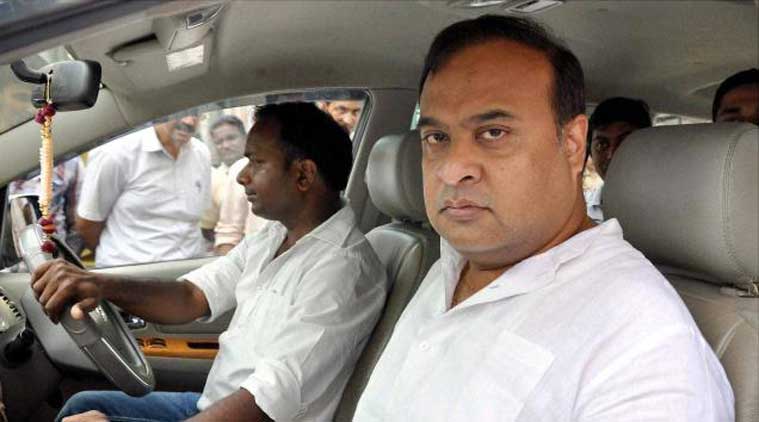
With less than a year left for assembly elections in Assam, the exit of Himanta Biswa Sarma from the party comes as sobering news for the Congress. Sarma, who rebelled against Assam chief minister Tarun Gogoi’s leadership and resigned from his ministry last year, is seen to have played a key organisational role in the party winning a third consecutive term in 2011. Incidentally, Sarma has now gone to the BJP, which had attacked him in the past on corruption, and which he had criticised for allegedly promoting a communal agenda. Sarma’s exit draws attention to the fact that, slowed down by anti-incumbency and with the BJP’s influence in the state rising steadily, the Gogoi government faces a challenging election in a state of many moving political parts.
By all accounts, Sarma’s exit from the Congress appears to be a fallout of the party leadership’s inability to mediate and temper factional politics in the state. The pull and tug of factions is not new to the Congress. It may even be inevitable in a party which is more a coalition of interest groups than a cohesive ideological unit. In the past, however, the party’s central leadership had skilled negotiators who could intervene and broker a truce between warring leaders. The Congress’s high command in recent times has tended to be indifferent to factional feuds in its state units, preferring to let the disputes simmer, even allowing a rebel leader to split the party. For instance, the high command has hardly intervened, or ineffectually so, in the jostling in Punjab between former Chief Minister Amarinder Singh and state party chief Pratap Singh Bajwa. In Haryana, the factions led by former Chief Minister Bhupinder Hooda and state head Ashok Tanwar work independently of each other, and at cross purposes. When G.K. Vasan walked out of the Congress in Tamil Nadu some months ago, he blamed the central leadership’s disinterest in addressing factionalism in the state. In its erstwhile strongholds like Andhra Pradesh and Telangana, too, the leadership has done little to rebuild its organisation and recover its base.


