
Opinion Labour’s choice
Jeremy Corbyn, British Labour party’s new leader, could lead his party back in time


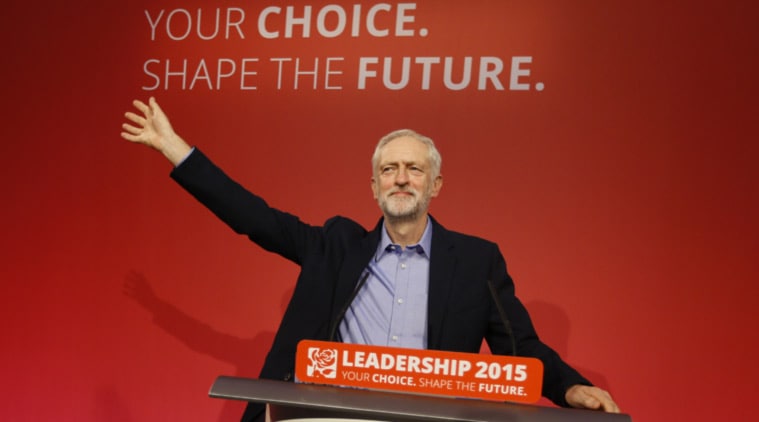 Jeremy Corbyn waves on stage after he is announced as the new leader of The Labour Party during the Labour Party Leadership Conference in London, Saturday, Sept. 12, 2015. (AP Photo)
Even reeling from the crushing defeat handed to the Labour party by David Cameron’s Conservatives in the general elections earlier this year, Labour insiders and the Westminster elite would have scoffed at the prospect of a 66-year-old hard-left backbencher being elected leader of the beleaguered opposition party. Yet, for all the improbability of Jeremy Corbyn’s swift ascent — he only announced that he was running for the party top spot in June — his victory was the most decisive since the mandate won by Tony Blair to take Labour in a new direction, shrugging off the shackles of past orthodoxy.
Corbyn’s campaign appears to have electrified the party rank-and-file in the wake of a demoralising loss. His outsider status is thought to have appealed to those disgruntled with politics as usual, especially the young, for whom he embodies authenticity in a way that mainstream politicians do not. Even Harry Potter, aka Daniel Radcliffe, isn’t impervious to the magic of Corbynism, praising him for his “sincerity” and “conviction”. Despite Corbyn’s popularity with Labour’s overall electorate, however, he has the public support of only 14, or 6 per cent, of his party MPs. Labour parliamentarians are understandably apprehensive that another leftward lurch, particularly so soon after voters overwhelmingly rejected Ed Miliband’s soft turn to the left, will, in the words of one MP, turn the party into a “1980s Trotskyist tribute act”. After all, though Corbyn promised a new type of politics, several of his ideas — from the re-nationalisation of the railways and utilities to eurosceptism and strident anti-Americanism — appear to herald a return to the Labour of the 1970s and 1980s, which the party spent locked in internecine conflict and electoral wilderness.

Perhaps Corbyn will be forced to tack to the centre, given the sparse backing of his MPs. He must now forge a bridge between party moderates and the members who so emphatically voted for him. Corbyn faces difficult challenges in the months ahead, as the real world catches up with him — the anger over economic austerity and social inequality that he tapped into will not disappear; the Scottish question remains, as does the one over Britain’s role in the EU. Can the ideological purist accommodate the aspirations of a pragmatic, modern Britain? He could look to Germany’s Angela Merkel, who has carefully and skilfully presided over coalition governments to manage competing priorities, and yet displayed ethical leadership when it is most required, such as when grappling with Europe’s refugee crisis.
 Share
Share


