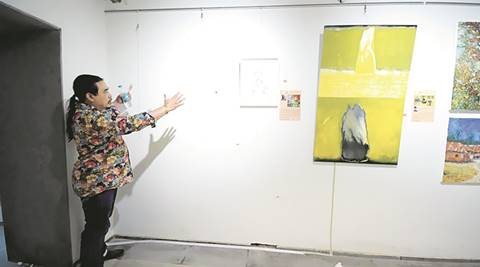

Members of Lal Shakti and Rashtriya Hindu Ekta Manch, local Jaipur groups, attacked an art work — and an artist — in the Jaipur Art Summit. Claiming that Radha Binod Sharma’s painting of a semi-nude woman was “obscene”, they took down the art work, and when the artist intervened, tried to physically intimidate him. To add insult to outrage, the vigilantes took the painting to a police station where, voicing objections about “vulgarity”, they filed a complaint.
Throughout this episode, which marks the trespass of lumpenism on a sphere meant for our reflective selves, the silence of the authorities has rung out loudly. One of the accused has been arrested but the main accused is absconding. The wider panorama for art and artists in India is grave, even dismal. Sudden decisions by arbitrary groups on what is “obscene” or unacceptable in art aren’t unusual; what’s worrying is when such groups feel free to express their criticism with violence and attack the art — or the artist — that they claim to be provoked by. It is here that the law and order machinery must step in to protect the artist and the fundamental freedom of expression. Instead, all too often, we see the administrative machinery conveniently and opportunistically looking the other way when books are burnt, filmmakers bullied and painters victimised to the point of having to leave their own country.


