
Opinion Happy green year
Political spotlighting of air pollution, and coming together of stakeholders, are signs of hope.
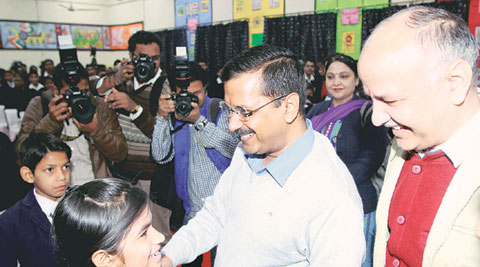


The new year starts on a hopeful note. The Delhi government’s 15-day odd-even experiment starts today. This road space rationing initiative is the most talked about measure in an arsenal that includes vacuum cleaning of roads and making an early switch to Euro VI emission norms. Whatever the outcome, the political executive taking ownership of this project is welcome, and rare. Chief Minister Arvind Kejriwal has taken to the radio to build a case for the move, written to schoolchildren and asked them to convince their parents to carpool or use public transport. This recasting of a critical public health initiative into a political programme is heartening — and vital for its success.
So far, the judiciary had taken on the role of custodian of the environment. Its expansive interpretation of the right to life, coupled with its innovation of public interest litigation, resulted in landmark judgments pushing the use of CNG in Delhi, addressing the impact of refinery emissions on the Taj Mahal, leading to the closure of limestone quarries in UP and curbs on tannery-generated effluents discharged into the Ganga. Even the Delhi government’s current package is seen to be prodded by scathing judicial observations. But the gains in Delhi were soon squandered as air quality remained low on the political agenda. Indeed, as a series in the paper, which shone the light on issues that were later taken up by another judicial institution, the National Green Tribunal, showed, a deadly cocktail of vehicular and construction-generated respirable suspended particulate matter seemed to be taking the city down a dangerous path.

But the Delhi government’s initiative isn’t about the city-state alone. Thirteen of the 20 most polluted cities in the world are in India and many of them will be tracking the Delhi experiment. For now, a galaxy of state institutions has come on board to support the programme. Notably, the chief justice of India, though exempt from the odd-even rule, has declared he will carpool to work, and even the Union environment minister, also exempt and critical of the policy, has said he will follow it. Delhi Police, despite prickly exchanges with the Delhi government earlier, has promised to cooperate. The coming together of stakeholders and the political foregrounding of air pollution are signs of hope.
 Share
Share


