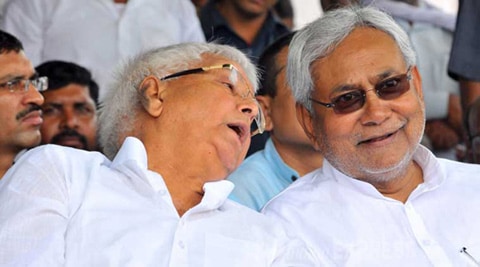


Despite the several declarations and photo-ops, the Janata merger may well turn out to be an idea whose time has not yet come, or at least not before the crucial electoral test later this year in Bihar. On paper, the merger of six parties of the erstwhile Janata Parivar adds up to a strong fight against an ascendant BJP — with the notable exception of Delhi, the Narendra Modi-led party has been on a winning streak in the states. If the statements emanating from the key players in Bihar are any indication, however, the merger project could be running aground the same problems that have afflicted past attempts at unification of socialist parties — the unchecked clashing of ambitions and over-developed personality cults, and a wholly inadequate effort to stitch together differing agendas and paper over the contradictions. The floundering has also revived a familiar question: is a common enemy or a negative agenda — in this case, anti-BJPism — enough? This question has taken on a sharper edge at a time when successive elections have suggested that vote banks may no longer be taken for granted and the electorate is increasingly giving a chance to affirmative programmes that hold out the promise of change.


While the Lalu-Nitish combination seemed to work in the Bihar bypolls last year, giving them six seats out of 10, in an assembly election where a government can be formed and changed, the voters’ calculus could be different. Against a BJP which offers a promise of newness and a more friendly Centre, the Lalu-Nitish-Congress combine will have to present a reasonably coherent alternative, or at least the assurance that they will not let their differences overtake them — Nitish and Lalu both hold aloft the banner of social justice and secularism, but Nitish rode to power on the assurance of being the anti-Lalu. For now, as they continue to take aim at each other, Bihar continues to look like a state of many corners.


