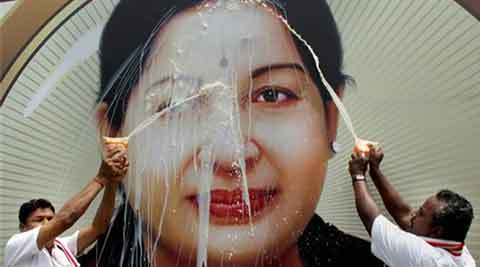

Events have moved at a scorching pace in Tamil Nadu since Saturday. The AIADMK legislators met in the morning and O. Paneerselvam, chief minister since September last year, was off to the governor’s residence with his resignation five minutes later. Within an hour, Governor Rosaiah invited J. Jayalalithaa to form the next government. Now chief minister for the fifth time, Jayalalithaa needs to hit the ground running. The bureaucracy has been in limbo since she resigned after a lower court convicted her in the disproportionate assets case. For eight months, the administration was directionless and waiting for Jayalalithaa to return. With hardly 10 months left before assembly elections, she must make up for lost time and get the state moving.
Tamil Nadu’s performance will have a bearing on the national economy. Among the top three industrialised states in the country, Tamil Nadu is key to creating jobs. With a large manufacturing base, skilled labour and pro-business climate, the state could drive Prime Minister Narendra Modi’s Make In India campaign. Gaps in infrastructure, especially power, have held back the state from realising its potential in recent times. Industries outside the Chennai region have bled due to the power crisis and the small scale sector is on the verge of ruin. Jayalalithaa’s ambitious plan to tap solar energy — the state has done well with wind — has yet to take off. Critical projects like the Chennai Metro and port expansion have slowed down. The reluctance of the automobile sector to expand in the state and the decline of the electronics industry are warning signals. With Andhra Pradesh building a port city north of Chennai, there is competition for capital. Jayalalithaa’s focus early in her tenure was on building a safety net for the urban poor. She now needs industry to grow so that funds are available for her welfare schemes.


