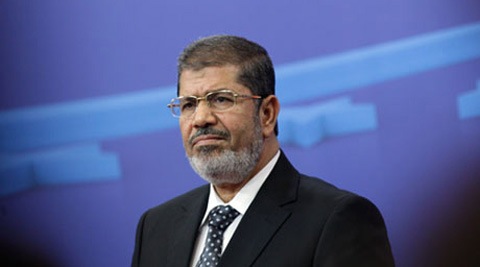

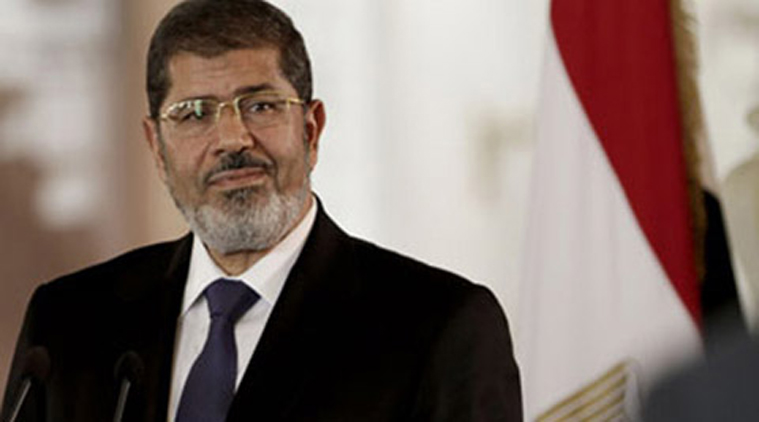
When Mohamed Morsi took office in June 2012 as Egypt’s first democratically elected president, after an uprising overthrew Hosni Mubarak, few could have imagined him in the dock a year and a half later. The sentencing of Morsi to 20 years’ imprisonment has ended the first of several trials the former Egyptian president faces. Morsi and 14 other Muslim Brotherhood members were sentenced for ordering the arrest and torture of protesters when he was president, but they were not charged with inciting their killing, which could have carried the death penalty. The remaining charges against Morsi are formidable: collusion with foreign militants to free Islamists from prison, espionage and terrorist conspiracy in collaboration with Hamas, Hezbollah and Iran’s Revolutionary Guards, and endangering national security by leaking state secrets to Qatar via the al-Jazeera network.
Morsi has been defiant and foreign observers have claimed that the court is not meeting international fair trial guarantees, but the former president cannot overlook the fact that he fell also because he had missed the opportunity to be president to all Egyptians. Instead, his presidency saw Egypt split further along the Islamist vs liberal/ minority faultline. Morsi overreached when he gave himself absolute powers by decree in December 2012 and used Brotherhood supporters to quell the resulting unrest. He never recovered. Around the first anniversary of his presidency, the army obliged protesters demanding his resignation and deposed him.


