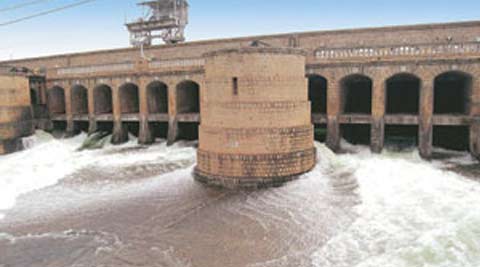

Karnataka’s insistence on building two more dams on the Cauvery could lead to a showdown with Tamil Nadu. Political mobilisations have begun in both states for and against the dam. On Thursday, an all-party delegation from Karnataka led by Chief Minister Siddaramaiah met Prime Minister Narendra Modi to argue the state’s case and seek the Centre’s help in building the dam. Earlier this week, an all-party team from Tamil Nadu had met the PM to impress that state’s viewpoint. Bandhs have been observed in both states in the past few weeks on the issue.
Tamil Nadu is justifiably apprehensive that the proposed dams at Mekedatu, close to the state border, would impact the flow into the Mettur Dam, the state’s main storage system from which waters are channelised to the fields of the Cauvery delta downstream. Karnataka’s stance — that it need not address Tamil Nadu’s concerns since the dams will come up in its territory — appears both insensitive and impractical.


The Cauvery waters have been a bone of contention for the four southern states — Karnataka, Tamil Nadu, Kerala and Puducherry — that fall in the river’s basin. Though the Centre has notified the Cauvery Water Disputes Tribunal award on each state’s share of the river, both Karnataka and Tamil Nadu have challenged the allocation. Both states want more water, but the question is: Can the river satisfy the need — or greed — of two states? The 765 km-long river has been exploited to the hilt across its length, so much so that it has been reduced to a patchwork of shallow outlets at its mouth. The cultivated area fed by the Cauvery — most of it under water-intensive crops like paddy and sugarcane — has been expanding, stretching the river’s resources. Better water management and more judicious selection of crops could help conserve the scarce water. The Cauvery is a living ecosystem and must be managed as such. Or else, it could slowly die.


