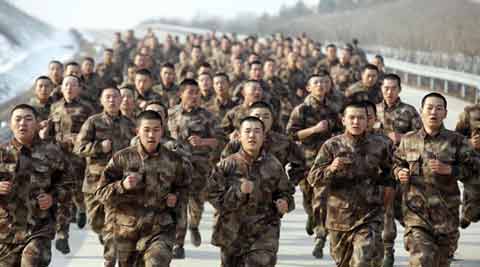

China’s formal reorganisation of the People’s Liberation Army (PLA) — from seven “military regions” into five “battle zones” — is the last step in its biggest military overhaul in decades. It’s aimed at building a force that, according to President Xi Jinping, “can win modern wars”. Unifying the branches of the PLA under a single command structure for the first time, Monday’s exercise also consolidates the Party’s grip over the military. Announced by Xi during last September’s commemoration of the 70th anniversary of Japan’s surrender, this revamp also involves adding new units and cutting troop numbers to streamline the forces.
China’s military has been rapidly modernising under Xi, and the latest changes are meant to project Beijing’s power. When China last reorganised its military regions in 1985, its primary concern was still the Soviet Union to the north. Today, Beijing’s geopolitical focus is on the South China and East China Seas, its restive western region, as well as the US pivot to Asia. The new command theatres relieve the military zones of administrative responsibility and refocus them on a single job — warfare. As such, notwithstanding Beijing’s claim that its “defensive” defence policy will continue, China’s neighbours are concerned by this implicit declaration of battle-readiness at a time when Beijing’s territorial claims in the disputed waters have become very aggressive.


