
Opinion Where are the women in India’s political parties?
Now that the government has announced the next Census and indicated that women’s reservation is likely to be implemented in the 2029 Lok Sabha election, one wonders what parties are doing to build a steady supply of powerful and influential women leaders in the run-up
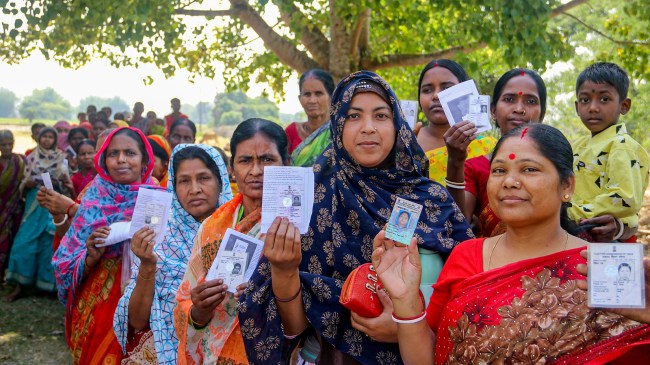 When the quota comes into play, are parties expecting a cohort of ready women leaders to magically emerge out of thin air?
(PTI Photo)
When the quota comes into play, are parties expecting a cohort of ready women leaders to magically emerge out of thin air?
(PTI Photo) 



Earlier this week, Congress named a set of 40 new district presidents for the state of Gujarat. It included 39 men, and one woman. Sonal Patel, who was appointed to the post in Ahmedabad city, expressed her disappointment and said she was expecting at least three to four women to make the cut. A few women had been shortlisted, but only Patel made it to the final list. The Congress’s list is not very different from that of the Bharatiya Janata Party (BJP Gujarat), whose cohort of district presidents and secretaries for the state includes only two women among 41 names.
From stubborn entry barriers to rigid leadership pathways, there are innumerable examples the world over to show why politics remains a difficult field for women. Not just in Gujarat, women remain scarce across internal hierarchies of political parties across India.

Rewind to September 2023, when the historic Women’s Reservation Bill was passed by Parliament with a near consensus. Political parties across the spectrum went all out to express support for the long-awaited Bill. Just 13 years earlier, the Bill had led to mayhem in the House of the People. Clearly, in 2023, women could no longer be dismissed so easily by political parties.
Except that they can. Browse through the lists of office bearers on party websites, or glance through visuals from party gatherings and rallies. When the quota comes into play, are parties expecting a cohort of ready women leaders to magically emerge out of thin air?
The veneer of support came crashing soon after the Bill was passed. Fourteen states have held Assembly elections since then. MyNeta data shows women comprised only 10 per cent of candidates, and a similar share among eventual MLAs (this ranges from 4.9 percent in Jammu and Kashmir and Arunachal Pradesh, to 13.9 percent in Odisha). In the 2024 Lok Sabha polls, just 9.6 percent of candidates were women. Most major parties fared on similar lines. In essence, electoral math exposed parties’ (lack of) commitment to women’s representation. The message was that they would back women only when forced by law.
But now that the government has announced the next Census and indicated that the quota law is likely to be implemented in the 2029 Lok Sabha election, one wonders what parties are doing to build a steady supply of powerful and influential women leaders in the run-up.
To be sure, there are some encouraging developments. Earlier this year, the ruling BJP said it was looking to include more women in its cadre and party organisation, and would include women as district presidents in some states. In Kerala, the Indian Union Muslim League (IUML) appointed two women to its national leadership, a first in its 75-year history. The Congress party runs a Shakti Abhiyaan for the “political empowerment of women”.
But these piecemeal attempts are not going to suffice. Here are some steps parties could take, if they are not considering these already:
First, identify women with the aspiration and potential to lead from within the party cadre. If finding enough women is difficult, look outside the party towards the local level. Thanks to the 73rd and 74th constitutional amendments, India has thousands, possibly millions, of women active in local politics in villages and cities. Currently, the political system offers them little opportunity to grow beyond their jurisdiction. Also, look for women active in community organisations, self-help groups, and local movements.
Second, once identified, champion them within the party’s organisational structure. Some may not yet be ready to lead, so create opportunities for them to work closely with other local leaders. This will not only help them learn, but will also create scope for allyship within the party, where women and men work towards common goals as teams.
Third, set internal quotas and targets for party leaders: For example, ask local office-bearers to ensure that their staff/team comprises a minimum percentage of women. From Iceland and Finland, to South Africa, the United Kingdom and New Zealand, there are numerous instances where countries have a healthy representation of women in politics even without quotas, because some or all major political parties have adopted quotas voluntarily. Parties can start with small targets (say 10 or 15 per cent), and then increase it incrementally. Recognise and reward those who meet and exceed these targets, and hold those who don’t to account.
Fourth, ensure there are adequate women in all decision-making bodies within the party, especially when it comes to decisions on who will make it to party positions. In Australia, as an example, the Labour Party’s constitution states that its “state branches should ask branches to nominate either a women’s officer or contact person to assist the development of equitable participation for women in the Party”.
Fifth, as you work to bring more women in, also work to create a friendly space for them. In Canada, the Liberal Party’s Judy LaMarsh Fund aims to provide financial support to women candidates. In many countries, parties have publicly available policies and codes of conduct to prevent and address sexual harassment. Talk to the longstanding male leaders who could fear loss of power once the quotas come into play; get them on board and make them allies rather than adversaries ahead of this impending major shift. Curate the right culture, infrastructure, policies and support systems. Will a woman from a village be able to attend a party meeting being held in a city 200 km away? Will she have a safe place to stay if the meeting stretches into the night? Will there be a separate and functional washroom in the building where this meeting will be held? These may seem too basic, almost banal, but ask women who have had to navigate public life, and you’ll find how real these barriers are. In short, don’t just work to bring women in, also create the environment for them to stay and feel like they belong.
Enabling women’s entry into spaces where they have been historically excluded can be a bit of a chicken-and-egg problem. Women are more likely to bring in more women with them once they join but they are also more likely to join when there are already enough women present. So, how do you break the stasis, and ensure the critical mass? Quotas help. In India, they have been long awaited, but now that they’re almost here, parties must make sustained and sincere attempts to enable women to participate in politics fully.
Otherwise, they’ll be left scrambling and resort to disingenuous last-minute measures. In the run-up to the implementation of the quota, every election and every organisational recruitment is a chance to prepare and build better — parties shouldn’t let it be a missed opportunity.
Chawla is an independent writer who tracks women’s representation in public life (with a focus on politics, leadership positions, and the workforce)

 Share
Share


