
Opinion View From The Right: River conflicts
The Cauvery basin has kept the region, which includes states of Karnataka, Tamil Nadu, Kerala and the Union Territory of Puducherry, “connected with each other and distinguished them from the Godavari or Krishna river valleys”.
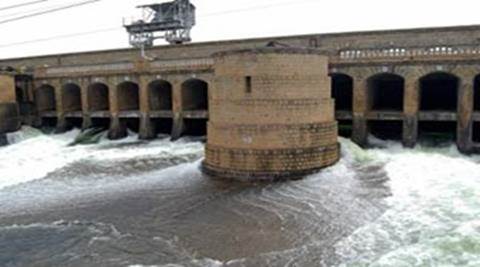

The editorial in Organiser, ‘The faulty faultlines’, comments on the recent Cauvery crisis and says that “our national life revolved around 23 river basins”. The Cauvery basin has kept the region, which includes states of Karnataka, Tamil Nadu, Kerala and the Union Territory of Puducherry, “connected with each other and distinguished them from the Godavari or Krishna river valleys”.
If water was the “unifying force in our civilisation, then why has it become a source of division is the basic question we would ponder over,” it asks. It notes that “the water distribution issue has turned into a linguistic feud” and adds that the RSS, Bharatiya Jana Sangh and leaders like B.R. Ambedkar and K.M. Munshi had “warned against the one-language, one-state policy, which many of them feared would translate into sub-nationalism”.

As per the vision of our Constitution makers, the Union government has the final say on matters of inter-state water management. But with increasing needs and a growing economy, “local participation is essential in arriving at a decision on water management”. “Not only about water, but on all issues of development we need to evolve a national perspective rather than thinking on inter-state or inter-district terms,” it says.
Evoking kashmiriyat
An article in Organiser stresses on the need for “rekindling Kashmiriyat” in the Valley. “The ongoing turmoil has brought to the fore the necessity to find a long-term solution to the issues involved,” it says, and adds that “the Vajpayee model of ‘Insaniyat, Jamhooriat and Kashmiriyat’ (humanity, democracy and Kashmiri culture) has emerged as a viable concept on the basis of which the matter can be addressed”.
In Kashmir, Shaivism and Buddhism flourished along with Islam. Sikhism arrived in the 18th century and was “embraced in a similar and seamless manner”. Kashmiriyat “epitomises synergised coexistence that has been practised in Kashmir Valley since times immemorial”.
“Islam in Kashmir followed a concept of Sufi mysticism that was quite different from the concepts prevalent in Central Asia/West Asia,” it says. “The concept of Kashmiriyat is not different from the practice of universal brotherhood prevalent in the rest of India and epitomised by Vasudhaiva Kutumbakam,”it argues.
At the time of the Partition, when the entire subcontinent was engulfed in fires of religious hatred, Kashmir Valley exhibited exemplary cohesion. “The ethnic cleansing that led to the exodus of Kashmiri Pundit community from the Valley in 1990 was engineered mostly by foreign terrorists,” it says. We can “counter the proliferation of fundamentalist Islamic principles and reconstruct the concept of Sufism that is central to Kashmiri way of life,” it concludes.
Nitish, The Puppet
The editorial in Panchjanya comments on RJD leader Shahabuddin’s release from a Bihar jail. “Lalu is happy and people are surprised after the don got bail,” it says, adding that this release has confirmed that Lalu Yadav is surging in Bihar. It has demonstrated that RJD knows the “art of armtwisting from behind the curtain”. The muscleman don has asserted that his leader is Lalu Yadav, and no one else. The editorial asks: “Who holds the key to power in Bihar? What is the yardstick of good governance? Has jungle raj returned in the state or not?”
It takes a dig at Nitish Kumar for saying that Shahabuddin’s release on bail is the result of a judicial process. However, “Nitish must have realised the price he would have to pay for the alliance with the RJD”. Everyone knows that judicial process gets crippled in the absence of neutral investigation and effective policing.
Shahabuddin’s release exemplifies that the police and civil administration of Bihar are being crippled following a “conspiracy”. “Who are the participants in this conspiracy?” This episode has confirmed that Nitish Kumar has lost his strength, and has become “a puppet in the hands of musclemen”.
 Share
Share


